• Gathering (Tomie part 17)

    Gathering (Tomie part 17)


    You interest me. That’s all. For you to see me and not feel anything, it’s too weird.

    Tomie can’t believe Umehara doesn’t like her — Gathering

    What is Gathering about?

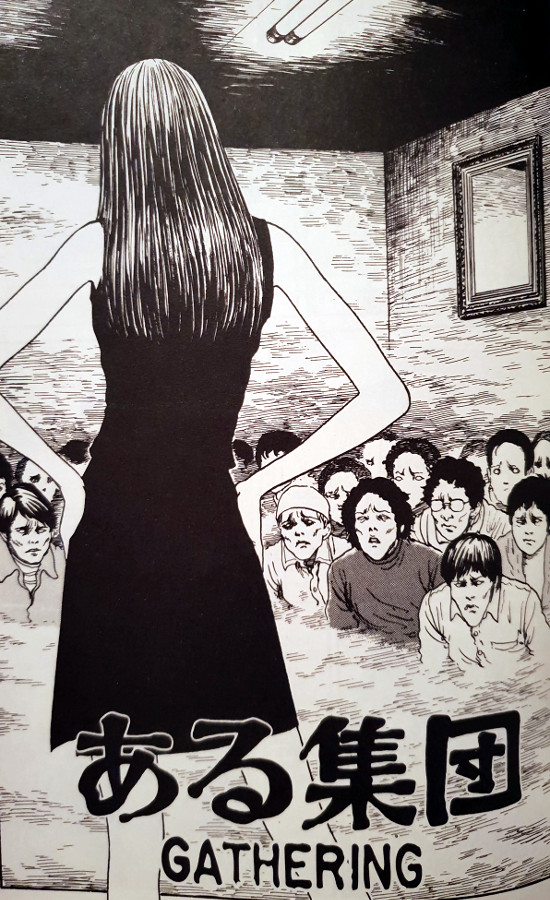
    Umehara is in the throws of grief over the passing of his girlfriend. We join him as he is being consoled by his good friend, Miyagawa, who offers a hand to help. Miyagawa invites his friend to a gathering that he has been regularly attending, but it is a gathering like no other.

    On arriving, Umehara finds a room full of men on their knees all looking towards an empty chair on the room’s opposite wall. The whole place has the air of a cult, with those suspicions being solidified once the target of these men’s attention appears. It is Tomie. All of the men go wild and Miyagawa reveals that he has brought his friend as a gift to Tomie in order to receive a reward.

    Tomie seems taken by Umehara immediately, however, he couldn’t care less about her. It seems his love for his recently passed lady are just too strong. As the story moves forward, Tomie tries to work out why she has no effect on him. Her failure leads to her turning her worshippers against him in response. But what is truly shocking, is when the inevitable happens and the crowds of men move past the infatuation stage, and into the “I just want to kill her and cut her up” stage. By the end of this gathering, things get rather messy – and perhaps not for the reasons you may first think.

    An army of the obsessed

    This story is about Tomie’s power of obsession over men, except it’s turned up to eleven. She essentially has an army at her disposal, and chooses to have them shower her with complements and gifts. She will demand for them to make her laugh; to entertain her in any way she shes fit. But when she doesn’t get her way, as is the case with Umehara, you’d better not be in her path.

    The power that she has over these men is potent. And the conclusion of such an odd situation – with these men all sitting at her feet in a growing internal frenzy – could only lead to bad things. The whole chapter feels like a boiling pot of water just waiting to break over the sides. The final panels present a suitably violent scene for such a dangerous, high-pressure atmosphere.

    In Summary

    Not a favourite of mine in the Tomie Collection, but still a very worthwhile addition to its overall world. Here, Junji Ito is focusing in on the side of Tomie that drives men to obsess over her – and to do anything she asks in order to please her. Although it isn’t very large in scope, when it is digested along with all of the other chapters, really give a complete picture of this Queen of horror manga.

    I don’t think this would be the best chapter to serve as an introduction to the lady. Although most of what you see in here would have been seen before in earlier chapters, there is one part that I believe is new. She manages to force herself into the reoccurring dreams of Umehara. Whether it is her doing or just from the effect she’s had on him, is not clear. So perhaps she manages to win him over after all?

    If you are an existing fan of the series and want to see more of what you have come to enjoy from Tomie, then Gathering will make a fine addition to that repertoire.
  • Babysitter (Tomie part 16)

    Babysitter (Tomie part 16)


    Just insurance, my dear. Sitters have a habit of running out on us.

    The lady of the house explains the locks on the nursery door — Babysitter

    What is Babysitter about?

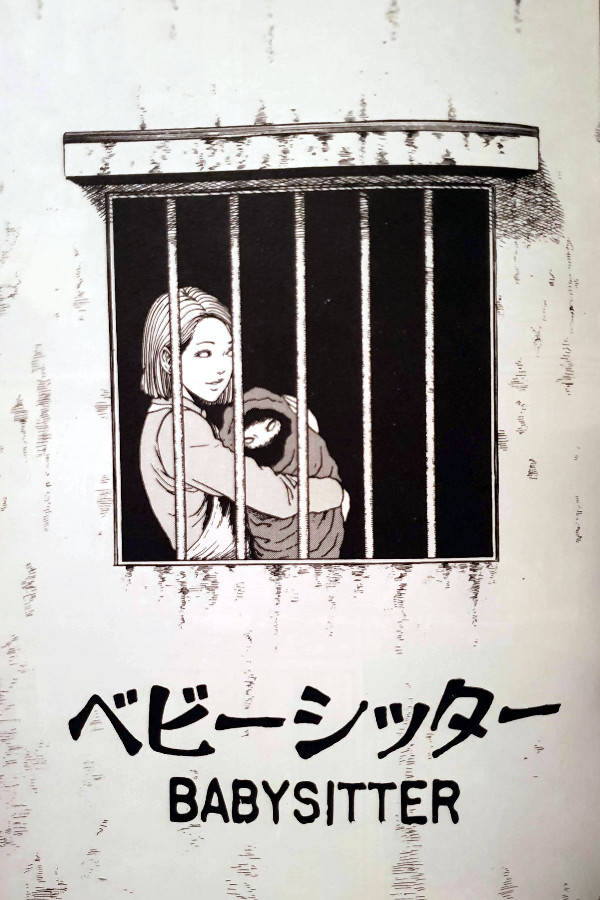
    In Babysitter, the story is confined to one small room throughout its entire 22 pages. That small room has the look of a cell, but is in fact a baby’s nursery. The babysitter herself is a young woman named Erita, who arrives at an elderly couple’s home in the opening pages. She is quickly introduced to the couple’s baby, although without actually seeing it properly, before being shown into the nursery.

    Once in the nursery, Erita is locked inside with the baby. The couple tells her that they’ve had past babysitters run away during the job, so this is merely a precaution from them. After the brief explanation to the situation, Erita is encouraged to pull back the baby’s blanket. Can you guess what she finds underneath? That’s right – underneath the blanket is not a baby at all, but what she believes to be a little monster. However, us as readers of this series will recognise it as being a regenerating Tomie.

    Once the couple have left Tomie (the baby) and Erita alone, Tomie begins to cry and slowly drive Erita mad. Babies crying in general, to those outside of their family, tend to have that shrill, piercing effect on many. But couple that with the powers that Tomie has and you have a deadly mixture. As it turns out, the only thing that can calm the small Tomie is the colour of red, which Erita slowly realises she must use to her advantage. But in such a small, confined space that colour is sparse – save for the blood in her veins and the growing number of town fires outside the window. Oh yes the fires – I didn’t even mention those did I?

    Confined in space and story

    Babysitter is very much a confined story. Not only does it trap our heroine, Erita, inside a small cell with this demon baby Tomie, but it also focuses the story there too. Except for the opening panels with Erita travelling to the home, we only see things from her perspective within that room. Even whispers and rumours from outside are learned from her spying outside of the barred window. We only know what she knows.

    Tomie’s madness is always something to be feared, but generally when people start to feel the effects, they have the opportunity to run or hide. However, in this small locked room, the babysitter Erita has no choice but to withstand and eventually comply with Tomie’s demands.

    Despite the story taking place solely within this nursery, don’t be fooled into thinking that this has no extra layers. There is in fact a wider story going on outside the window, which actually has a big impact on the overall story. And not only that, but only the future of both Erita and Tomie.

    In Summary

    I find this chapter to be a very charming one. Something about it makes it one of my favourite from the collection. It has a certain charm in how it focuses in on the doomed relationship between Erita and Tomie. Although the story doesn’t really take us to many places, I find it does quite a lot in the space it does have.

    I always find it more interesting somehow, when artists work within certain constraints, whether self-imposed or not. In this, Junji Ito has limited himself to a single room and seen what he can create from it. For me, he has created a short but nonetheless very entertaining segment of Tomie’s life. At least one of her many lives anyway.

  • Moromi (Tomie part 15)

    Moromi (Tomie part 15)


    It… reminds me of Tomie’s voice. I mean, it… sounds just like her.

    Ishizuka might be hallucinating in the factory — Moromi

    What is Moromi about?

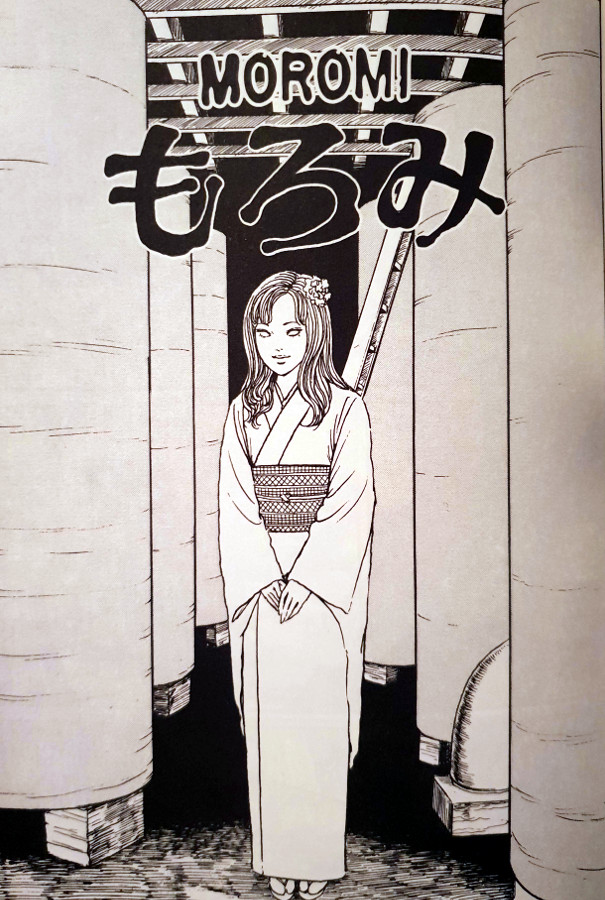
    In Moromi, Junji Ito mixes things up a bit, centring the entire chapter around the attempted disposal of an already-killed Tomie. Not only has she already been killed, but her former partner – Ishizuka – is busy mashing her remains into a fine paste on the floor. And even though he is putting a lot of work into it, her bloody remains seem to not be getting any smaller. In fact, he has noticed that the flesh seems to be getting larger in volume.

    In order to get some help, Ishizuka invites his friend Nagaoka round. Once he arrives, he is told about the strange situation going on. Ishizuka brings him up to speed, revealing that he has discovered that the pieces of Tomie seem to be regenerating. Tomie just can not die. He explains how he has tried to fight the growing flesh, by cutting it up as small as possible. However, he now has buckets and buckets of her remains that are still growing out of all proportion with no way of disposing of it.

    His friend then comes up with a very strange method of disposing of the meat. And this is where the story gets a bit odd, at least within the context of Tomie. They both travel to Nagaoka’s parent’s Sake factory, where there are huge tanks of mixing vats. These mixing vats are where the family Sake is produced, and it will also become the target for Tomie’s disposal. They begin mixing in parts of the flesh piece by piece into the Sake mix. This begins to have a very strange effect on everyone as the vapours begin to circulate round the factory. Not only that, but when they decide to taste the new recipe things really get turned up a notch in strangeness.

    Regeneration

    This is a story that focuses solely on Tomie’s regenerative powers. But not as we’ve seen before from complete limbs or cuts in the body. Instead, this is regeneration from the mangled, squashed flesh of a once-beautiful woman. Her appearance in this chapter is relegated mostly to being just that of buckets of body parts and ooze. Except, that is, for the spirit hallucinations that occur once the vapours being to rise. It reminded me of the chapter Hair in that respect, as she didn’t appear completely in that one either.

    There isn’t as much elegance attached to her here either, due to the fact that she spends the time as buckets of chopped-up flesh. This chapter is a much grittier, dirtier story than we’ve come to expect so far from the Tomie Collection. For that reason I enjoy it on its own level from others. I believe that Junji Ito must have approached this story in a very tongue-in-cheek manner. Just the fact that the friends very first suggestion, and the one that they actually go with, is to shove her parts into Sake vats in his family’s factory. It’s so ludicrous, but its one of those stories that always makes me smile.

    Not only is it a fun and silly one, but it provides some much-needed relief after the much darker events of the previous chapter “Boy” too.

    In Summary

    This isn’t a chapter that features highly in my favourite Tomie stories, but it is still enjoyable nonetheless. I loved the juxtaposition of the opening panels – with the loving words from the boyfriend, followed by him beating her corpse into the ground.

    This is another standalone chapter, which I think is suitably placed with its other chapters. Moromi sits comfortably in the middle of the overall collection. And while not the best there is, is definitely worthy of your time in reading.

  • Boy (Tomie part 14)

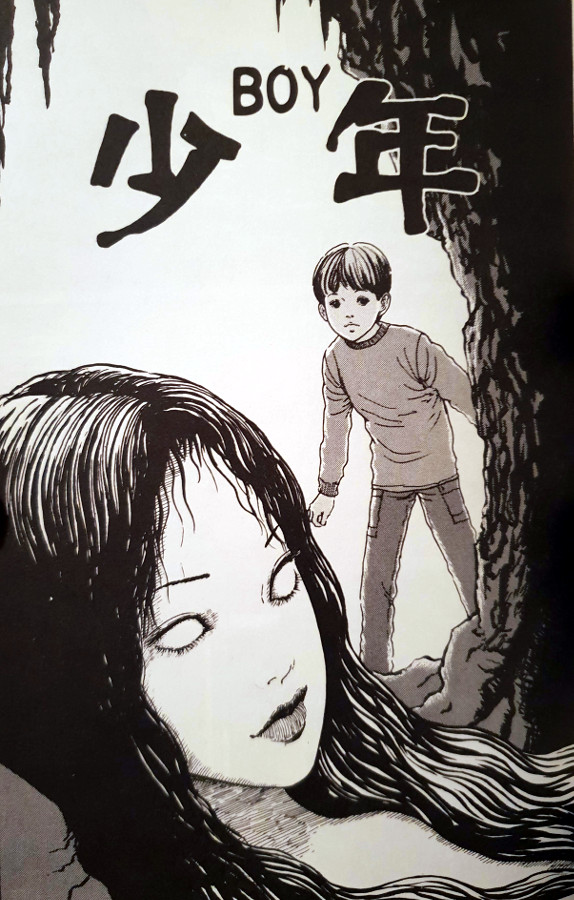
    Boy (Tomie part 14)


    But sweetie, don’t tell anyone about me. Instead, come visit me here every day.

    Tomie starts corrupting the young boy — Boy

    What is Boy about?

    Satoru is a young boy whose parents have recently moved them all to live by the sea. It was the father’s thinking that it would be good for a young child’s health and growth – how wrong he was. While wandering the beach alone, Satoru stumbles across a small cave with a pool of dark red coloured sea water inside. On closer inspection he finds the body of a young woman floating to the surface – her face cut to pieces but miraculously, still alive.

    The young boy befriends the woman, who introduces herself as Tomie. As their friendship grows, she convinces the boy to help her in her recovery. First with bringing her food and some clothes form his mother’s wardrobe, followed by her having him steal a fancy dress more “befitting” of her. Tomie has the boy completely under her spell, even convincing him to call her “Mommy” from now on.

    Satoru’s sanity declines very fast, as his obsession over his new mommy drives him to do some very bad things. Eventually, the parents notice that something strange is happening, and do their best to stop it. But will the boy’s parents be able to break the hold that Tomie now has on their son? Or have they tried to help him too far down the track; are they too late to save their only son?

    The darkest Tomie chapter

    Throughout our looking into the stories from the Tomie Collection, we have come across some pretty dark themes. However, this chapter sits up top for me as being the single most darkest one. Simply down to the fact that it involves the corruption and gradual insanity of a young boy. Junji Ito is most definitely not afraid to explore areas of his world that other people would perhaps be too afraid to conquer.

    Characters who cross Tomie’s path generally have a pretty bad time with her. But when it comes to children, the horror becomes that little bit more scary. Ito has a talent for getting under my skin, and indeed many other people’s skins. However, this is where he officially got all of his claws in and asked “Are you ready to go deeper and darker?”

    I remember having similar feelings from a chapter within Dissolving Classroom, where the young girl – Chizumi – has a boy her age kidnapped. But I think that Boy just pips that one to the post, as it goes pretty deep into how Satoru is changed at his very core. And how he transforms very quickly from innocent to cursed. So much so that it sets in motion the events for the rest of his tainted life. The final few panels that detail the boy’s adult life were pretty heartbreaking.

    In Summary

    Depending on your disposition, this could be quite a tough one to get through. This is all down to the fact that throughout the entire story, Tomie is corrupting a very young boy and moving herself into his mind as his mother. This is a big splinter that risks breaking the family right down the centre. The fact that she has no reason whatsoever to bring terror upon these people, makes it very easy to hate her completely.

    I have mentioned in the past about how she had some characteristics that I enjoyed about her – even liking her at times. But in this chapter, Tomie is without redemption; without reason; and is at her most callous and destructive from start to finish.

  • Little Finger (Tomie part 13)

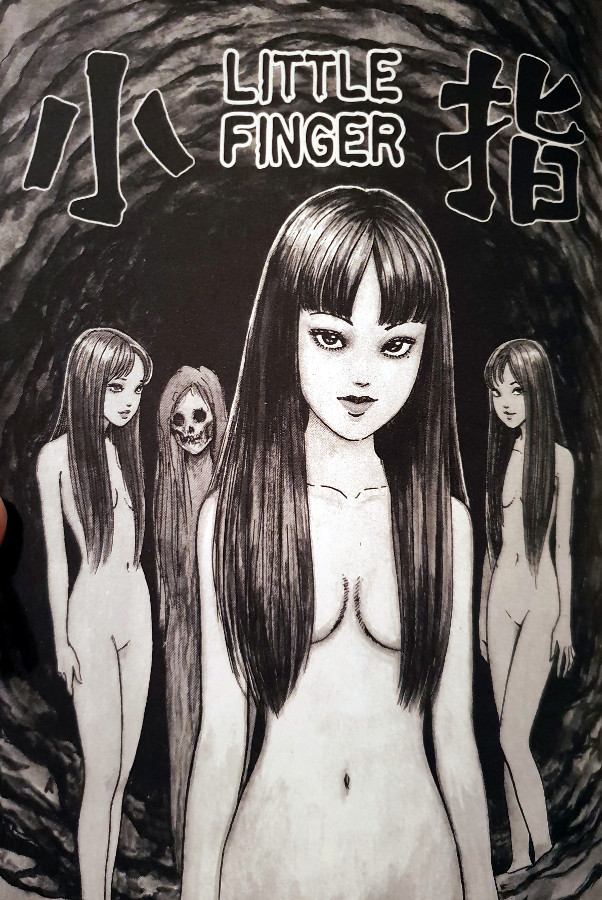
    Little Finger (Tomie part 13)


    My brothers regarded her not as their mother… but as a woman. It didn’t take long for her to reciprocate, either. Motherly love, indeed.

    Hiroya talks about their Father’s new wife — Little Finger

    What is Little finger about?

    A father of four brothers brings home a new woman in his life. Her name is Tomie. As you can probably imagine, Tomie has an immediate effect on the brothers, an attraction that she returns. This chemistry between the brothers and Tomie takes its toll on the father, who soon commits suicide. She is then left alone with the four brothers.

    The thing is though, not all of the brothers have desires towards Tomie. Hiroya is not conventionally attractive, often being the target of bullying from his three siblings. But he has something that his brothers do not – an immunity to Tomie’s charms. She hates the fact that he isn’t obsessed with her as the others are. And despite her best efforts, she is unable to win him over. This leads to Hiroya being locked away from everyone in the basement, away from the people who matter.

    Hiroya is later released and discovers that his brothers have done something terrible to Tomie. They have killed her and cut her to pieces, which she probably expected to be honest. The weak, sickly brother is then forced to dispose of her body parts in exchange for his being let free. Hiroya makes good on his deal, but little does he know that he is forever sealing his fate. What follows is an encounter with Tomie, as she regenerates around him, tormenting him with echoes of his past. But will he survive the suffering, and will he reach the end of this path with his life intact?

    A damaged man

    This is the first time I have read a story from the Tomie Collection where the central character was weak and completely lacking in self-confidence. The characters in these stories are normally well-adjusted people, however, in Hiroya’s case this couldn’t be further from the truth. But with his weaknesses, comes a huge strength that many don’t possess – the power to resist Tomie’s powers.

    That inner strength of his is soon put to the test though, as he is left hidden away with Tomie as she regenerates. And not one of her, but four! These four instances of her give Hiroya a glimpse at his own life from an outsider’s perspective. He is able to see these four versions of her grow up, with one of them significantly slower and weaker than the others. This echoing back to the story’s earlier theme is one of the things that makes Junji Ito the craftsman that he is.

    Through the horrors of the regenerating Tomie siblings, Hiroya is reminded of elements from his own life. He knows what its like to be the slowest and the most hated, which allows him to know the pains of the weakest Tomie sibling. His inner strength knows no bounds too it seems, as he is able to befriend – and give comfort to – that weaker version of her. But at what cost?

    In Summary

    Despite being outwardly one of the weakest characters within the Tomie Collection, I think Hiroya is inwardly one of the strongest. Not just from his ability to resist Tomie, but with his power to empathise with something so threatening and grotesque. He is truly a man who is able to not only confront the fears from his past, but is able to embrace them too.

    Little finger was a very enjoyable read for me. It was great to finally see a man who was almost invincible to Tomie’s powers. Although it took him being slightly disfigured and having zero self-confidence in order to have that gift. While this wasn’t the most visually inventive chapter, it does have many aspects that are to be admired. Like how Ito is able to tie in such a strong theme, that is used so well in the story’s pay off.

    It is probably not the best introduction to the character of Tomie, but it is a chapter that is definitely worthy of your time. It will do well in expanding a preexisting knowledge of this awesome, and horrific, world.

  • Adopted Daughter (Tomie part 12)

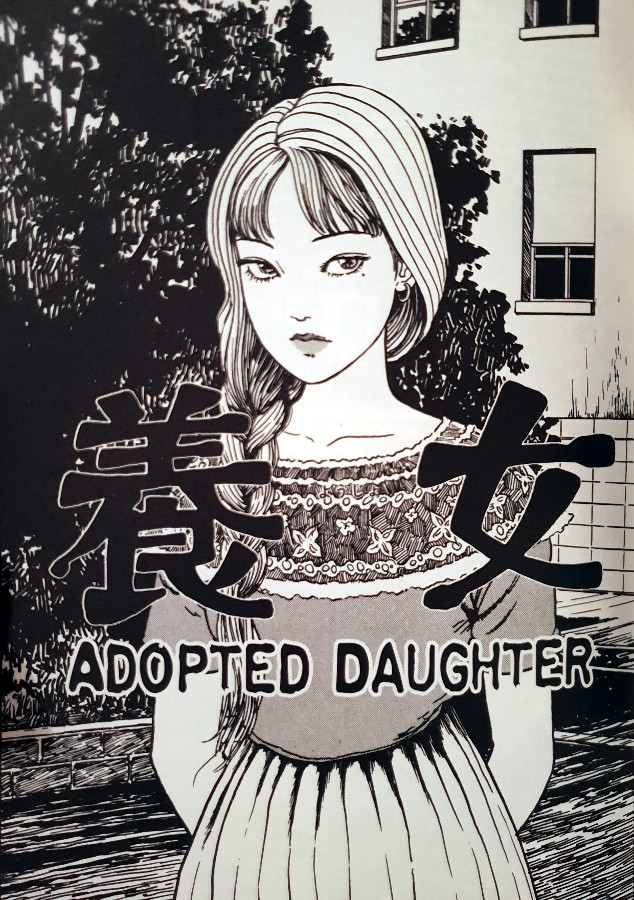
    Adopted Daughter (Tomie part 12)


    Oh, how sweet. To stay here, with you… it would be like a dream.

    Tomie is welcomed into the couple’s home — Adopted Daughter

    What is Adopted Daughter about?

    In the twelfth chapter from the Tomie Collection, Adopted Daughter sees the lady herself be taken in by a friendly old couple. This lovely couple have been unable to have children themselves, and so have previously adopted from a local orphanage. However, their fate seems cursed, as every one of the girls they have adopted has died mysteriously. These strange deaths, whilst under their care, have birthed some very bizarre and troubling rumours about them.

    One rainy night, the unconscious body of a young woman is found just outside of their window. The couple quickly take her inside, dry her up and make her feel at home. She introduces herself – her name is Tomie. The couple see this event as a blessing and immediately offer her a home. She accepts, after explaining about how both of her parents have recently died. And it isn’t long until she finds herself right at home.

    The old couple dote on her as if she were their very own. They do their very best to make her every desire come true, no matter what she asks of them. They buy her nice jewellery; dress her in beautiful gowns; make her hair up like royalty. But none of this manages to stop the inevitable effect that Tomie ends up having on those around her. Those same desires in the innocent soon reveal themselves with gusto, for the story’s climactic ending.

    Main Characters

    Twists and tragedy

    Adopted daughter is definitely one of the darkest Tomie stories I have read. All of the stories within this world are pretty dark by definition, however, this one manages to go that one extra step. For me, this was down to the sub-plot that is hidden within the over-arching story. I’m not going to mention a word of its details here, for fear of spoiling it for you. Let me just say that it was a twist that I didn’t see coming, and reminded me that the scariest things in horror are those that are rooted in reality.

    My heart went out to this sweet, old couple. Although I don’t want to reveal their ultimate fate, the fact that they seem to be cursed with sick daughters – and then to have Tomie turn up – is a truly upsetting situation to be in. Not only that, but the rumours that go around about them are unfair too. I know that people will talk, especially about certain unknowns in their neighbourhood, but when you add it all up, this couple just doesn’t deserve it.

    The couple are without a doubt shunned from society – alone together – and unable to make a family. Mix that with the horrific events that they come to witness, and you have a very unfortunate final stage in life.

    Closing thoughts

    I would definitely put this chapter into my top five from the entire Tomie Collection. The sense of depth in the story’s history, which comes out from the later-revealed sub-plot, is the most rich out of all I’ve read so far. I would even go so far as to say that Adopted Daughter would make an excellent Tomie film, in the right hands.

    If you haven’t read a Tomie story before, or indeed any of Junji Ito’s stories, I think that this would give you a great introduction. This chapter has one of the best written narratives from the collection in my opinion. And it gives a good level of gore without being completely in your face. Adopted daughter is a standalone story in the collection, so feel free to read this one during any stage of your exploration.

  • Hair (Tomie part 11)

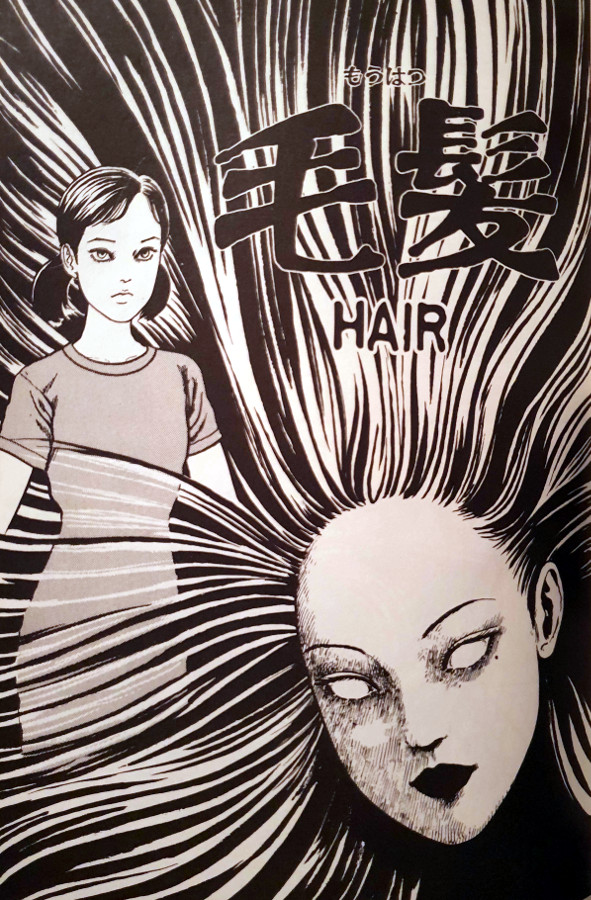
    Hair (Tomie part 11)


    Tomie came to me more and more often. I sat in my room, dwelling, transfixed by her beauty. I felt no desire to go anywhere.

    Chie becomes increasingly obsessed by Tomie — Hair

    What is Hair about?

    After looking around her father’s study, Chie discovers a very weird trinket hidden in secret. That trinket is a wooden box, within which is a large collection of long black hair. Although the contents of the box are strange, the hair’s unique properties are stranger still.

    Once the box has been opened, the hair seems to start growing of its own accord. To share in her weird discovery, Chie confides in her best friend Miki and tells her all about her find. Playing around as children do, each of them get a strand of the hair attached to their heads. It just sticks into their scalp and makes a permanent home there.

    As time goes on, they both start having strange dreams – dreams of a beautiful young woman who introduces herself as Tomie. But those dreams become increasingly real for one of the girls as she starts attaching more strands of hair to herself. But how much is too much? And what effect will Tomie’s hair ultimately have on these innocent girls?

    Main Characters

    Body horror

    When I think of the body horror sub-genre within horror manga, I imagine the contorted faces from some stories. Or even the devastated bodies from viruses and curses such as in Emerging or Manhole. What I never even considered was how hair could be used in just as an effective way. It just took someone like Junji Ito to see what I could not, and bring it to my eyes in as demented a form as possible.

    What Ito has managed to do, yet again, is go to a place that I could never have even dreamt of. We all know that increased hair is a universal sign of maturing within us humans. So to have that taken and used as a catalyst for the changes that these girls start going through was a stroke of genius.

    The conclusion to this chapter gave me some remembered feelings from another story of his called Greased. Although not anywhere quite as vulgar as Greased in what it shows, Hair does a great job at ticking some of those same boxes. It too uses parts of the body’s natural processes to try and completely unnerve you. And for me it completely succeeded.

    Transformations

    Hair is a chapter that focuses solely on Tomie’s ability to take over an unknowing host. We saw a similar case to this in the Basement chapter through the infection of Yukiko’s blood. However, here Tomie is doing the same thing through the DNA of the hair that Chie’s father had been keeping. As soon as it latches on to them, it works its way into their mind and begins to take them over.

    The more I think about it too, the more I can’t necessarily blame Tomie for what she is doing. I mean, of course she is the enemy here, but is she not simply clinging on to her life like any self-aware being would? Of course it is to the detriment of the girls she is affecting, but I find Tomie’s motives here somewhat pure. It is the father who kept the hair hidden for himself for so long that I blame. He would have known the powers that Tomie had, yet still he kept that hair in the same house as his wife and daughter.

    What I found interesting, and even refreshing, with this chapter, was how Tomie herself doesn’t actually appear in the story in physical form. Instead, it is only through the hallucinations that both girls witness that she appears.

    In summary

    I found Hair to be a calmer chapter in the Tomie Collection, but with one of the more visually disturbing endings in my opinion. I think that any dark ending to a story that affects children is by default more disturbing. But in how Ito chooses to essentially teach these girls a lesson really touched a nerve in me when I saw its conclusion.

    I guess that those are the buttons that horror manga should press. If you’re not left feeling at least partially disturbed after reading one, then the author hasn’t taken full advantage of the genre.

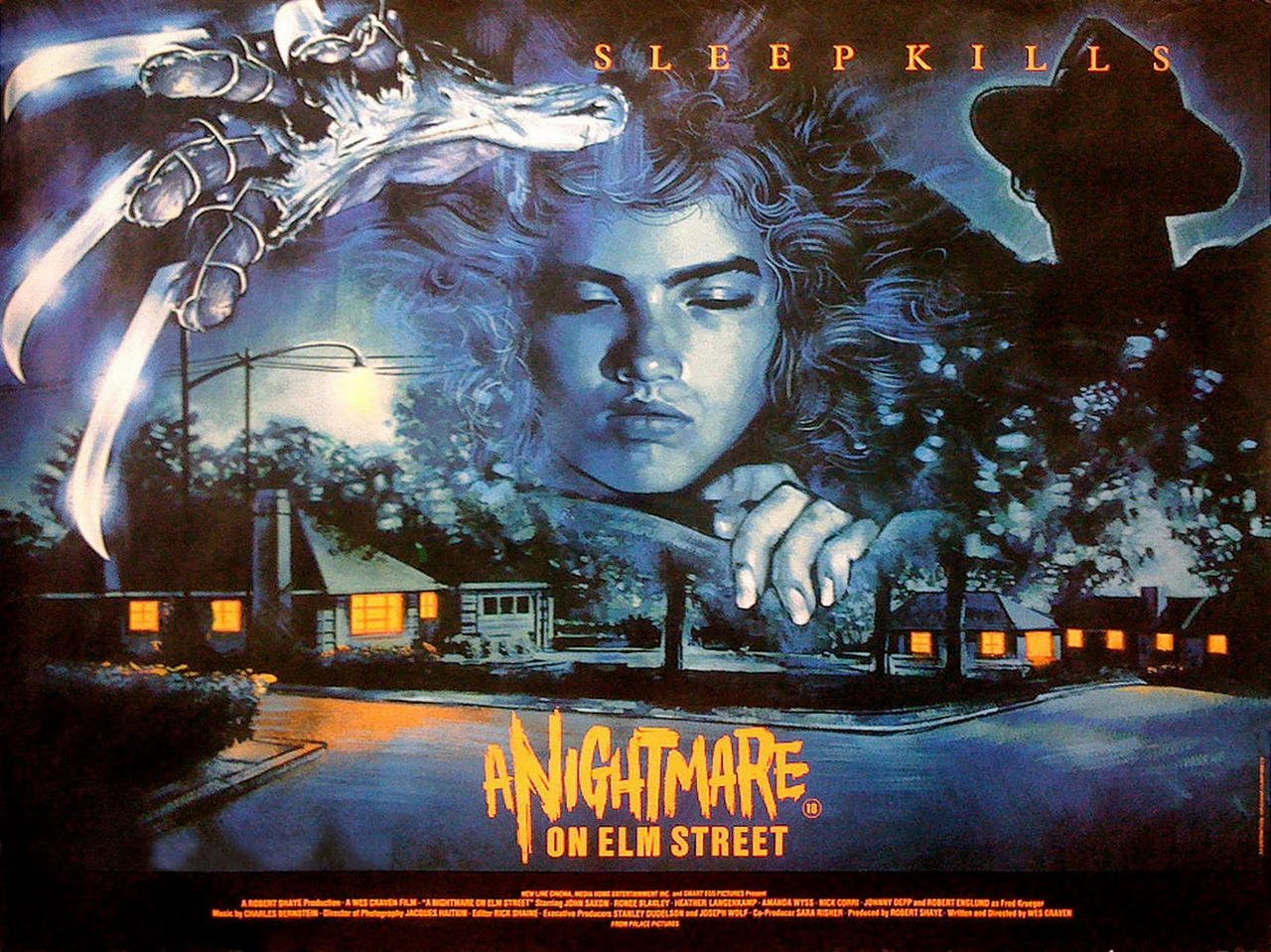
  • Thoughts on A Nightmare on Elm Street

    Thoughts on A Nightmare on Elm Street

    A Nightmare on Elm Street is one of the most recognisable titles in cinema – as is it’s villain, and star, Freddy Krueger. I felt the urge to re-watch this film after my recently-formed gaming obsession with Dead By Daylight. I was pleasantly surprised by the fact that much of the film still holds up to modern viewing.

    What is A Nightmare on Elm Street about?

    A Nightmare on Elm Street follows four high-school kids, who are all experiencing almost identical nightmares. Nightmares about a mysterious burnt man in an old jumper and hat with knives for fingers. This figure is none other than one of cinema’s most charismatic antagonists – Freddy Krueger.

    Freddy has long been dead, but has since returned to feed on children’s fear within their dreams in order to kill them. While alive, Freddy was exclusively a child killer – and possibly worse in the originally draft – which makes him one of the most despicable of his contemporary killers. Yet, perhaps intentionally, this is juxtaposed with his bouncy, playful actions and the fact that through the course of his films people have come to regard Freddy as a “cool character”.

    It isn’t long until one of the children Freddy is hunting, Nancy, takes it upon herself to stand up and fight back against him. This ultimately leads to a showdown where you’ll want to throw your fists up and shout “Fuck Yer, Nancy!”.

    The Effects still hold up

    When the Matrix came out in 1999 it blew most people away with its cutting-edge, computed-generated, effects. Less than ten years later and those effects sure did start to look dated – more so now. However, with films that focused on created actual physical effects, this dated effect is lessened quite substantially in my opinion.

    A Nightmare on Elm Street, although cheesy in parts, still holds up strongly with its physical effects. Especially those bedroom death scenes from both the start and end of the film. R.I.P. Johnny. And Freddy is every bit as menacing and full of charisma as I’d remembered from watching it years ago.

    It’s great when modern films take a leaf out of the books of films like this one. You really can’t beat the authenticity of good-old physical effects. Especially in horror.

    A personal favourite favourite of mine of all the film’s effects, is when Nancy is asleep at Tina’s house. Freddy can be seen pushing his way through the over-arching bedroom wall from the other side. And although it’s not too difficult to work out how this could be achieved it is still effing terrifying and highly effective.

    Freddy is still rock n roll

    Freddy Krueger is one of those pop culture horror icons who sits beside all of the greats. He sits with characters such as Michael Myers; Pinhead; Jason and Leatherface. He was played so perfectly by Robert Englund and like Doug Bradley for pinhead, will always be tightly linked to his seminal role.

    Interestingly what differs Freddy from many of his contemporaries, is his sense of humour and playfulness with his victims. Michael Myers was a silent shape in the darkness; Jason too was silent; Pinhead spoke only in a deep, almost poetic manner. But Freddy just toys with his victims in his cheeky, tormenting way.

    Freddy has been a really fun villain to revisit and I’m looking forward to re-watching the other films too. This includes one I’ve never seen before – Wes Craven’s New Nightmare. I’ve heard good things about it so will get a hold of that when I can.

    In Summary

    A great horror film that I think still holds strong today. Wes Craven unknowingly created an icon that would go on to become a household name – like Kellogg’s Corn Flakes and Coca Cola.

    If you’ve never before seen A Nightmare on Elm Street, I urge you to give it a watch. Yes there are some aspects of it that will be dated, such as the fashions and the acting in places. But this really is an important horror film like all of the top films lists repeat. You wont sleep easy till you watch this film.

  • Charlie Boy (Hammer House of Horror episode 6)

    Charlie Boy (Hammer House of Horror episode 6)

    Charlie boy is about a couple, Graham and Sarah, who come into possession of an African idol after Graham’s uncle dies. (Sarah gives the idol the name Charlie Boy). Unbeknown to the couple, the idol is cursed and is in fact a voodoo statue.

    What is Charlie Boy about?

    Close up of Charlie Boy
    Close up of Charlie Boy

    After a disagreement with his brother, Graham – sitting at home nursing a drink – takes out his anger on the Statue. He does this as he is looking at a photograph of five close friends, himself and his brother included. The rest of the episode is then about the systematic killing (or accidental deaths) of all who appear in said photograph in the order they appear.

    The episode had some juicy deaths in its 51 minutes including a man getting thrown off a horse and on to some plough spikes. Others I can’t reveal for fear of spoiling aspects of it for you, should you choose to watch it. This story is one of the grimmest to watch overall – nobody really has a good time in this one. That being said I do enjoy a good downer of a story – there’s no light without shade.

    A weaker example of the series

    Charlie Boy had some potential to be a great episode but unfortunately fell a bit short for me. One big thing that let it down was the soundtrack. At times the music felt like it belonged somewhere between Confessions of a Window Cleaner and Foxy Brown. It’s a shame because the idea itself was a sound one that fits with the rest of the series well. It just seemed to be poorly executed by people who had no real vision of what Hammer Horror is.

    Graham and Sarah examine Charlie Boy
    Graham and Sarah examine Charlie Boy

    In Summary

    This is one episode of The Hammer House of Horror that I think you could comfortably miss. It does have some redeeming qualities, such as a higher death count to previous episodes. So it isn’t all doom and gloom. But yer, not the best one.

  • Resident Evil Kitchen Demo on PSVR

    Resident Evil Kitchen Demo on PSVR

    The Resident Evil Kitchen Demo is a little taster that Capcom put out around the release of Resident Evil 7. It shows off, in its short five minutes of game play, the pure horror potential for Playstation VR, and indeed VR in general.

    What happens in the Resident Evil Kitchen Demo?

    You spend the entirety of the demo strapped to an old wooden chair in a completely run-down kitchen. The Kitchen gave me similar vibes to the Peacock house from the infamous X-Files episode, ‘Home’. Just sitting there in the chair, both my real-life chair and the in-game chair, looking down at my bound-hands, I was already bricking it.

    It felt very much like the start of the original saw film too, in that I had essentially woken up with no recollection of how I got there.

    Once you figure out how to wake your friend up off the floor, he slowly gets up and tries to untie you. This is where my first palpable fears manifested. Behind him, moving in the shadows of the corridor, I could see a figure. A figure that no sooner had I said aloud ‘behind you!’, was already upon him.

    Looking directly into the face of the hideous visage of a woman, who looked somewhat decayed and possessed, was a feeling like no other. In VR you can look around her head at the mangled locks of hair; the saliva in her teeth; the killing gleam in her eyes, staring directly into yours.

    This is what horror really is

    Horror games are always fun to me in retrospect. At the time of playing I experience what the game developers must strive for – prolonged anxiety and a fear to move onward through the game. But there really is no feeling like that of the release of tension after a well-timed, tasteful jump scare. And I have the feeling Resident Evil 7 will have those in spades.

    Seeing the twisted and zombie-looking woman up close in my face actually got me turning my head away. I knew, somewhere in my mind, that this was just a game. But that held truth was buried beneath the many layers of fear from this demo. The level of immersion here is unreal and this has somehow awoken a level of computer game experience that I never even knew existed.

    On to the full game

    As soon as I finished the Kitchen Demo I was online shopping for the full game. I kick myself now for not picking it up in the PlayStation Store sale a few months back. As I type this sentence I am awaiting a confirmation email to come through for me to collect the game.

    I have no idea how I’m going to survive this game. Outlast feels like a walk in the park now, compared to this. (It’s not – Outlast is still very scary, but Resident Evil 7 just has a whole new dimension – literally and figuratively).

    p.s. I have since bought the game and have played the first hour. It has not disappointed me and I can not wait to write up my thoughts on it in full.

  • The House That Bled to Death (Hammer House of Horror episode 5)

    The House That Bled to Death kicks off strong and stays strong throughout its 50 minutes. It keeps a sustained anxiousness until it’s very final scenes.

    What is ‘The house that bled to death about?

    The House That Bled To Death opening
    The House That Bled To Death opening

    The darkest and coldest opening of the series so far. An elderly couple are together in the kitchen about to have a cup of warm milk before bed. The husband heats the milk and slips a dark powder into one of the cups. As he sits there and lets his wife drink the tainted milk, not a word is exchanged. We have no idea as to why he is murdering his wife and in the world of Hammer House of Horror it doesn’t really matter.

    Fast forward some time ahead and we are with this episode’s family, the Peters family. They are buying the very same house where the murder occurred, unknowing to them, from one of the creepiest estate agents in a TV series ever. As soon as they begin moving in, strange things start happening – doors jamming, strange visions and the most gruesome death of an animal I’ve seen in the series thus far.

    As they try to bare the strange goings on in the house, tensions are increased both within the family and with the neighbours and friends. The poltergeist-like happenings culminate with the most shocking child’s Birthday party I’ve ever seen. But just when you think it’s all over, we see one of the most interesting – in my opinion – closing scenes of an episode of Hammer House of Horror I’ve watched.

    I wonder about the child actors

    Every time I see these sorts of series or films I can’t help but wonder how the children are affected. I mean, obviously if there’s a dead body the child wouldn’t necessarily need to physically see it. Through the magic of editing this effect can be produced. But when you have a scene such as this episode’s Birthday party, where the children are directly affected, this must be an awkward conversation with the young actors’ parents.

    Sophies Birthday Present
    Sophies Birthday Present

    Nonetheless the child actors do a really good job in this episode. Their terror is almost palpable – which is worrying on a couple of levels. Sometimes I find the younger actors more convincing than their superiors. This could simply be down to the fact that children, in their very nature, are innocent. So the horrors that befall them are that much more horrific.

    In Summary

    Definitely one of the strongest and most memorable episodes of the Hammer House of Horror TV series. The House That Bled To Death has everything you could want from a hammer horror series.

    The feeling of claustrophobia is maintained throughout most of the episode from being limited to the interior of their house. The house too is not a house that would necessarily stand out. You would see many houses like it passing through most built up city suburbs. This in itself is scary. The fact that it isn’t some huge eerie castle or dark, set-back mansion. This is a regular house, for regular families, who have to endure some far-from-regular things.