Junji Ito

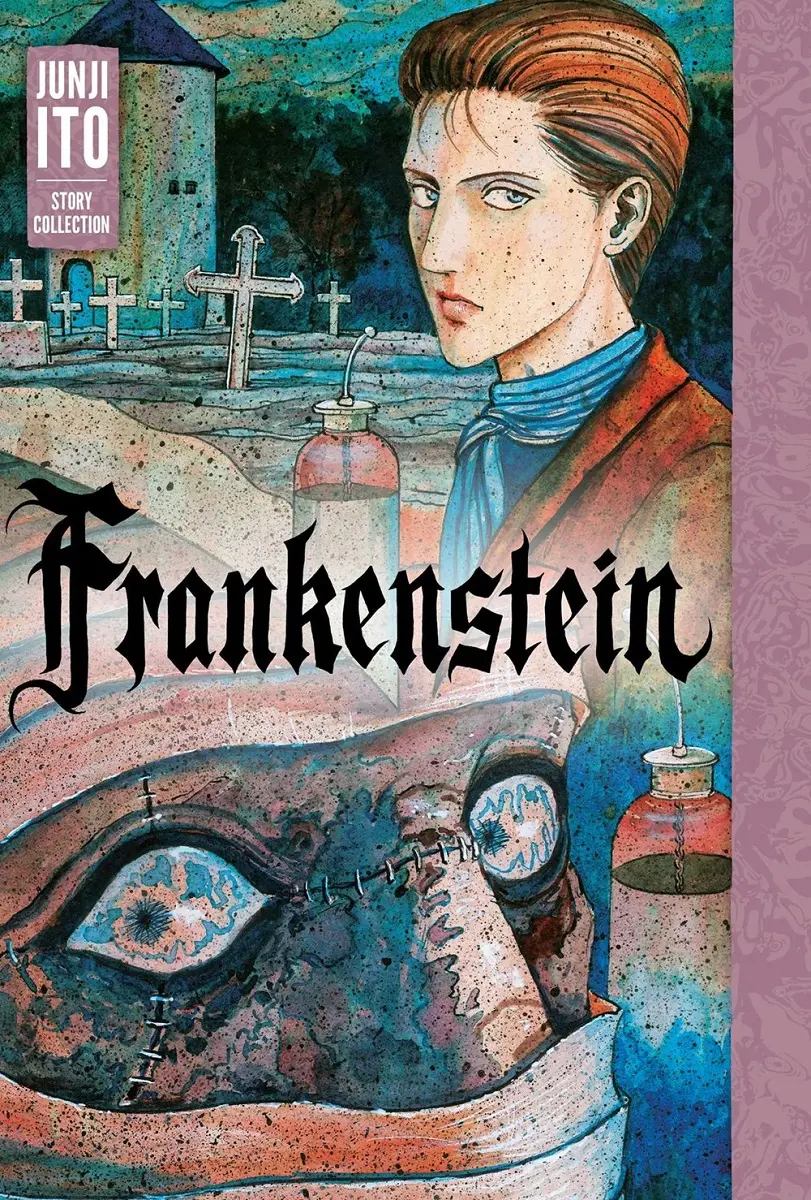
Frankenstein

Junji Ito takes on one of the most well-known horror stories of all time. He injects his signature style and atmosphere into the classic tale of man playing god.


You seek for knowledge and wisdom as I once did… it is only natural for a man to pursue knowledge. Until a few years ago, I burned with the same ambition as you.

Victor Frankenstein begins to tell his story — Frankenstein

Mary Shelley’s Frankenstein is perhaps one of the most well-known horror novels ever written, if only by name. In his horror manga of the same name, Junji Ito tackles the mammoth task of bringing this novel into his disturbingly visual world.

Frankenstein is such a huge part of popular culture, however, I have to be honest and say that I have never read Frankenstein the novel; Ito’s version is my first time experiencing the story itself. I knew the rough story – the Doctor creating the monster, but I needed to check the major plot points on the novel’s Wikipedia page after reading this manga, just to see how close it was. 

I am happy to report that Junji Ito’s version of Frankenstein stays very true to Mary Shelley’s novel. Even the narrative structure of telling the story from the perspective of the ship’s captain is maintained. But I can’t give a full comparison as I am not familiar with the source material.

What is Frankenstein about?

During an expedition to the North Pole, in the pursuit of fame, the captain and his crew see the towering figure of a stranger in the distance. This is followed by them finding a man out in the freezing cold all alone and in need of shelter — a man by the name of Victor Frankenstein. Victor is in pursuit also, only his pursuit is of something far more tangiable than fame. His pursuit is of a creature he decsribes — the figure that the crew saw previously.

Suffering from exhaustion and cold, Victor tells the captain his story and how he came to be out here in the wilds of the North Pole. We learn of Victor’s childhood and family, and his growth into the scientist he became. He also recounts the terrible deeds he performed in the pursuit of greatness in his unique field of study.

He goes on to tell the Captain of his creation, the Frankenstein’s Monster, and how it came to escape and ultimately wreak havoc on his family. We bear witness to the awful deeds that the monster does, and Victor’s seemingly never-ending pursuit of it. Victor’s story ultimately brings us back to the current time on board the trapped ship and to the final moments of realisation of both the monster and the creator alike.

My thoughts

As I said before, this was the first time experiencing the full story of Frankenstein. I mean, I’ve always known about the characters and the creation of the monster through parodies and tv series tie-ins like Penny Dreadful and Carry On Screaming, but never the original story.

I am glad, in a way, that reading Junji Ito’s interpretation of it was my first taste. It meant that I got to experience all of the story’s twists, turns and moments of horror, only via the expert artistry of the horror mangaka himself. That’s not to discount Mary Shelley’s talents; I’m just saying that this was a very different way to be subjected to it for the first time.

I thought that the intricacies of the monster himself were put across very well too. It’s moments of horrific brutality; it’s moments of love towards the family whose home he hides in; and the moments of vulnerability where he pleads for his creator to build him a mate – a mate who won’t cower and scream at the mere sight of his face. Someone he can love — and receive love in return.

I can’t say that this is my favourite Junji Ito story, but nonetheless I thought he did a great job working within another writer’s world and the limitations that it can bring. His artwork is on point as always, with the depiction of both innocence and horror so expertly portayed, sometimes through the same character.

I’ve heard said before that if you are going to remake or cover someone else’s creation, whether a film, song or whatever, you should either strive to improve on the original or at least make it different. Whilst I can’t say whether or not he improved it, I do think he brought something completely different. Perhaps even bringing this classic horror story to the eyes of people who may never have ended up reading it — like me.

In Summary

Whilst I can’t recommend reading this version of Frankenstein before the original, nor should I, I do feel that it is definitely a Manga worth reading at some point. I’m not sure about any different experiences I may have had, had I have read the novel first. The big difference that does spring to mind is that all of the visuals would have been created in my imagination – making it even more scary perhaps?

But as a standalone horror manga, regardless of the source material, Junji Ito’s Frankenstein is a great read in my opinion and worthy of your time.
The Sad Tale of the Principal Post

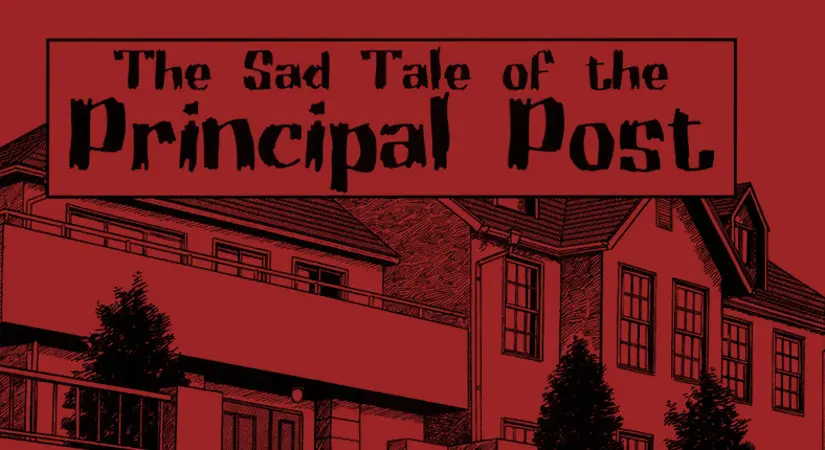
One of the shortest of Junji Ito’s manga stories at just four pages. Included with his famous Gyo series is this little gem about a man who has some trouble with the supporting beam of his family’s home – the principal post.

Nestled at the end of Junji Ito’s story `Gyo`, is a four page one-shot story about a man found trapped underneath the main supporting post of his family’s home. As the mother and children are busy entertaining visitors to their new home, screams are heard from beneath them. And there inside the house’s crawl space, tightly held beneath the Principal Post, is the father of the family.

The metaphor for this short story seemed so obvious to me, but I wanted to share my thoughts on it nonetheless.

For me, it seems that the father is literally holding the weight of the house on his back – supporting it for his wife and children. And instead of begging for help, he instead pleads for them not to move him – for doing so would risk bringing the whole building down. So for his family, he is willing to die in order to keep them warm and safe in their home.

I’m not sure if this was perhaps Junji Ito expressing feelings of his own regarding his family and his willingness to do whatever he can to help and support them. But I do like to think so.

This story does have a pretty ridiculous narrative when you think about it – the man being spontaneously trapped and the reason for it never being revealed – but I do think that this holds a nice message of family loyalty. Out of all of Ito’s one-shot stories I have read so far, The Sad Tale of the Principal Post is one of my favourites.

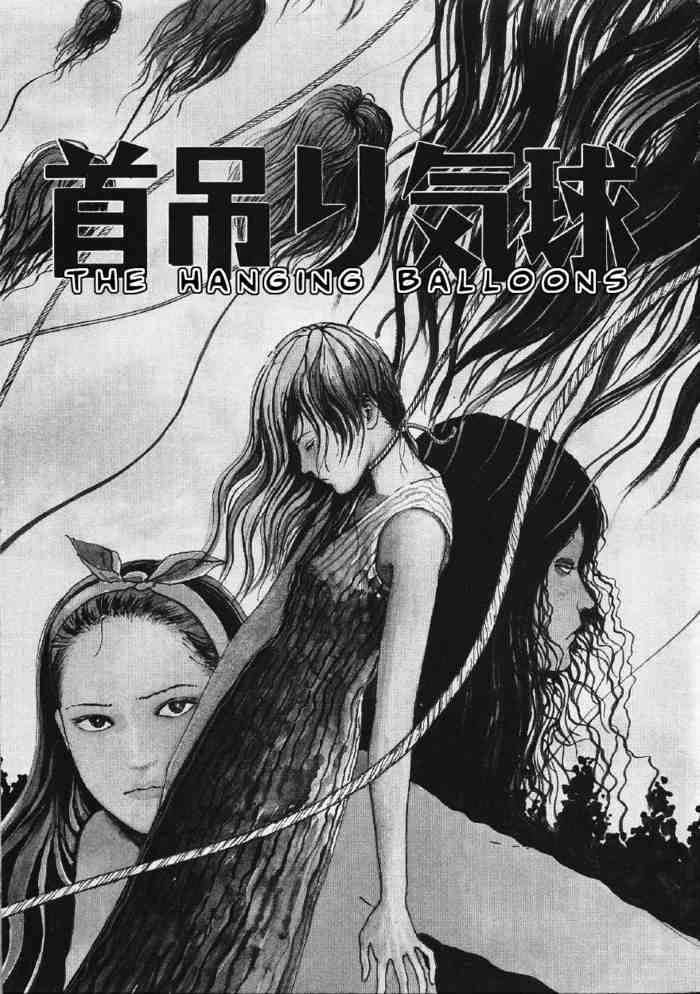
Hanging Blimp

A young woman is found hanging from a telephone wire outside her apartment. Soon after, a strange vision of her head is spotted floating over the night sky.


Her face was hanging up in the sky, right above that tree there.

A student explains the strange sights he saw — Hanging Blimp

What is Hanging Blimp about?

Hanging blimp felt like a waking nightmare to me. The other stories in the Shiver Selected Stories collection had at least some kind of explanation to them. However, with Hanging Blimp, there isn’t any explanation offered as to why strange, head-shaped balloons are coming to town. And this isn’t necessarily a bad thing either.

The strange occurrences of this Horror Manga begin when a well-known girl is found hanging from the telephone line outside of her bedroom window. What follows soon after is very strange indeed – her head, floating in the wind, is spotted by one of her school friends. And this isn’t even the strangest part about this story.

What is initially thought to be her actual head, is in fact a giant balloon that bares her exact image. As the story progresses we of course see more of these blimps and even find out what their true, horrific, intentions are.

From out of a dream

Perhaps the reason that Hanging Blimp lacks any solid basis for its events, is because it came from a dream of the young Junji Ito. In the commentary contained in the Shiver collection, he explains how a dream came to him before he became a mangaka, which led him to the images that you will find in this story.

I actually love how he hasn’t tried to force any kind of back story into this. Instead, he seems to have stayed true to his dream. Half of what I love about Ito’s work is the artwork itself and the unforgettable images he conjures up. And this story contains, what I would say are, some very memorable images indeed.

In Summary

This isn’t the scariest story in the Shiver Collection by a long shot. But it is one of the stories that made me think the most about it after reading. The appearance of these head-shaped balloons felt to me to represent the inevitability of death. I felt as if it was showing, very vividly, those people running from their own self-imposed doom. Without ruining the end of the story, I can’t really elaborate on these thoughts though.

Why not give it a read yourself, then we can have a chat and swap ideas below in the comments.

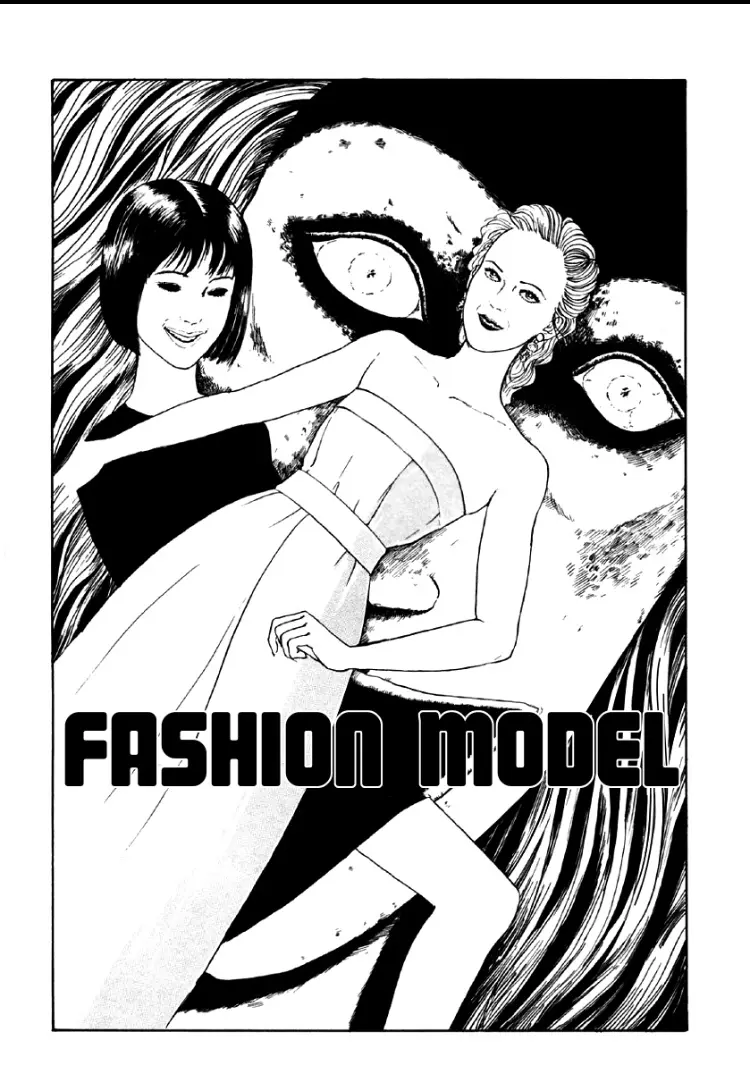
Fashion Model

After seeing the modelling photos of a strange — almost demonic — woman, a film student starts getting nightmarish visions of her. Not long after, that same model is hired on his current film and things begin to take a turn for the worse.


But, Oda… She’s been gradually transforming in my memory, so that now she’s basically a monster

Iwasaki talks about his obsession with the unknown model — Fashion Model

What is Fashion Model by Junji Ito about?

Iwasaki is a screenwriter, who is currently working on a script for his film-making friends. In a chance reading of a fashion magazine he comes across the portrait photo of the creepiest looking model you could ever hope to see. After this brief encounter with her visage, Iwasaki is unable to get her face out of his mind. Everywhere he looks; every time he tries to sleep – there she is, in his mind’s eye. And every time he imagines it, she becomes more and more distorted and demonic.

After some success with their film, Iwasaki and his friends begin casting calls for the lead in their next feature. And guess who’s profile picture comes up in the three envelopes they open? Yep – you guessed it – that creepy model whose name, they discover, is Fuchi. Fuchi is not picked for the lead, but is instead chosen for another part,  in the hope that her professional model prestige will help elevate their own status.

Fuchi seems immediately fond of Iwasaki and spends most of her time gazing across at him. During filming of this new feature they all head up into the mountains for filming and Fuchi is pretty much the butt of their jokes. Not just that, but she is shunned to the side in favour of the lead actress. But it isn’t long before Fuchi takes matters into her own hands and lashes out at those who shun and mock her.

Sometimes monsters need love too

Fashion Model introduced me to a sort of recurring character of Ito’s – the horrifying-looking model, Fuchi. She had previously featured in one of the stories in Souichi’s Diary of Curses: ‘Rumours’. then later she appears in a bonus short manga at the end of the Shiver Selected Stories collection in ‘Fashion Model: Cursed Frame’.

Fuchi towers over all other people around her, and somehow manages to keep it secret about how she is in fact a flesh-eating monster. It’s not until they are driving up to the mountains and Fuchi, trying to fit in with the others, begins laughing along with them. It is here that they all notice her huge set of layered teeth in her mouth.

Despite knowing where this story ends up, and what Fuchi ends up doing, I still can’t help but feel sorry for her. Just because of her looks, she is teased and critiqued behind her back. They just can’t believe how she has managed to become a model. And all because she doesn’t fit in with their typical ideal image of a model.

It’s because of other people’s attitudes towards her that I can’t help but root for Fuchi. The horrific things she ends up doing towards the end seem to be out of an unrequited love for Iwasaki.

In Summary

What I find most interesting with this horror manga is not the story itself, but rather the character of Fuchi. I actually feel as though Fuchi is the main character and not Iwasaki, as it first seems. It would be interesting to see more stories about her – or even have her mentioned, or ‘pass through’, future manga volumes by Junji Ito.

This was an enjoyable story from the Shiver Collection, which you should definitely consider buying today.

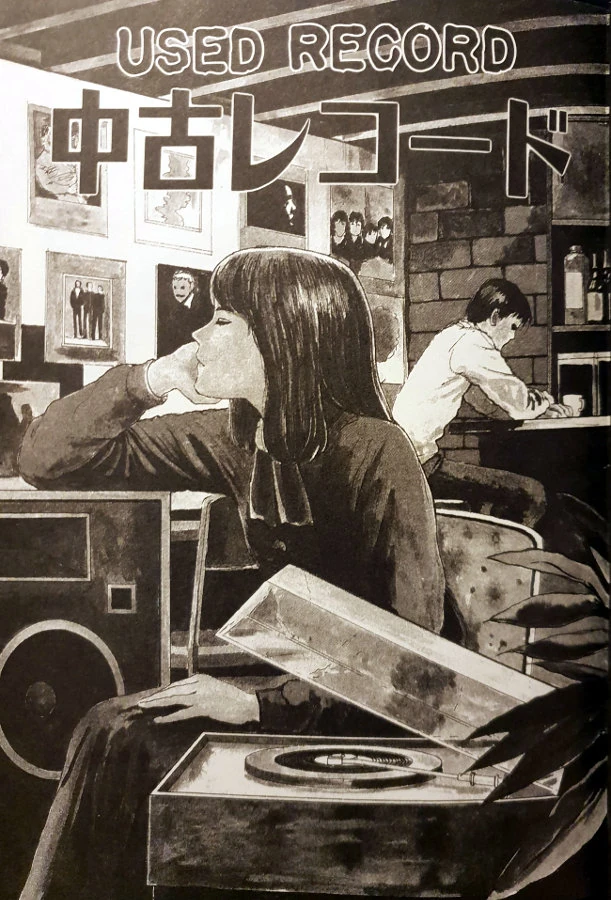
Used Record

A musical record has a strange, hypnotic effect on those that hear it. The music tends to be calm and soothing to those who listen. But it can also trigger a rage in those who will do anything to take it for their own.


I’ve never heard anything like it before. The girl’s voice sounds detached, but there’s a strange intonation somehow…

Nakayama describes the music from the record — Used Record

What is Used Record manga about?

Used Record is a short horror manga story from famed Mangaka Junji Ito. It follows a girl who sneaks an old record out of her friend’s house, after that friend refused to let her make a copy.

The song on the record tends to emotionally move all who hear it in a very deep and powerful way. You could say that they become obsessed with it.

The story takes place over the course of about an hour or so by my guess. What we see is the havoc that is caused between a selection of unrelated people that the main character, Nakayama, crosses paths with.

More haunting than horror

This short manga contains no graphic horror elements, save for the killing of one character with a rock. Instead it focuses more on the haunting aspects of the record itself. This untitled record could be considered a song from beyond the grave. As the short story progresses, we find out a little bit more about the origin of the record, which up till now has been a mystery.

Although the story is a short one, it still feels like it has a big history to it. I couldn’t help but allow my mind to wander around the mythology of it. How had this record made its way from its unusual recording to the main characters? If there were more recorded at the same time, where are they and what effects are they having on the people who have them?

In Summary

Used record is the first story in a collection of short stories by Junji Ito. This collection is called Shiver, and is available to buy here. Although Ito is in his prime with his more grotesque depictions of horror, this story is a good example of his ability to tell a spooky tale without all the gore.

Like with some of his more famous works, this one deals with the idea of obsession. Like the men who obsess over Tomie, or the people of Kurouzucho who become obsessed with spirals in Uzumaki. But unlike those larger overarching stories, Used Record tells it’s story in a very condensed format, ideal for a quick 5 minute read.

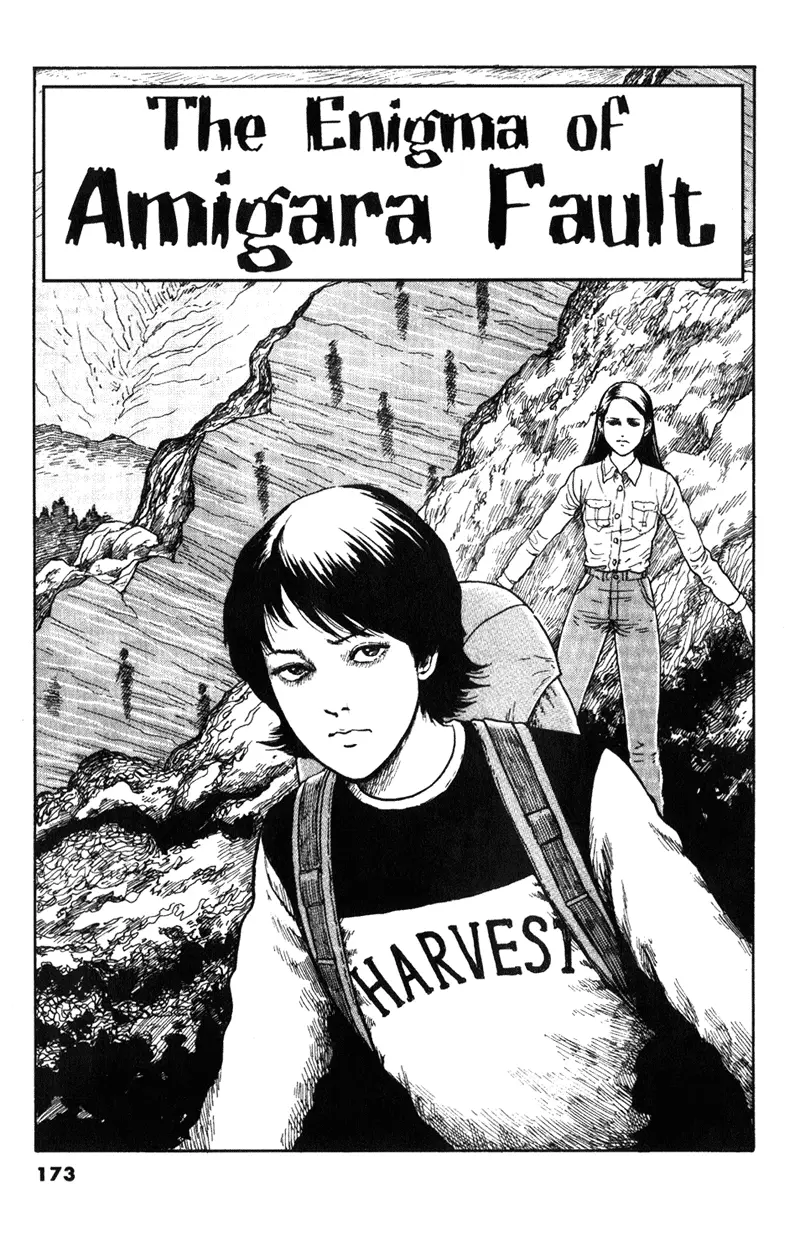
The Enigma of Amigara Fault

After an earthquake reveals lots of human-shaped tunnels within its fault line, people from all over are drawn to what they believe to be their own shape. But what will await them on the other side of these tunnels?


That hole was my silhouette! It was based on me. I swear, I’m serious!

Yoshida is convinced — Enigma of Amigara Fault

The Enigma of Amigara Fault is the first horror manga I ever read, recommended by a friend at work. Like with almost all of his stories, Junji Ito left me slightly haunted and disturbed when I finished this one.

What is The Enigma of Amigara Fault about?

It tells the story of two young people who meet as they climb up the Amigara mountain to see a recently opened fault line. On arrival they discover many other people who have had the same idea. They have all come to see the curious human-shaped holes in the recently-revealed rock face.

As the story moves forward, people start to find the holes that they believe have been specifically created for them. With each moment that passes, the inexplicable force that pulls them to their holes becomes too overwhelming. Those people are never seen again after entering their hole. At least not until a later discovery finds them as changed people at the end of their horrific destiny.

The horror is in the psychology of people

I believe that this story explores something that classical Freudian psychoanalytic theory refers to as the Death Drive. Simply put, this is a person’s unconscious desire towards self-destruction and death. Junji Ito, in his unique way, explores this through his characters being drawn towards their holes by their own curiosity. Their conscious minds will know that certain death will await them if they enter, but they do it any way.

Like with all of his work that I’ve seen, the art style is great and the stories have a dark Lovecraftian flavour to them. This story only takes about five to ten minutes to read, but is sure to leave a lasting mark on you.

Where you can read it

The Enigma of Amigara Fault was released as one of two extra stories in the Gyo collection, which I definitely recommend you buying. Not only will you be supporting the artist, but you will also get to read even more of his dark works.

Black Paradox

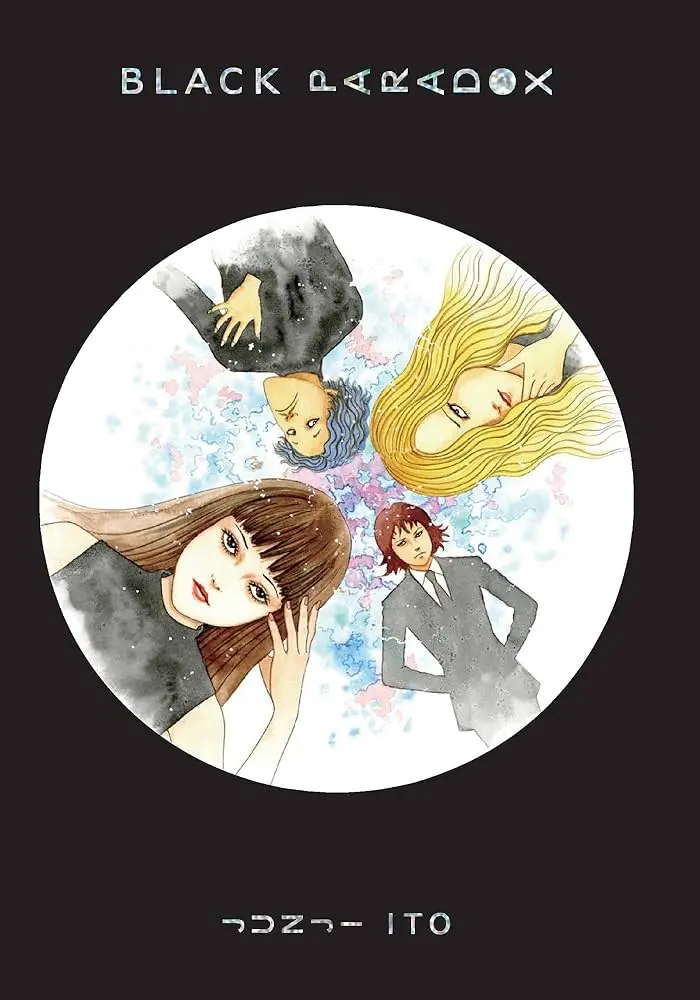
Black Paradox follows four characters who meet on a group suicide website. We join them as they are meeting in person for the first time, in preparation for performing their suicide together.

What is Black Paradox about?

Black Paradox follows four characters who meet on a group suicide website. We join them as they are meeting in person for the first time, in preparation for performing their suicide together. After their failed attempt, one of them starts regurgitating large shiny balls that he says are from a “Dazzling world”. Yer I know – stay with me.

As the story progresses, we discover that this Dazzling World is in fact the spirit world. The shiny balls that they are able to acquire from this spirit world become very sort after in the real world. They end up calling this material ‘Paradonite’. Paradonite has huge amounts of stored energy within, as some find to their horror.

As each of them learns their own access points into the spirit world, a doctor tries to capitalise on it. He helps them to fulfil their odd destinies as a way to help the future of the human race. Within his mansion, he sets up an underground lab where these events are studied and ultimately normalised.

Body Horror

Black Paradox is a good introduction to the body horror artwork that Junji Ito is famous for creating. It’s a bit milder than a lot of his stories, but there are still some things in here to keep the most ravenous of Ito fans placated.

Each of the four main characters accesses the spirit world through the manipulation of a particular body part. Piitan’s Pylorus, the body part that normally connects the stomach to the small intestine, connects him to the spirit world. The other characters later discover that they too can access that world, but in even more stranger ways.

One person’s face is their gateway and must have it removed before it destroys her. Another has a small tumour in their brain which must be removed. While a third accesses it through their own shadow. If I only say one thing about Junji Ito, it’s that he has an imagination like no other.

Are people just resources?

Interesting in Black Paradox is its looks into the darker sides of human nature. The side that will try to advance through the pain of others. Once the first of the four starts uncontrollably regurgitating the Paradonite, one of them immediately wants to use its high value for their own financial gain. Then later, once the doctor has them all under his roof, he uses them simply as a means to get hold of more of the material “For humanity’s sake”.

However, after seeing a vision of the world’s future, one of them learns how the continued mining for Paradonite is actually detrimental to the future of humanity – real people, specifically. But with the planet’s growing reliance on the material for its energy, the doctor keeps them on the path that may ultimately lead to destruction.

I couldn’t help but find parallels between our own world and the future Paradonite-dependant world of Black Paradox. The way in which the materials are used for the apparent greater good, but at the expense of many real people in the process of acquiring it. Whether such parallels were intended by Junji Ito I don’t know, but anything that sheds light on such things is a good thing in my mind. I wont spoil the story by saying just how they are affected, but affected they are.

In Summary

Black Paradox was a very enjoyable read for me. Although not specifically a horror manga story, it does have many elements and drawing styles that veer on that side of the road. It felt to me to be like an origin story for this group of four, who ultimately refer to themselves collectively as Black Paradox. I’d even go so far as to say that this was Junji Ito’s ‘Fantastic Four’.

She is a Slow Walker

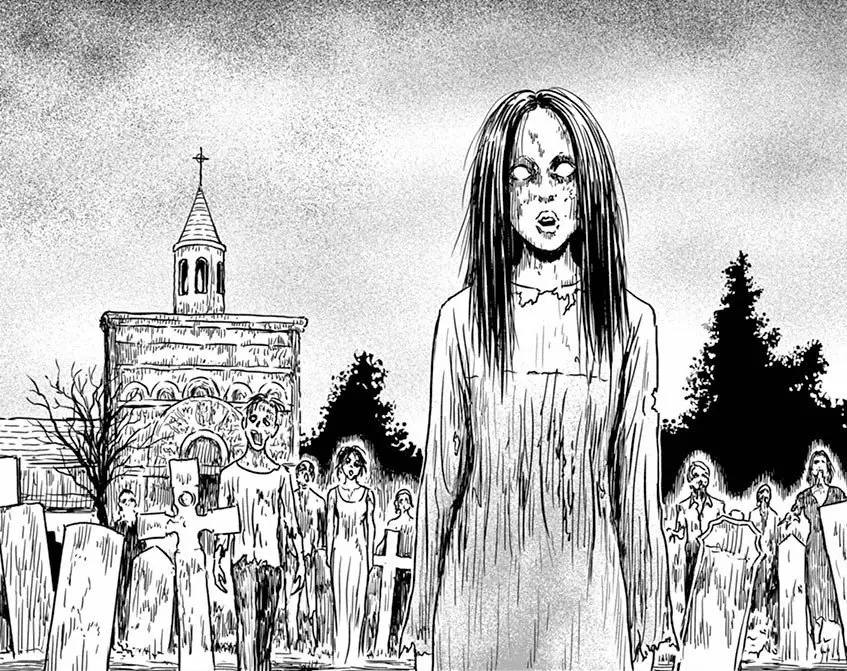
Junji Ito takes on the zombie genre in this short story. It centers around a couple trapped in their apartment during a zombie apocalypse. The manga is actually set in the same universe as the ‘I am a Hero’ manga series, and is from an anthology manga called ‘8 tales of the ZQN’.

She is a Slow Walker — Synopsis

The story centres around Shinichi and his girlfriend Yumi. We join them in mid argument about what the best type of zombie is — slow or fast. Shinichi is of the opinion that faster moving zombies are the better ones. Whereas Yumi is a firm fan of George A. Romero and favours the classic slow-moving zombies. Not two seconds after storming out in anger, Yumi runs back in, having just been bitten by a zombie.

It turns out that the world outside has quickly evolved into chaos, with the infected attacking the living right outside their door. They lock themselves inside in the relative safe, but Yumi has already been bitten and they both suspect she’ll soon turn.

Once she inevitably turns, luckily for Shinichi, she is of the slow-moving type. She would be happy with herself with that, I think. But she’s not only slow, she’s extremely slow; taking ages to move even an inch. After Shinichi has a close call after overestimating his own safety, the two of them reach their final destination. The ending is a complete left turn and I couldn’t help but smile at it.


Finally I get to board up the windows. When the zombies come, the zombie buffs will be the last standing!

Shinichi seems almost excited about the impending doom — She is a slow walker

Part of the I am a Hero universe

When I first read ‘She is a Slow Walker’ I thought it was it’s own story in it’s own little universe. But I have since discovered that it is, in fact, part of the much larger universe from the manga ‘I am a Hero’.

‘I am a Hero‘ is a long-running zombie manga series by Kengo Hanazawa. It is about a man finding himself trying to survive in a post-apocalyptic zombie world. I haven’t read it yet but I was vaguely aware of it before hand.

What Junji Ito’s story does is focus in on one couple and their particular story, within the overarching ‘I am a Hero’ world. Presumably this is separate from the main narrative of ‘I am a Hero’. However, I haven’t read it yet so can’t confirm this. But what I can confirm is that this story is freakin’ awesome.

In Conclusion

It takes a special kind of person to find grotesque gore in fiction sometimes funny, and I think I may be one of those people. Although things don’t go great for our characters, this story does have a great level of humour, especially in it’s closing scene.

This one isn’t for the faint of heart, but it’s also not one of Junji Ito’s most graphic works. ‘She is a Slow Walker’ is a fun little story that you may not have come across from Ito before now. Not only does it have the power to gross you out, but it may just have you laughing out loud at those very same panels.

You can find this story in the book “8 Tales of the ZQN“. However, if you don’t read Japanese, you can rad a translated version here. (Please always support the author where you can buy purchasing his works where available — Thank You).

Hellstar Remina

A scientist’s daughter is inexplicably linked to a mysterious, newly-discovered planet in the night sky. But when the planet is seen moving at great speeds, and with deadly consequences, the link with the young girl is brought into question by the public.

What is Hellstar Remina about?

One evening, while watching the night sky, an astronomer discovers a mysterious new planet that seems to have just appeared from nowhere. He soon believes that it has appeared from out of a distant wormhole sixteen light years away. He names this new planet Remina, after his only daughter — his sixteen years old daughter.

The daughter Remina, who coincidentally is the same age as the planet – sixteen* , becomes an overnight star due to her new namesake. Fan clubs are popping up all over the world and people scramble in the streets just to see her. The world is obsessed with Remina!

*The new planet is sixteen light years away, which means it takes the light sixteen years to get to us. This means that at the point of it appearing to the astronomer, sixteen years would have passed since it actually appeared. So it must have appeared around the time of his daughters birth.

In the night sky

While the world is obsessing over the girl, the new planet is observed as taking a very strange, irregular path across the distant sky. Not only that, but the stars it seems to come into contact with disappear as the planet approaches. It isn’t long until the planet seems to stop still completely, which leads the astronomers to hypothesise only one thing. They believe that this can only mean that the planet is now heading straight for Earth.

As the planet becomes larger, as it approaches the Earth at speed, the population’s thirst for the girl’s love quickly becomes a thirst for her blood. She becomes the sole target of a full-on witch hunt. The people believe that killing her will stop the impending doom that the new planet threatens them all.

What follows is an extremely harrowing experience for Remina and the few who are still trying to keep her safe. The growing hordes of angry people stop at nothing to get hold of the girl and hold her accountable for their fate.


Remina looked me right in the eye! Remina knows about us, knows we’re here! That’s why… it’s coming for us…

One scientist is driven mad by the new planet — Hellstar Remina

A microcosm of organised religion

What I found most interesting about Hellstar Remina, was the people’s actions and beliefs towards the girl. When the new planet was a thing of awe and wonder, she was revered as such. However, once the planet seemed to pose an immediate threat, they directed their fear and anger directly at the only thing they could seemingly control — her. All of this because her father named the planet after her.

There is no evidence to support a connection between Remina the girl and Remina the planet. However, cast-iron beliefs are held that destroying her will ultimately destroy this evil planet. Even within the mobs of people there is a small sect of believers, dressed in spiritual robes, who believe that sacrificing her in a particular way will stop the planet.

To me this story is like a microcosm of organised religion, taken to the extremes in a way that only Junji Ito knows how. That’s not to say that I believe organised religions are necessarily bad – that’s not what I am saying. What I am saying is it’s interesting how an organised group of people come together under a common belief, to perform an act that they all believe will save them. Even though there is never any proof in this — they are all acting on faith.

Mob Rule

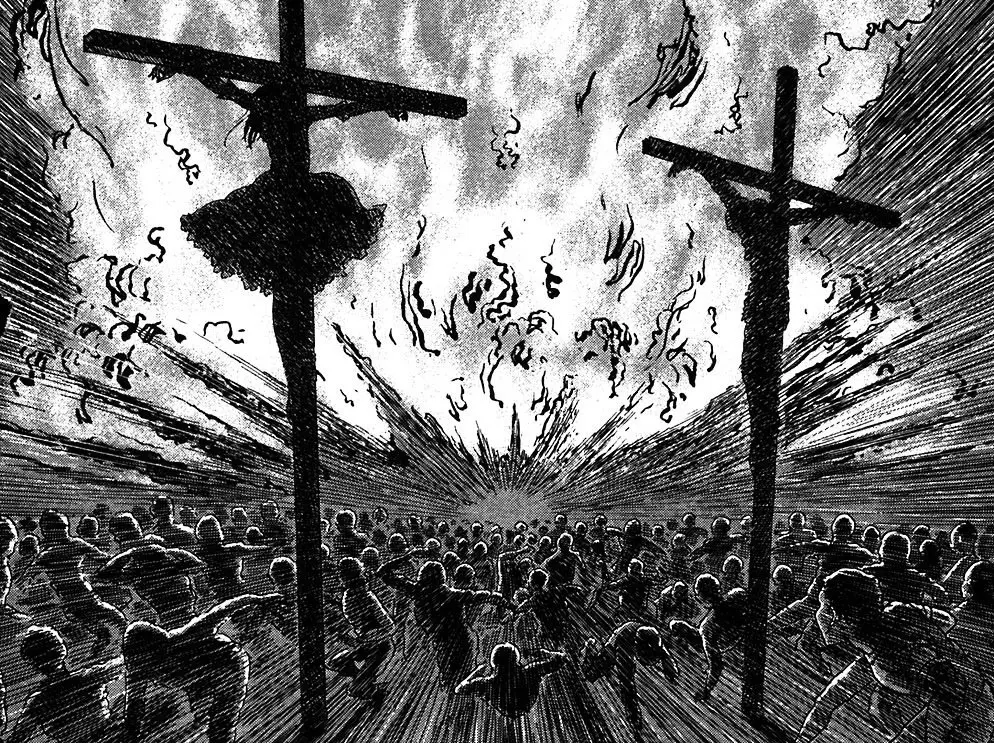
The most shocking things in this story are not necessarily what the mysterious planet does, although it does get pretty crazy. For me, the most shocking actions come from the people and what they put this girl through. Remina gets beaten, dragged through the streets and strung up on a crucifix — as shown in the opening pages.

Whether they love her or hate her, people’s emotions are always taken to the extremes by those who are near her. It’s often hard to remember that Remina is a sixteen year old girl. But when you do, it makes her struggle all the more harder to endure at times.

Summary

Another great story from Junji Ito — one of my favourite in fact — not that I’ve ever found a bad story of his. There is less on the usual body horror front and more of a look at the human psychology surrounding the story’s events.

A world-eating planet and the things people will do to try and stop it based on nothing but their faith.

The story is told in 7 chapters and the official collection will also include a favourite one shot story of mine: Army of One.

This book would make an incredible introduction to Junji Ito’s work if you are new to him. Or perhaps you have read it unofficially online and would now like to own your own official copy. Then you could experience Hellstar Remina in the way it was always meant to be.

Army of One

Army of One is a one shot manga featured at the end of Junji Ito’s five-part series Hellstar Remina. It tells of the mysterious stitch murders and turns a popular horror trope on its head.

What is Army of One about?

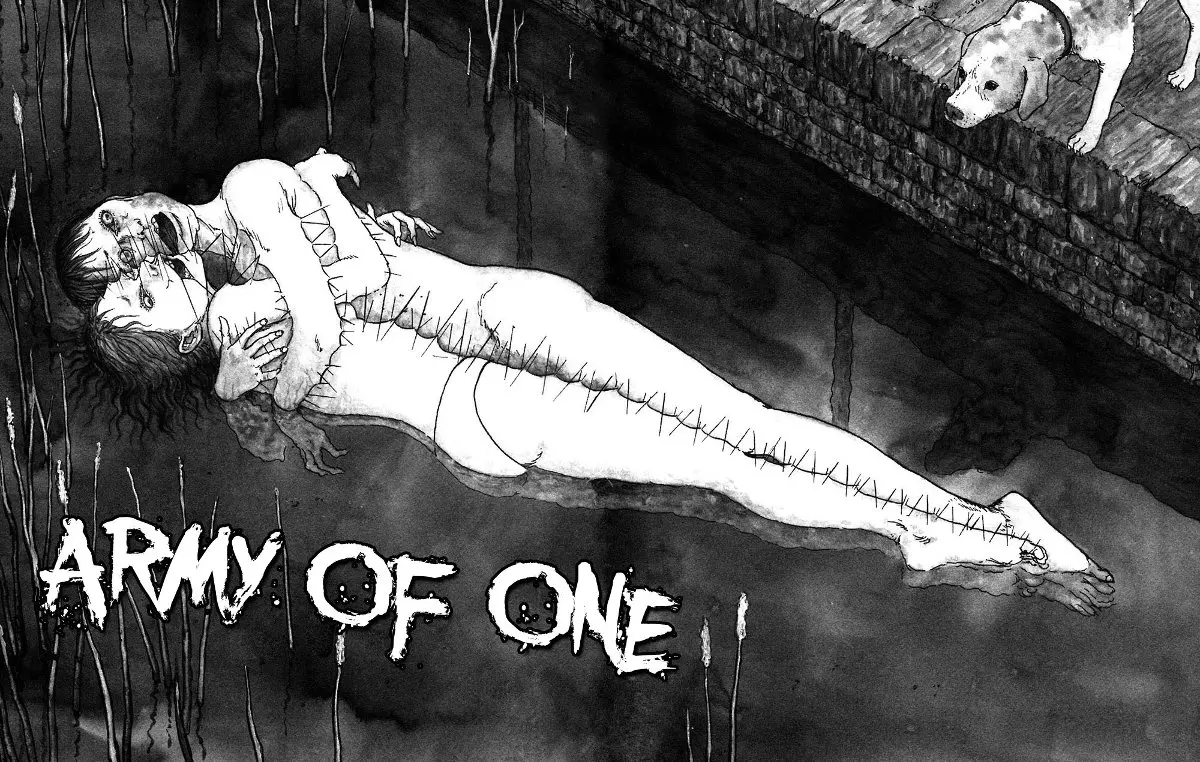
Army of one follows some friends trying to organise their school reunion in the midst of a new killing spree. The killing spree involves victims being found in different places all sewn together. The number of people found sewn together grows exponentially as the story quickly moves forward.

Michio is a boy who hasn’t really left his bedroom for seven years. He prefers the solitary lifestyle in his family home. When he is called upon one day by a girl from his school year, he reluctantly begins mingling with his school peers once again – albeit briefly. The girl, Natsuko, is organising their school year’s reunion and coming of age party, which by definition will involve a large group of people. This can only end badly.

It isn’t long before some of those friends start to become victims of these “stitch murders”. People quickly realise that the safest place to be is alone.


Gather round, people. All together now! Nobody likes a lonely only. Everyone’s your friend, everyone’s your friend. When you join hearts and sing – Army of one, We’re an army of one!

The mysterious radio broadcast

An interesting spin on a horror trope

Normally in horror, of most kinds, the safest place to be is together. As soon as someone goes off alone, more often than not, they are picked off. Army of One spins that on its head, however, in that the victims are all people who go off in groups. It is actually safer to be alone in this world, which I think would have interesting consequences in the wider world had this been a larger story.

It is touched upon with the mention of phones soon to be cut off and networks potentially going down. If everybody was afraid to be in groups just imagine what that would do to society. Families would start becoming separated; people would cease going to work; people would be afraid to even go shopping. The world would go to hell.

In Summary

This is one of my favourite stories by famed Mangaka Junji Ito. It has great pacing and creates an interesting world, which I’d have loved to see expanded upon. That being said, Ito does use the lesser page count – thirty seven pages by my reckoning – to great effect. He gets straight into the situation of the “Stitch Murders” and escalates it at a really good pace.

You’ll never want to be in a group again.