David Peach

Page 74 of 211

Posts by David Peach

23rd May 2019

Futon

What is Futon about?

This is a very short Horror Manga story. It shows a young couple who live in a small apartment together. The Husband, Tomio, refuses to come out from under his blanket on his futon. The Futon is his bed.

He warns his wife of what he calls the “Dark Nature Spirits” in the room. She believes none of it until she actually gets a similar experience for herself.

But are these visions simply a manifestation of some extreme anxiety that Tomio is experiencing? Or are they as literal as he makes them out to be?

Short and Sweet

The story is very much to the point, yet no less charming than Ito’s other tales. Futon doesn’t try to fill out unneeded pages just to increase the count. Junji Ito has created a short horror story and isn’t afraid to just let it be what it is.

I absolutely love the big ceiling reveal that shows the monsters that Tomio is convinced he is seeing. The detail in that double-page spread is so great and a testament to Ito’s gorgeous horror style.

I was fine too with the vague back story that Tomio gives to his wife about the apparent witch. Some eerie tales can stand up for their strangeness alone, without the need for a comprehensive explanation. I think Futon is one such story.

In Summary

Despite it’s super short length at just eight pages, this is one of the Stories by the legendary Horror Mangaka that I remember more often. That double page spread is one that lives in my memory as vivid as the page itself.

I just hope I never get to see such visions off the page.

20th May 2019

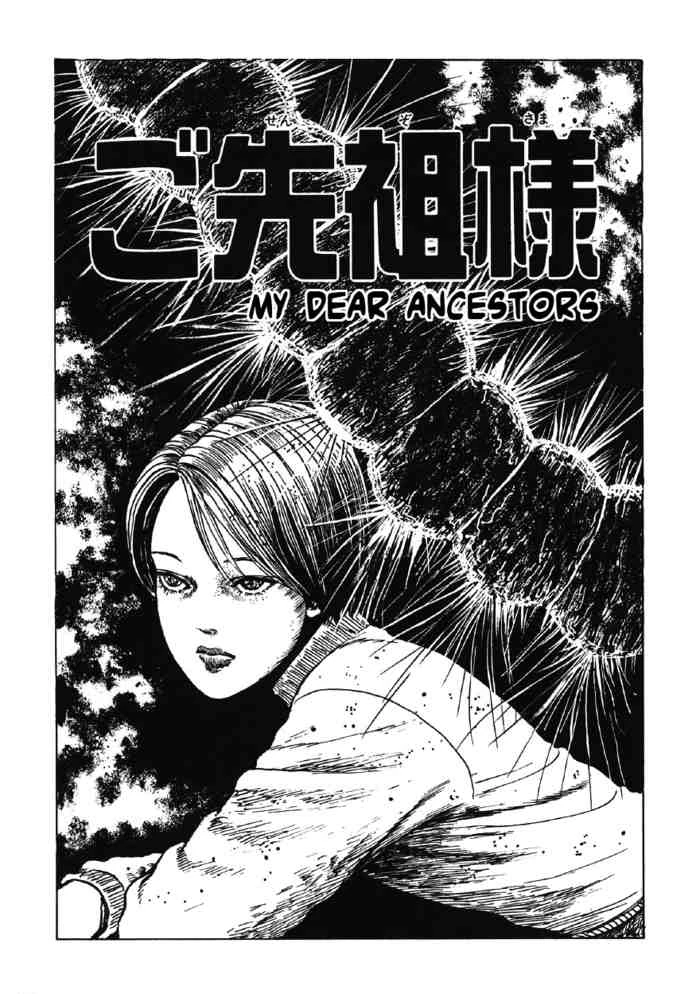
Honoured Ancestors

What is Honoured Ancestors about?

We join a young couple as the boy, Makita, is walking his girlfriend Risa back to her house. Risa has recently lost her memory and nobody can work out how. She then begins to get increasing anxiety, along with nightmares of a giant caterpillar invading her bedroom at night.

Perhaps something in her lost memories can give a clue as to the origin of these disturbing visions?

Makita seems almost happy that Risa has lost her memory because, as he puts it, they can experience all of the “first times” they had together once again. One such “first time” that they relive is them both going round to Makita’s home, where he lives with his sick father. However, upon meeting the father, thoughts and feelings begin to stir within her.

It is in this house where the mystery of her lost memories will be unravelled. And there will be one such “first time” that she will wish would never happen again.

Head to head with the past

In the author’s notes for this story, Ito explains how he saw the big reveal of this story in his mind before any of characters or plot came to him. This is a very interesting way of working, starting with the imagery and working back from there, and I wonder how many other stories of his began this way.

Honoured Ancestors is one of those stories that has so much more going on underneath its surface than what we see. We are shown the current generation of the family, Makita, along with the end of his father’s life. But what about the many ancestors that came before? How did they all trick their partners into marriage and carrying on this family line in such a twisted way?

I really enjoy how many of Ito’s stories like this one trigger these thoughts in me. I love wondering about events that happened so completely out of the scope of the current story, yet would still have had an effect on the story’s world.

In Summary

I enjoy this story a lot. While not being a favourite of mine, it still holds a high place for me. I find myself imagining the lives of those ancestors and just how they came to begin the connection to their past in this way.

You should definitely pick up Junji Ito’s Shiver Collection and read this story – see what thoughts it sparks in your own imagination.

16th May 2019

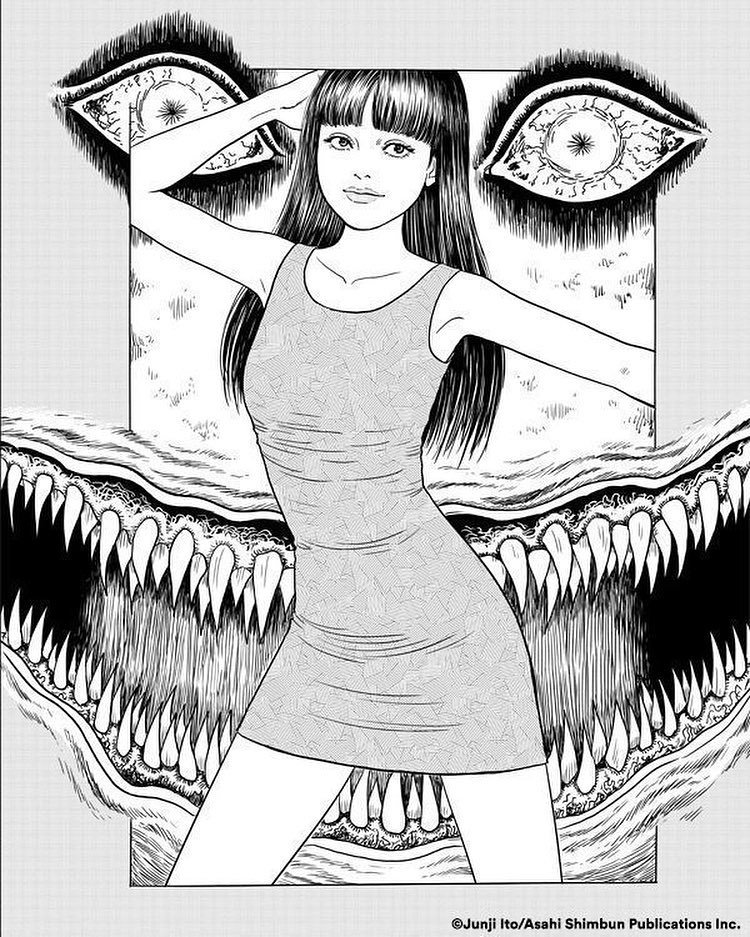
Fashion Model : Cursed Frame


Ever since I was little, I’ve been afraid of having my picture taken. Or more precisely, of my body being fragmented by photos.

Amy is a fresh young model with a strange phobia — Fashion Model: Cursed Frame


In this bonus story from his Shiver collection, Junji Ito delivers an incredible depiction of a woman’s strange fear made flesh. And in the most iconic of ways too. One of the things about Junji Ito that is so great, is his big reveals that he often gives us. More often than not I don’t expect them. However, in hindsight they seem to be the only logical outcome.

Logical in Ito’s world at least.

What is Fashion Model Cursed Frame about?

In Fashion Model: Cursed Frame, we are reunited with a favourite amongst Ito’s Characters – Fuchi. Fuchi is the shark-toothed, seven-foot-tall fashion model with a taste for human flesh.

The modelling industry in Junji Ito’s world is very cut-throat indeed.

Amy is a new model on the scene, who agrees to work for a company on a single condition – that they only ever photograph her full body. Never head or body shots. The idea of having parts of her body missing from photographs completely freaks her out.

It is the kind of fear that feels right at home in Junji Ito’s world. And I could just tell it wasn’t going to end well for her.

But how will Amy cope in a profession where people don’t stick to their word. An industry that is often depicted as being ruthless and super-competitive. Not to mention the demonic Fuchi lurking about; on the prowl within those choppy waters of the fashion world.

In Summary

Cursed Frame is only seven pages long and comes as a bonus in the back of the Junji Ito Shiver Collection. But despite its short length, it packs so much into those pages in a concise, and suitably violent way.

I was really impressed at how he gave us a character with a very specific fear – and one I’d never heard of before either – and managed to bring her story full circle to face that fear head on. I thought Fuchi was an excellent conduit for the idea too – her presence alone brings a sense of dread and foreboding.

I really wish Fuchi was more of a long-standing character – she’s so much fun to watch.

13th April 2019

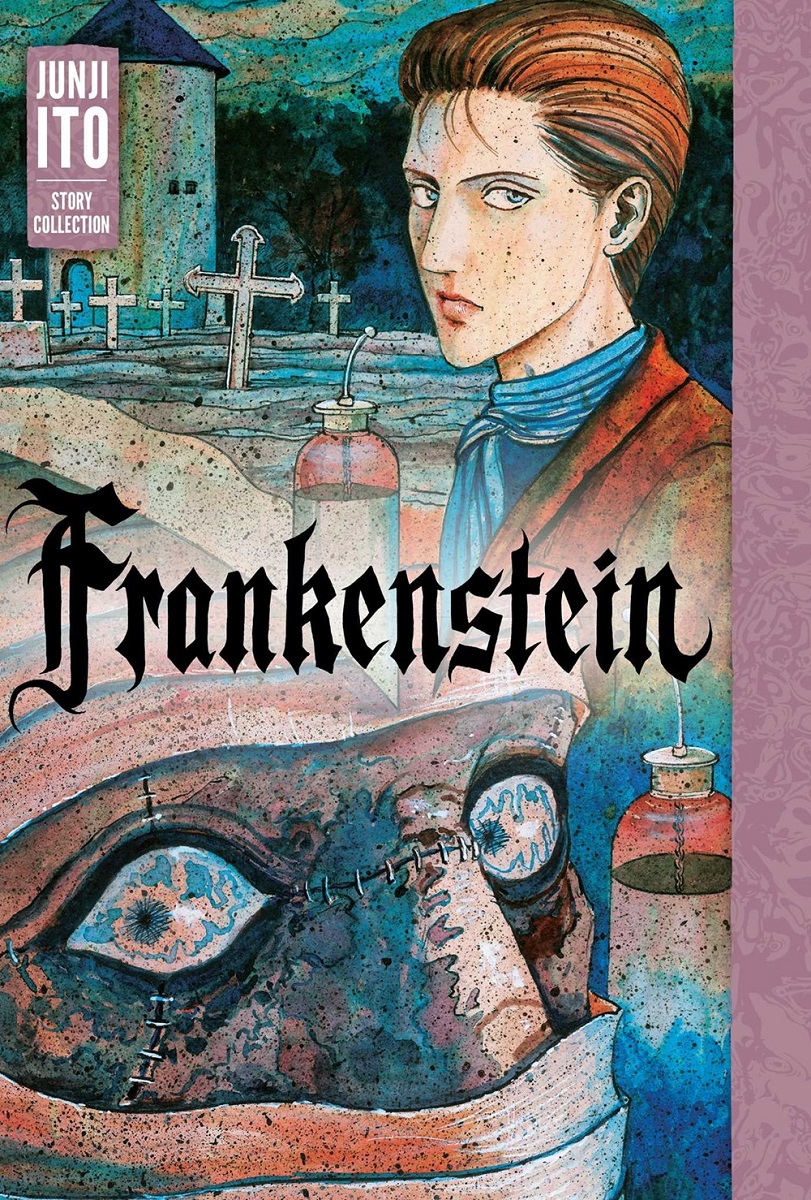
Frankenstein


You seek for knowledge and wisdom as I once did… it is only natural for a man to pursue knowledge. Until a few years ago, I burned with the same ambition as you.

Victor Frankenstein begins to tell his story — Frankenstein


Mary Shelley’s Frankenstein is perhaps one of the most well-known horror novels ever written, if only by name. In his horror manga of the same name, Junji Ito tackles the mammoth task of bringing this novel into his disturbingly visual world.

Frankenstein is such a huge part of popular culture, however, I have to be honest and say that I have never read Frankenstein the novel; Ito’s version is my first time experiencing the story itself. I knew the rough story – the Doctor creating the monster, but I needed to check the major plot points on the novel’s Wikipedia page after reading this manga, just to see how close it was. 

I am happy to report that Junji Ito’s version of Frankenstein stays very true to Mary Shelley’s novel. Even the narrative structure of telling the story from the perspective of the ship’s captain is maintained. But I can’t give a full comparison as I am not familiar with the source material.

What is Frankenstein about?

During an expedition to the North Pole, in the pursuit of fame, the captain and his crew see the towering figure of a stranger in the distance. This is followed by them finding a man out in the freezing cold all alone and in need of shelter — a man by the name of Victor Frankenstein. Victor is in pursuit also, only his pursuit is of something far more tangiable than fame. His pursuit is of a creature he decsribes — the figure that the crew saw previously.

Suffering from exhaustion and cold, Victor tells the captain his story and how he came to be out here in the wilds of the North Pole. We learn of Victor’s childhood and family, and his growth into the scientist he became. He also recounts the terrible deeds he performed in the pursuit of greatness in his unique field of study.

He goes on to tell the Captain of his creation, the Frankenstein’s Monster, and how it came to escape and ultimately wreak havoc on his family. We bear witness to the awful deeds that the monster does, and Victor’s seemingly never-ending pursuit of it. Victor’s story ultimately brings us back to the current time on board the trapped ship and to the final moments of realisation of both the monster and the creator alike.

My thoughts

As I said before, this was the first time experiencing the full story of Frankenstein. I mean, I’ve always known about the characters and the creation of the monster through parodies and tv series tie-ins like Penny Dreadful and Carry On Screaming, but never the original story.

I am glad, in a way, that reading Junji Ito’s interpretation of it was my first taste. It meant that I got to experience all of the story’s twists, turns and moments of horror, only via the expert artistry of the horror mangaka himself. That’s not to discount Mary Shelley’s talents; I’m just saying that this was a very different way to be subjected to it for the first time.

I thought that the intricacies of the monster himself were put across very well too. It’s moments of horrific brutality; it’s moments of love towards the family whose home he hides in; and the moments of vulnerability where he pleads for his creator to build him a mate – a mate who won’t cower and scream at the mere sight of his face. Someone he can love — and receive love in return.

I can’t say that this is my favourite Junji Ito story, but nonetheless I thought he did a great job working within another writer’s world and the limitations that it can bring. His artwork is on point as always, with the depiction of both innocence and horror so expertly portayed, sometimes through the same character.

I’ve heard said before that if you are going to remake or cover someone else’s creation, whether a film, song or whatever, you should either strive to improve on the original or at least make it different. Whilst I can’t say whether or not he improved it, I do think he brought something completely different. Perhaps even bringing this classic horror story to the eyes of people who may never have ended up reading it — like me.

In Summary

Whilst I can’t recommend reading this version of Frankenstein before the original, nor should I, I do feel that it is definitely a Manga worth reading at some point. I’m not sure about any different experiences I may have had, had I have read the novel first. The big difference that does spring to mind is that all of the visuals would have been created in my imagination – making it even more scary perhaps?

But as a standalone horror manga, regardless of the source material, Junji Ito’s Frankenstein is a great read in my opinion and worthy of your time.

7th April 2019

The Silent Scream (Hammer House of Horror episode 7)

Lay the right bait, and almost any creature will walk in of its own accord.

Martin Blueck to Chuck Spillers

The Silent Scream may be one of my favourite episodes from the Hammer House of Horror series. It doesn’t contain any deaths – not of people anyway – and doesn’t really have much in the way of gore. But where this episode excelled for me was on the psychological level.

Plus, escaped nazi war scientists always bring with them a particular brand of horror for me. Memories of American Horror Story‘s Dr. Hans Grüper.

Main Characters

What is The Silent Scream about?

Chuck Spillers, played by the excellent Brian Cox, is fresh out of jail and back into the loving arms of his wife, Annie – played by TV actress Elaine Donnelly. Whilst in prison he was visited regularly by an older man, Martin Blueck – played by the ever-charming Peter Cushing. Blueck would talk with him and give him money for his time. Although this initially seemed very generous, it is soon apparent that this was just bait; grooming him for what was to come later.

True to his word, the day after his release Chuck goes to visit Blueck at his place of work – a pet shop in the centre of town. He goes to say thank you to this old man whom he now considers a friend. Blueck then offers Chuck a job, only in a secret back area of the shop.

In the back is a large warehouse where Blueck keeps all manner of dangerous and exotic animals in cages. These include Lions, Tigers, Panthers and Baboons. What is perhaps more surprising for Chuck, is the fact that the cages all have their doors open.

Blueck explains his ambitions to create zoos without bars, where animals can walk freely and still be of no danger – something that Chuck sees the benefit in having just been released from jail. These animals have been conditioned to know that the open doors do in fact contain an electrical field that will instantly kill any who attempt to pass through. Only after the power is turned off, and the loud buzzer is rang, is it safe to briefly step out to get their prepared food.

Chuck dutifully tends to the animals each day whilst Blueck is away, as he is paid to do. However, Chuck’s attention is continually drawn to a safe housed in the wall on the second floor of the warehouse. He knows he has the skills necessary to open such a safe and obtain the potential fortune within. But his greed may well be his undoing.

Prisons without bars — my thoughts

Imprisonment is a big theme in this episode: Chuck has just been released from jail, where he found the confinement particularly hard to cope with; the animals being housed in their open cages with fear of death on exit in Blueck’s warehouse; and even the limitation of locations in the episode. For the most part we are either in the Spillers’ kitchen or Blueck’s shop.

On writing this it even occured to me that perhaps the prisons that these character’s carry within them are of importance too. The way that Chuck’s desire for more leads him to crack open the warehouse safe, causing his own imprisonment by Blueck.

A Leopard sits in its cage

Or even the way that Annie is still bound to Chuck with love, even after his greed and criminal actions lead directly to his being imprisoned. And her being bound to him, attempting his rescue, leads to her own capture by Blueck.

And finally Blueck himself. His desire to experiment on Chuck and Annie, to create a prison without bars, ultimately leads to the overlooking of his most dangerous captive animals – sealing his own fate

I found this episode to have a good amount of tension — the most poignant moment just has to be that scene with the puppy. Although not gory, it still manages to leave it’s trace across the rest of the episode. I didn’t find the lack of blood and conventional Hammer Horror deaths to be a thing I particularly missed either. I mean, a bit of gore can be fun alot of the time, but in this story the suspense and tension were balanced enough to carry it on their own.

The ending was suitably nightmarish for me, although I could see it coming a mile off. This was simply due to a previous scene with Blueck driving away from a location in his car. It was a shame, because had it have been edited in a slightly different way, I believe that the closing scene could have been much more of a surprise twist.

Summary

I loved this episode. The over-arching theme of imprisonment and being beholden to the desires we carry within us was an interesting one. Some of these episodes can be a bit hit and miss for me, but there are enough good quality episodes, like The Silent Scream, that really hit the mark.

I enjoyed seeing the legendary Peter Cushing in the role of Blueck. I was so used to him portraying the side of good, like as Van Hellsing in the Dracula films and Sherlock Holmes in The Hound of the Baskervilles. So it was a real treat to see him in such a dark role.

(I know he played Grand Moff Tarkin in Star Wars too, but I’m only thinking of the more horror-themed films here)

Also Brian Cox playing Chuck Spillers. He has one of those faces that I knew I recognised – I just couldn’t remember from where. Then I read his filmography and saw, amongst many other entries :

1995 Braveheart Argyle Wallace

Instant recollections of the opening scenes from Braveheart hit me. That’s where I know him from!

2nd April 2019

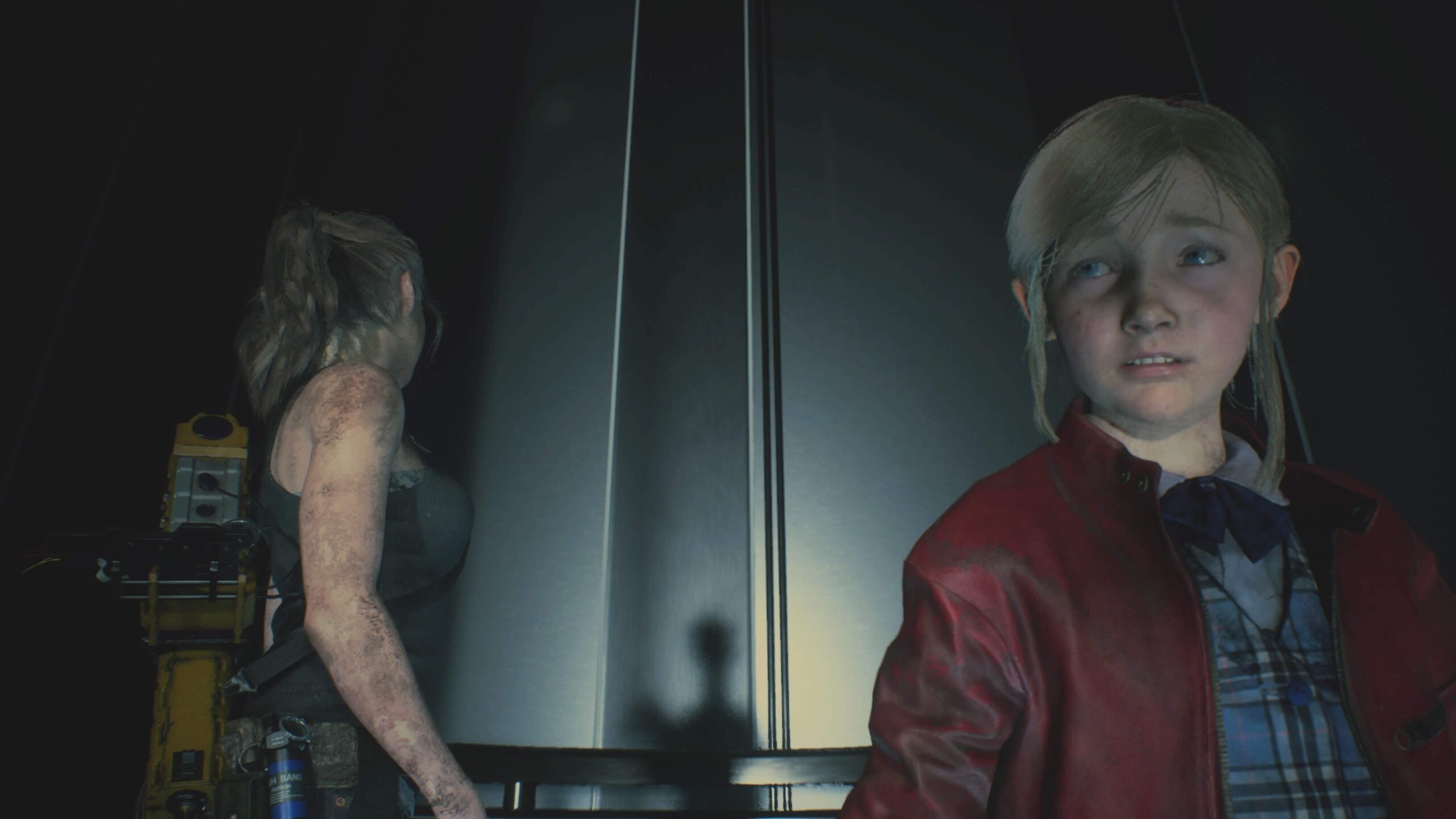
Claire and Sherry take the lift

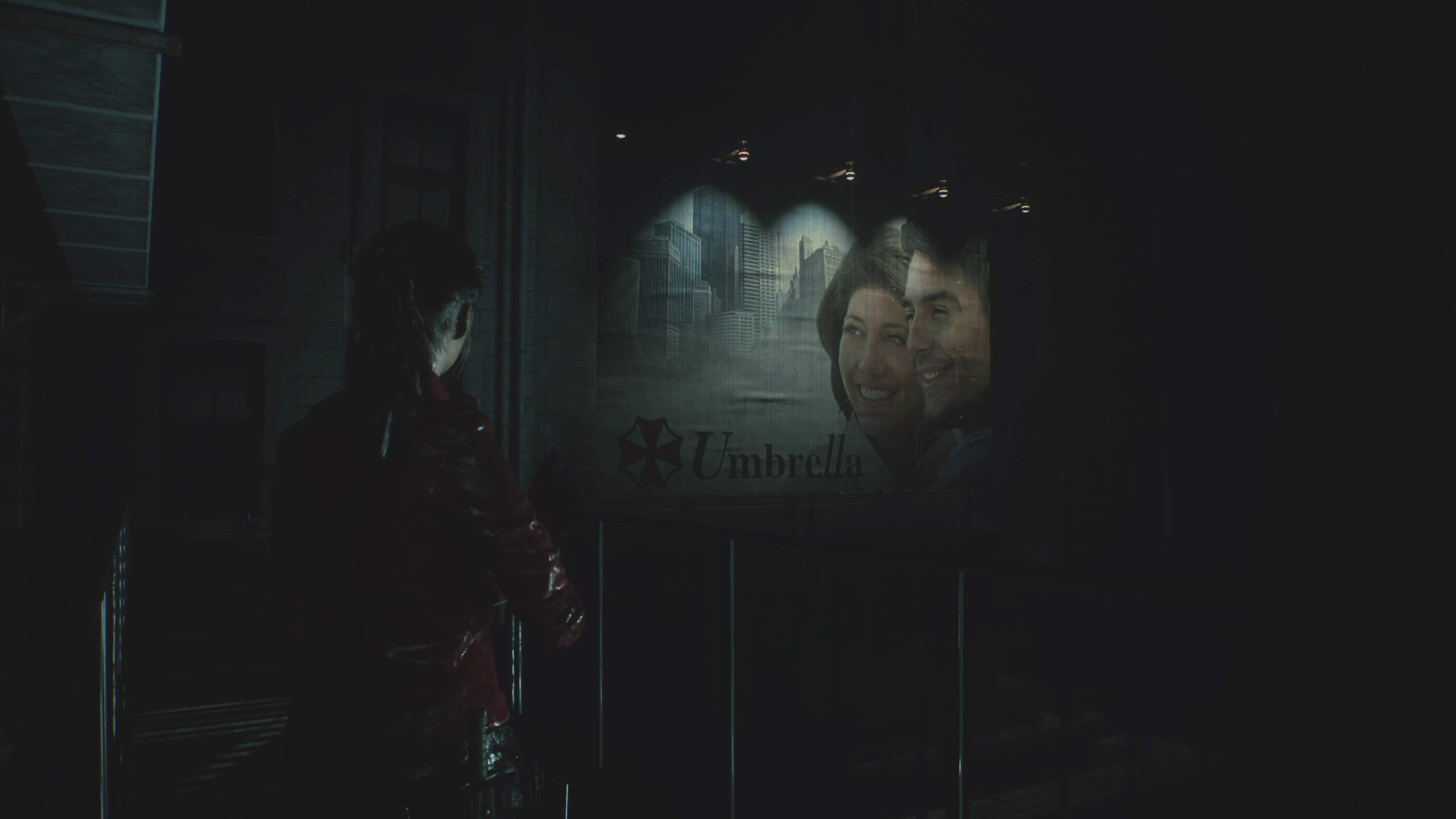
Umbrella advert

Who’s there?

Claire!

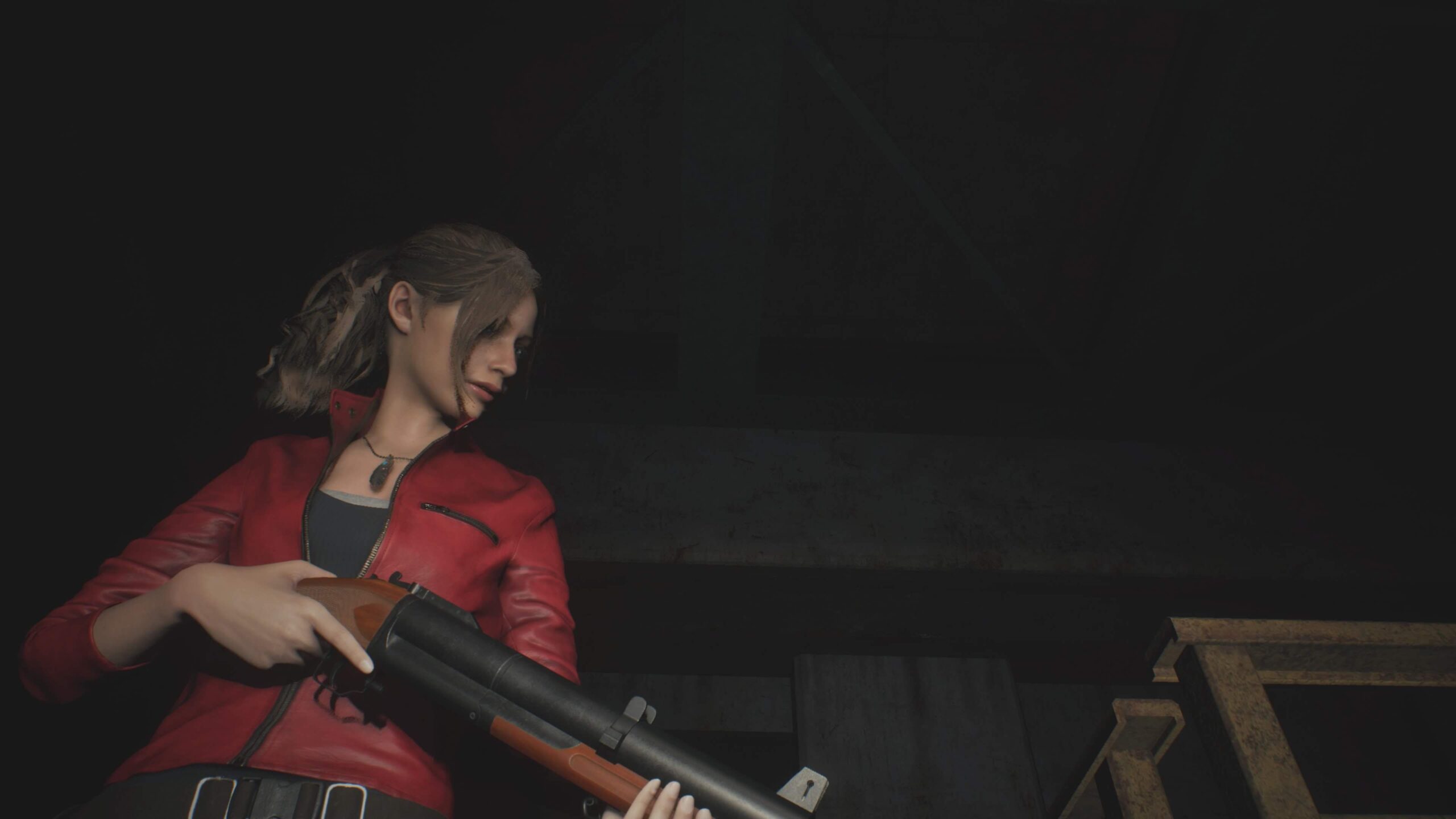
Claire and her launcher

A Wry Smile

21st March 2019

What Is the Fediverse?

The word Fediverse comes from the joining of the
words “Federated” and “Universe”. It encompasses web-based social
software that is inter-operable through open protocols1 and gives each person full control over their own website and data.

(of a country or organization) set up as a single centralized unit within which each state or division keeps some internal autonomy.

federated, from Oxford living Dictionaries

Where are we now?

Modern social technology, for the most part, revolves around huge
central areas of power. Places like Facebook, Twitter, Snapchat, Google
have become household names. But these sorts of companies are not
conducive to a free and open world.

These central powers monopolise much of the communication between
people and fully own and control the data that they collect from said
communications.

Not only do they own that data, but it is their core business models
to learn as much as possible about us and monetise that data for their actual customers – their investors2.

Not only is this dangerous to a free and open world, and along with
it freedom of speech, but it also strips people of their control over a
huge portion of what it means to be a human being on the planet Earth
today – their personal data.

Data about people, is people.

Aral Balkan, Cyborg Rights Activist

Huge leaps in the right direction

The Fediverse tips the current digital social system on its head, by
enabling people to take back ownership over their digital selves. With
certain services that are available, you3
have the ability to choose alternatives to mainstream technology – you
have the ability to take back control, as these federated services have
decentralisation built into their core.

This decentralisation removes the giant centres we’re used to seeing,
leveling the playing field and giving each person an equal place from
which to speak.

Yes, you would need to set up your own installation, or have somebody
with the know-how you trust do it for you. But once you have that
freedom with your very own digital home – that you truly own and control
– it’s very liberating.

Let’s use a service called “Mastodon
as an example here. Mastodon is often described as being a federated
Twitter, which it is, but I think it’s important to really hammer home
what that actually means. And the principles I will describe here apply
to many other types of federated social sites. For example: Peertube – a federated youtube contender; and Pixelfed – a federated Instagram clone.

It’s also worth saying that when we say something is a federated version
of a current site, that current site has zero to do with them – it is
just a way for people to grasp what the given federated site offers by
way of general features.

Mastodon, for example

Mastodon is not just a single website. It is an open source project that can power anybody’s website.

Me trying to explain mastodon in a single line.

If I have my own installation of Mastodon (each installation is known as an Instance,
by the way), then I have my very own Twitter-like website where I can
share my thoughts and images with anybody who would care to read them.
And if you had your own instance of it, you could do the same.

For example, if:

We would be at completely different web addresses. However, we would
still be able to communicate with one another, thanks to the way that
mastodon works. (In comparision, everyone who uses Twitter goes through https://twitter.com.
So talking to one another there takes place in Twitter’s house, as it
were). With federation, the communication is done so between the people
involved; from their own homes.

What makes the Fediverse federated, is its ability to enable people to have their own self-controlled instance of a service and still be able to connect with other people as we have come to love4 about Twitter et al. And imagine that, but with thousands and thousands of instances – all able to talk to one another.

It’s going to be a long hard road out of our current situation, but it all starts here – in the Fediverse.

And it doesn’t stop there.

Cross-service communication

A big tennet of federated services, is that there are no lock-ins to any particular one.

Earlier on I mentioned some other federated services – Peertube (for
video sharing) and Pixelfed (a federated version of Instagram). Let’s
suppose that I have a friend who has an instance of Peertube, where they
share video reviews on, let’s say the Australian soap “Neighbours”. And
let’s suppose I wanted to get updates from that friend, but I only have
my own Mastodon site. Wouldn’t it be cool if I could follow his
Peertube site, but from my Mastodon?

You already know what’s coming doing you? 😀

You can!

For example, I can follow a content creator from their own instance
of Peertube, and have their messages come through in my mastodon feed.
This is the exact opposite of how we are currently used to seeing online
services. The big social networks have lock-ins to their own walled
gardens – the Fediverse is a huge open park where people can choose to
travel through it any way they wish.

The beauty, and extra special powers, of the fediverse is that it
isn’t limited to a single service. The underlying protocols (ways that
the sites communicate) are designed in such a way that they can be used
by any service that wishes to implement them. And those messages still
go from person to person – there is no central authority to trust and /
or fear.

Joining the Fediverse

Right now, it is hard for none-tech people to get up and running with
their very own instance of a chosen service. This is the fediverse’s
biggest hurdle right now in my opinion, but it is still early days and
hopefully things will get easier with time.

That being said, there are numerous community-driven instances of
services that allow you to register on. This does go against that idea
of self-control and ownership that I have been talking about somewhat.
However, we all have to start somewhere and joining a popular community
instance is a great way to try it out and even discover new friends.
Plus, once you are comfortable in the Fediverse, there is nothing
stopping you from starting your own instance later on down the road,
should you have the technical knowledge or someone to help you do so.

If you would like advice, I’d be happy to help where I can. Email me at mail@davidpeach.me.

I hope you, after reading this, will give the fediverse a try for
yourself. This is freedom of speech at its best on the web right now,
and I encourage you to give it a go for yourself. And if / when you do,
come and say hello: https://mastodon.davidpeach.me

In Closing

The fediverse is an agreement that the people who use social services
online, indeed the entire web, should be in full control and ownership
of 100% of their data. They should be free to be who they want to be,
without being beholden to huge conglomerates whose only bar for success
is profit for renting access to peoples private data.

Come on over and say hello.