So it turns out that The Last of Us Grounded mode is actually pretty tough. Loving it! It’s put the scares and danger back into a game I’ve gotten used to completing.
David Peach
Thoughts on the film Joker
Joaquin Phoenix is probably my favourite representative of the character of Joker that I’ve seen on screen.

–is it just me, or is it getting crazier out there?
Arthur Fleck speaking with his Social Worker
Joker is a phenomenal film, released in 2019, that explores a possible origin story for Batman’s famous arch-nemesis.
I can’t believe that I was sat right where I am now as I write this, considering not going to see Joker for my second time at the cinema. This film is absolutely stunning for so many reasons — some of wish I will try and put over to you here.
Please note however, that this isn’t a typical “comic book film” — it’s so much more than that.
I should also say that there are some spoilers ahead.
A Stunning Performance
Joaquin Phoenix is probably my favourite representative of the character of Joker that I’ve seen on screen. He isn’t playing a huge comic book, larger-than-life character. Instead he is playing a grounded human being, living in almost-poverty, dealing with a whole manner of uphill battles.
At front and centre of his performance was the mental health issues that Arthur Fleck (later to become Joker) is dealing with throughout the film and his life. Joaquin’s portrayal of Fleck with these issues was incredible – I couldn’t help but imagine the amount of energy that this role must have taken day to day to get to what we see on screen. Nothing seems to be held back – even the look of his malnourished body from his weight loss for the role stands as a testament to his dedication here.
What I found the most profound though, was the way that Joaquin managed to blend comedy and tragedy into the same performance, so naturally. I remember a key scene where his boss at the clown hire company calls him to see him, essentially blaming him for getting beat up by a gang of kids. Fleck forces himself to ‘put on a happy face’, which for a second is passable as such. But as the camera moves in closer, I could see and feel the anguish and anger building up in him. That one moment made him worthy of his 2020 oscar win for best actor, in my opinion.
The Music is perfect
I discovered a new instrument when hearing the soundtrack to Joker: the Halldorophone. The instrument is similar to a cello, I think. It is so haunting, so intense and so desolate-sounding, that it perfectly represented the mental isolation that Fleck experiences on the busy streets of Gotham City. The film’s composer, Hildur Guðnadóttir, has created a sound that managed to cut down to Fleck’s core and expose it to the audience.
When I think about the score, I go straight to a bathroom scene where Fleck slow dances by himself having just killed the three suits on the subway. The way that the instrument filled the cinema as Fleck seemed to be slipping into something a lot more comfortable, mentally speaking, created a single moment in cinema that I will never forget.

Along with Hildur Guðnadóttir’s incredible score, are the use of some classic songs at key moments in Fleck’s transformation. Frank Sinatra’s “That’s life” seemed to perfectly capture an acceptance that life can beat you down at times. But it’s done with it’s calm, almost relaxing, accompaniment that it fit so well into the Joker’s embracing and enjoyment of using his experiences to fuel what he is to become.
I said, that’s life (that’s life), and as funny as it may seem
That’s Life – Frank Sinatra
Some people get their kicks
Stompin’ on a dream
But I don’t let it, let it get me down
‘Cause this fine old world it keeps spinnin’ around
I loved the use of Rock ‘N’ Roll (Part 2) too. After living with Arthur and experiencing his hardships first hand up to this point, this song was almost like a release of some of the tension. In fact that seemed to be exactly what Arthur was experiencing too as he danced along to it down them well-trodden steps in one of the film’s most iconic scenes. But even from that up-beat foot-tapping song, Hildur’s excellent score blends back in and takes over to remind us that despite this ‘happy face’, at his core is still that desolate and broken man.
An unlikely hero
Joker is probably one of the most unlikely heroes of all of the villains I’ve come across in films. Up until now that is. But of course, that is completely dependant on your perspective. In all of the Batman films, Thomas Wayne was this beacon of hope for the city who, after his death, became a catalyst for his son Bruce to pursue his own destiny as the Batman. But when you come at the story from the side of the “villain” (quotes intended), it makes things not quite so black and white.
Arthur Fleck comes from the impoverished side of gotham, where the people are pretty much forgotten about and frowned upon by the rich society. There is a moment when Thomas Wayne appears on television, to the excitement of Fleck’s mother, to be interviewed about the three killings on the subway.
From what we saw on that train car, we know that those three men were complete scumbags – harassing an innocent woman and then beating on Arthur. Yes, Arthur’s reaction was extreme. But after a life of being beaten on by his peers and society around him, and with the only means of self-defence to hand, is it really that surprising that he reacted how he did?
But then to have Thomas Wayne, the poster child for success and wealth in the city, give the following statement, it puts him in a completely opposing light to how I’d seen him previously: “And until that jealousy ends, those of us who’ve made a good life for ourselves will always look at those who haven’t as nothing but clowns.”.

And until that jealousy ends, those of us who’ve made a good life for ourselves will always look at those who haven’t as nothing but clowns.
Thomas Wayne, interviewed on TV
I think it was inevitable that there was going to be some civil unrest on the city streets. But it just so happened that Arthur was at the right place at the right time to kick start the revolution and lead it into a new era for Gotham.
Births and Deaths
There was a moment at the end that caused my mouth to drop with excitement and awe. It was just at the height of all of the rioting, as Fleck (almost fully Joker) is being broken out of the police car following his television appearance. We see Thomas and Martha Wayne leaving the theatre with their son Bruce in tow. I thought – hang on, this seems familiar.
As they run down a side alley to escape the escalating violence they are approached by one of the extreme protesters in a clown mask. This immediately sent me back to being about ten years old again seeing Tim Burton’s batman – “You ever dance with the Devil in the pale moonlight?”. The attacker in Joker didn’t say this, as it wasn’t the same character as in Batman (In Batman it is a criminal called Jack Napier who becomes the Joker). But it was no less powerful for me to see this scene play out at this film’s climax.
But the most powerful moment for me was the awakening of Joker on the bonnet of the police car — after having been broken out, and the deaths of both of Bruce Wayne’s parents. Although the metaphor is pretty obvious I just wanted to note it down: It is the perfect representation of the births of both Joker and Batman happening at the same point in time.
Joker is raised up and revered as the leader of a crusade for the beaten and down-trodden in society. At the same time the seeds of what Bruce is to become are planted at the very moment that his parents are taken away from him.


In Conclusion
I have only seen a couple of different versions of the Joker, from the New 52 DC comics to the classic Jack Nicholson perforce in Tim Burton’s Batman. And from Heath Ledger’s iconic performance back to Batman: The Animated Series. But I have to say that so far, I think that Joaquin Phoenix’s portrayal has easily become my favourite — of the ones I’ve seen on screen, anyway.
His version is so grounded in reality, so much so that this didn’t even feel like a typical ‘Comic Book Film’ for one second as I watched it. This is a psychological thriller through and through – and a damn excellent one too.
Joker does have it’s funny moments, but they are sometimes hard to spot — depending on your sense of humour. But if you are inclined towards darker comedy, there are some pretty funny moments in here.
Related Links
Composer Hildur Guðnadóttir’s website.
‘Joker’ Originally Had A Very Different Bathroom Scene – from SlashFIlm
Every Song On Joker’s Soundtrack. – from Screen Rant
Patio
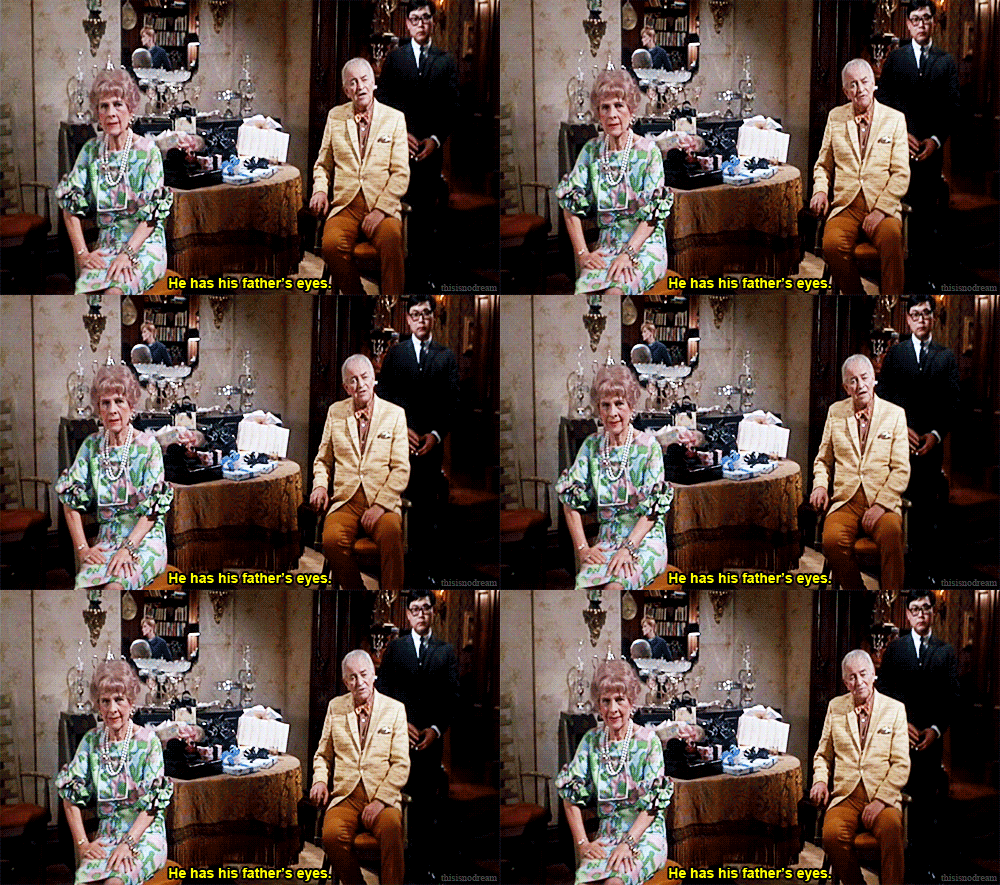
Thoughts on Rosemary’s Baby
The haunting story of a woman carrying her first child, struggling to keep it all together. However, she begins to suspect outside forces are working against her and her family’s safety. An absolute horror classic.

What have you done to it?! What have you done to its eyes?!
Rosemary Woodhouse
A Horror Classic
Rosemary’s Baby is one of those classic horror films that I have known about for years, yet never got round to watching it. But I decided it was time to sit down and finally watch it — and I was so glad I did.
I can’t offer any in-depth analysis or deeply philosophical film essays on this, or any other films I watch to be honest. What I will do though, is give my thoughts and feelings about it.
From it’s opening shot across Manhattan, this film felt very much like a Hitchcock film to me. Which was an instant hit for me. However, this isn’t a Hitchcock film – it was in fact made by Roman Polanski. In fact, it was the first film of Polanski’s that I have seen, that I remember.

Sustained terror and paranoia
I absolutely loved the feeling of sustained terror throughout most of the piece. It has been referred to as a “horror film that contains no horror”, although I would argue that the scenes depicted in Rosemary’s “nightmare” on baby night got pretty bloody scary. The images in that nightmare brought up the thought of witches in my mind. And there’s something about witches in older cinema that just creeps me out — even the film version of Roald Dahl’s “The Witches” still haunts me to this day.
But for most of the film, the kind of horror that it uses is that of paranoia. The paranoia that builds up in Rosemary as the baby gets closer and closer to it’s due date, and the paranoia I felt towards the excellent cast that surround the actress playing Rosemary, Mia Farrow.
Even in their very first scenes, I could tell that certain characters were dodgy. But I’m not sure whether that is because I am watching it 52 years after it’s release – with, no doubt, many known films I had seen having being inspired by it.
Ruth Gordon and Sidney Blackmer were great as Minnie and Roman Castevet. They have a certain friendliness and over-familiarity that I couldn’t help get the heeby jeebies from.


A false sense of security
Something else occurred to me whilst writing this post too. I don’t remember there being any dark, particularly scary moments, except for the nightmare I mentioned above. The film takes place mostly in the day time with well-lit rooms and colourful surroundings — I absolutely loved the colours and the choice of camera used here.
The people that are around Rosemary seem to be always brightly coloured too. It’s almost like the film is trying to put you at ease with it’s colourful, welcoming surroundings whilst the possibility of a dark, sinister underbelly becomes more and more likely as it moves forwards.
On looking back, it really did feel that the film was easing me into a false sense of security.


In Conclusion
As so many people have said before me, this really is a horror classic. It stands the test of time for me as both a psychological horror and at times a dark comedy — especially with those scenes involving those over-familiar neighbours of theirs.
I’d urge you, if you haven’t already, to give this film a watch. Don’t leave it as long as I have. It has scenes that I’m still thinking about now — days after I actually saw it. And I don’t doubt that I’ll be thinking about them again in the future.
External Articles
Kate Middleton Accidentally Wore a Dress from Rosemary’s Baby for Prince Louis’ Debut
Is Mother! a Rosemary’s Baby Remake? Is This Poster a Red Herring? Why Do I Suddenly Care?
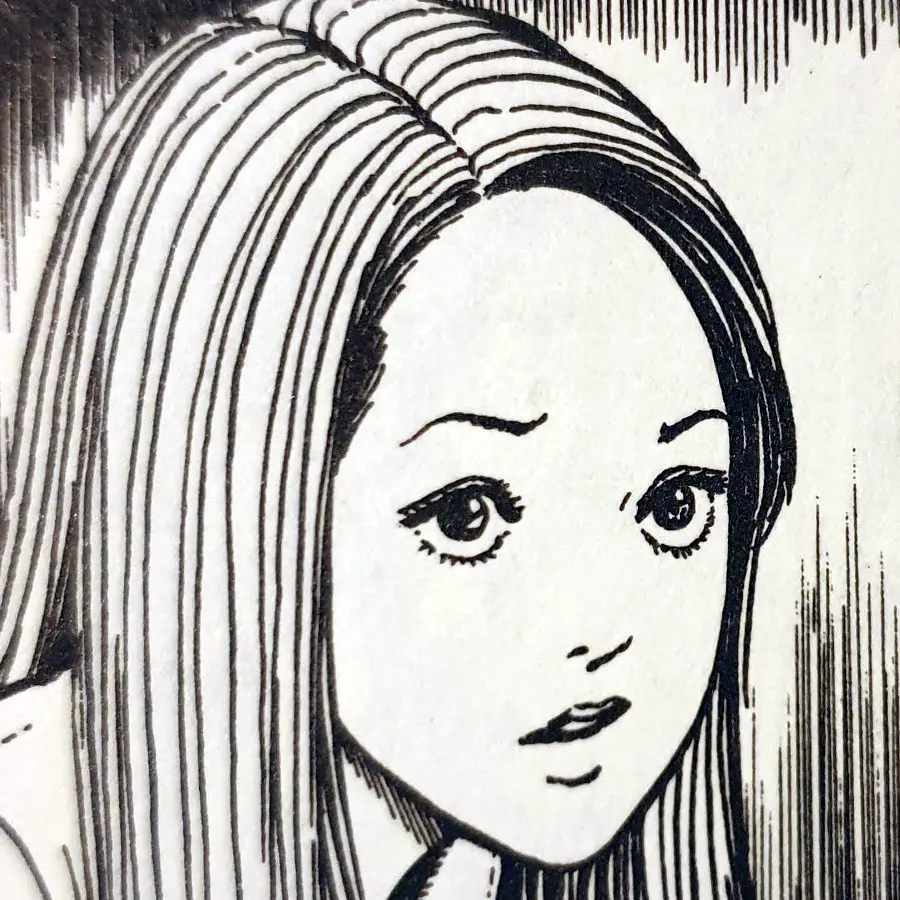
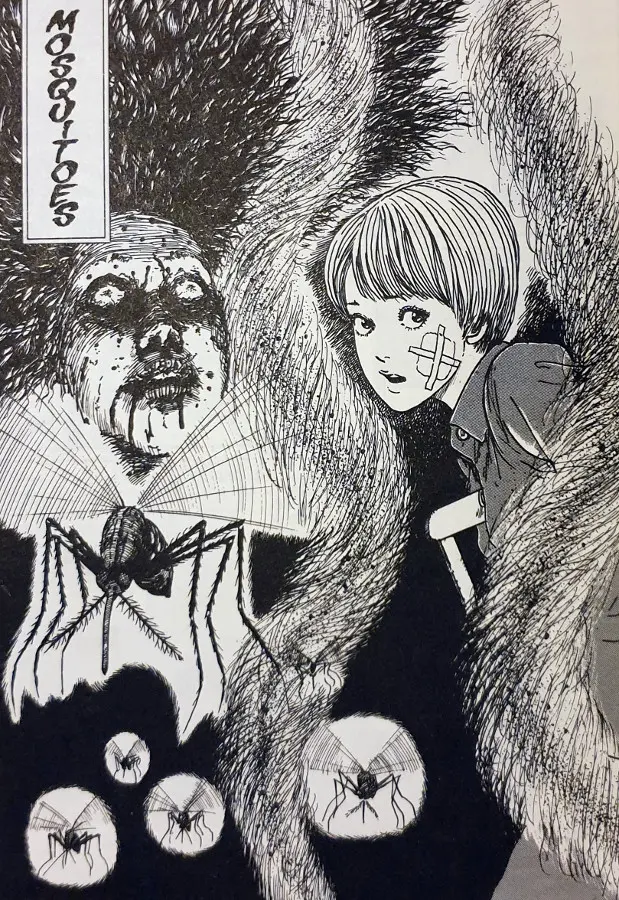
Mosquitoes (Uzumaki part 10)
In mosquitoes, Kirie must survive an horrific night in the hospital when she comes face to face with blood-thirsty pregnant women.
They needed raw blood for their babies!
Kirie must survive a blood-soaked nightmare
It is Summer time in Kurouzu-cho and Kirie Goshima is in hospital. She is still being treated for the wounds that she incurred when she and her brother escaped from the Black Lighthouse in the previous chapter. But what is not helping her heal, is the number of mosquitoes that have increased in numbers recently.
In fact, during a quick walk around the outside of the hospital Kirie and her friend notice a huge, thick collection of mosquitoes all buzzing around in a tight circular motion. Her friend tells her about how this is called a “Mosquito Column”, and occurs when all of the males get together to try and attract a mate. But within seconds of them seeing the column, things go from curious to horrific very quickly.
Kirie and her friend discover the body of a pregnant woman in the hospital grounds, with a face contorted into a look of pain and a body mutilated and full of holes. Soon after, more and more pregnant women get admitted to the hospital, as a result of mosquito swarm attacks. One of which is Kirie’s cousin Keiko.
As the story moves forward, more strange and horrific things begin to occur within the walls of the hospital. But what will Kirie and her Keiko do when they find themselves at the centre of a hellish nightmare?
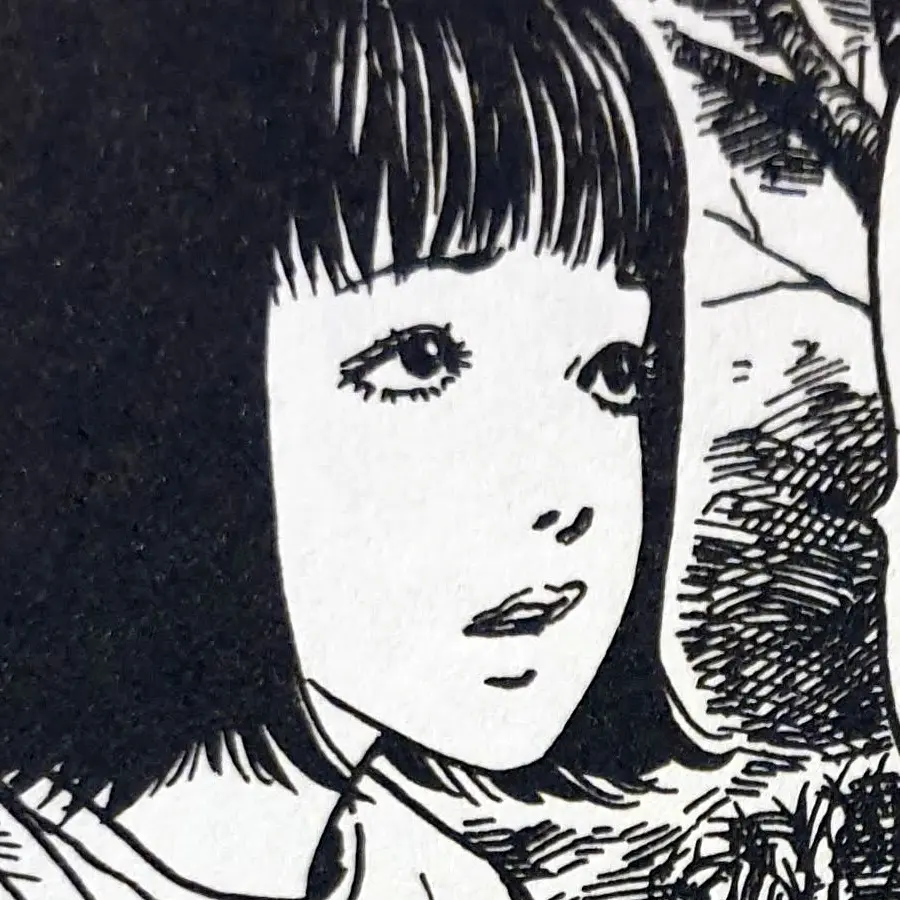

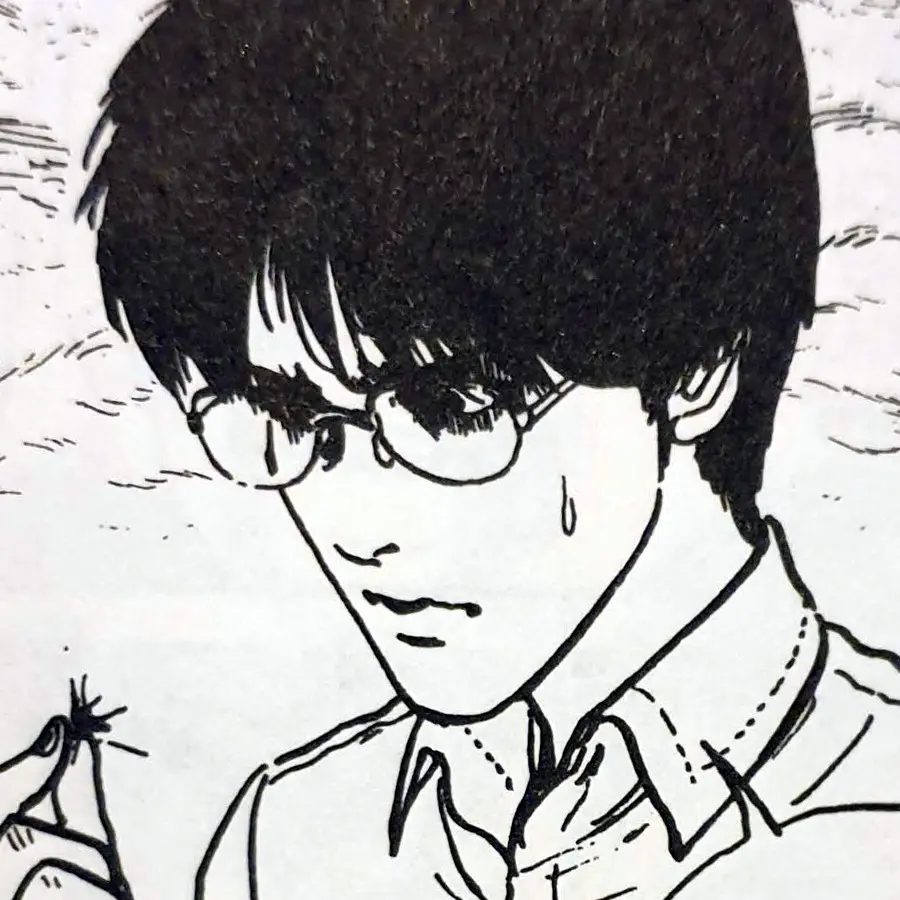
Vampyric tendencies
Vampires are a staple of horror and have been so for over a hundred years – arguably starting with the Bram Stoker novel Dracula. Many modern-day horror stories that tackle the idea of the vampire lean very heavily on the story of Dracula too. Especially with both his strengths and his weaknesses. But what I loved about Mosquitoes by Junji Ito, was how he has managed to create his own vampire-like story with absolutely no mention of vampires.
The blood sucking women throughout the second half of the story are not controlled by some greater being that has sired them. Except, of course, if you consider the spiral at the centre of all things in Kurouzu-cho to be the controller. Instead, these women have simply taken on the attributes of the mosquitoes.
And that is the stroke of genius that sits at the heart of this chapter: “What if people took on the same behaviours as mosquitoes?”. And in Junji Ito’s own unique way, he has explored that question with gusto. Here you have pregnant women drilling holes in people to drink their blood, in order to feed the unborn babies inside of them.

Gripping and Horrific
Mosquitoes packs so much into its thirty or so pages that I couldn’t help but feel wiped out by the end of it. This is possibly the most horrific night that Kirie has had so far in Uzumaki. Taking the deceptively simple premise of “what if people started becoming like mosquitoes” opened up a whole load of horror possibilities.
As mentioned above, the similarities with vampires was a comparison that I couldn’t help but make. But so too there are similarities with zombie films. There is one panel in particular where Kirie steps out to investigate a strange noise that she hears in the corridors. That investigation takes her straight towards a group of demonic-looking women all after one thing — blood.
Despite them being mindful of what they are doing and how they are doing it, the horde of evil ladies drew big parallels with scenes I’d seen from zombie films. Such as the group pursuing as one demonic pack; the people who come out to investigate and get caught and devoured. But perhaps my favourite part was when Kirie manages to escape the horde and lock herself back in her own room, only to be locked inside with something already lurking in there.


In Conclusion
Without a doubt, Mosquitoes is one of my top three favourite Uzumaki chapters. I’m not quite sure if it’s my absolute number one yet. But I think it’ll be a close one.
What’s great too, is that this story works great as it’s own standalone tale, separate from the surrounding story of the spiral nightmare. Junji Ito’s genius is on full show here with his gruesome depictions of blood-thirsty women being like mosquitoes. But instead of them just being pests as their tiny counterparts tend to be, these women are wild-eyed, demonic animals. And they will kill on site anyone who crosses their path.
Despite this being able to stand on it’s own story merits, it is actually followed on directly by the next chapter, “Umbilical Cord”. I can’t remember the story itself, having only just read the next chapter’s title. But seeing as it deals with the babies that came as a result of that evil night, it definitely feels like it will be just as crazier — perhaps more so.
If you’re looking for a reason to start reading Uzumaki, or even just Junji Ito in general, please do give this one a read. You could even go to your local bookshop that has it in stock, and jump straight to page 299. I guarantee you will at least enjoy the experience. But you’ll more likely than not end up buying the collection then and there.
Finally got my site to use the roots wordpress structure. Composer dependency management and deployment with laravel forge. 🤓
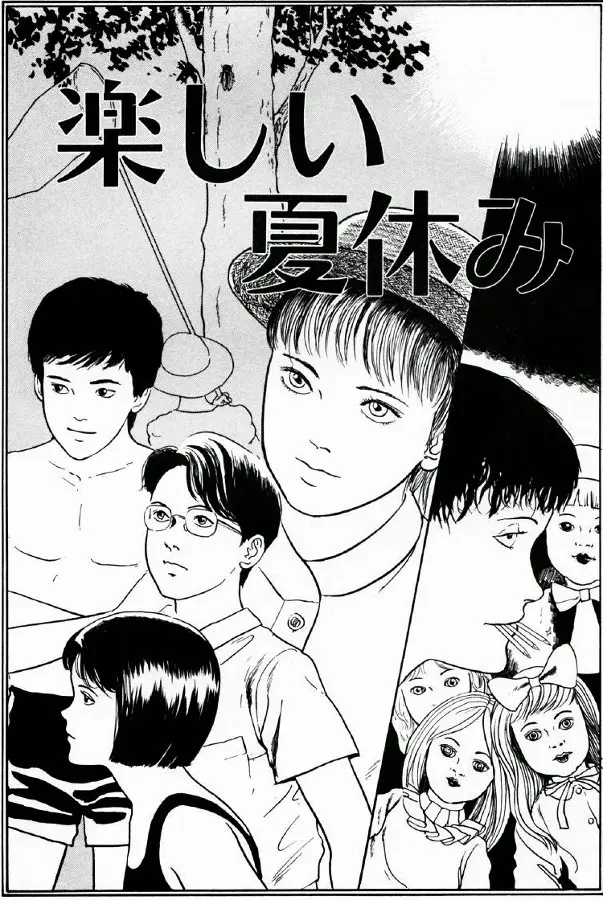
Fun Summer Vacation
Fun Summer Vacation tells the story of a family with an evil younger son. That son is none other than Junji Ito favourite, Souichi.
On nights like this, I go out onto the streets, and suck blood out from women’s jugular veins.
Souichi displaying some of his madness to Michina
Fun Summer Vacation — Synopsis
Yuusuke and Michina have travelled on the train to see some relatives of theirs. These relatives are six people who live in the same home. The Mother; Father; Grandfather; two sons and the daughter. Most of the family are very warm and welcoming to the visiting brother and sister. However, they soon get to meet their reclusive, and ever-so-slightly evil, younger son — Souichi.
The very first thing that we see of Souichi, is him spitting a small metal nail at the visitors. This is as they try to take him some food up to his room. You see, by this time they had yet to meet him and so they are trying to say hello to him. Souichi’s first response is to be hostile towards them.
As their family holiday passes each day, Souichi displays more strange behaviours — sinister laughs; curses on the family; attacks with deadly nails. With his hostility specifically targeted towards his visiting cousins. But how far will Souichi go to make his presence known to them, despite being so introverted?


Introduction to Souichi
When I had previously thought about Souichi, I had only remembered him from the manga “Souichi’s Selfish Curse”. I think that is the most popular Souichi story, possibly due to it being an early episode in the Junji Ito Anime Collection. But I was surprised, and happy, to learn that there are in fact a whole bunch of manga stories involving the evil-doing, twisted young boy.
What is perhaps interesting too, is that he isn’t really the central character of this particular manga — Fun Summer Vacation. He is just the strange young son who seems to haunt his family from the shadows. Driven by some strange internal need to punish and hurt those around him.
He is seen skulking about in his room, sucking on old nails and trying to curse people with his doll replicas of them. He isn’t the most likeable of Junji Ito’s characters but I would be lying if I said that I didn’t have a small piece of my heart set aside for this boy-terror.

Does he just need some love?
His actions towards Michina, although twisted and selfish, opened up a crack in his evil facade for me. I couldn’t help but feel that he was trying to curse her simply to get her to stay back at the family home with him. That way they could remain together, while the others went out to the swimming pool again. Maybe he was lonely after all and felt that he could only really connect with her. Perhaps he was even in love with Michina in some twisted sort of way?
Despite his appearance of hostility, maybe Souichi is just a little boy lost? His mother seems to enable some of his behaviour by taking his meals to his room, and allowing him to stay locked away. His father doesn’t really seem to do much by the way of discipline either. And his older brother seems to just wish that Souichi was something that he isn’t. Perhaps if the parents had set similar boundaries and punishments as they presumably had for the eldest two siblings, maybe he wouldn’t be acting out in this way?
Or maybe Souichi is just a little evil-incarnate brat who simply loves to see people in pain. Whatever it is that drives him, I can’t help but feel that there is more below his diabolical surface than meets the eye.


In Conclusion
I really want to say that I loved this story, but in all honesty it isn’t too high on my list of favourites. Now don’t get me wrong, this is still a good manga to read – especially as it is the first appearance (I believe) of the now-famous character of Souichi. However, I can’t recommend it over more memorable stories such as Flesh Colored Horror or Army of One.
But despite the story not being one that particular drew me in too much, Souichi is definitely a favourite character of mine. Even if I’ve only seen him in three stories (including this one) at the time of writing this post. I trust Junji Ito enough to believe that he can take Souichi into some pretty dark and even comedic places before reaching the end of the crazy boy’s story.
I’m looking forward to further exploring the world of Souichi, his curses, and just how those around him manage to survive.
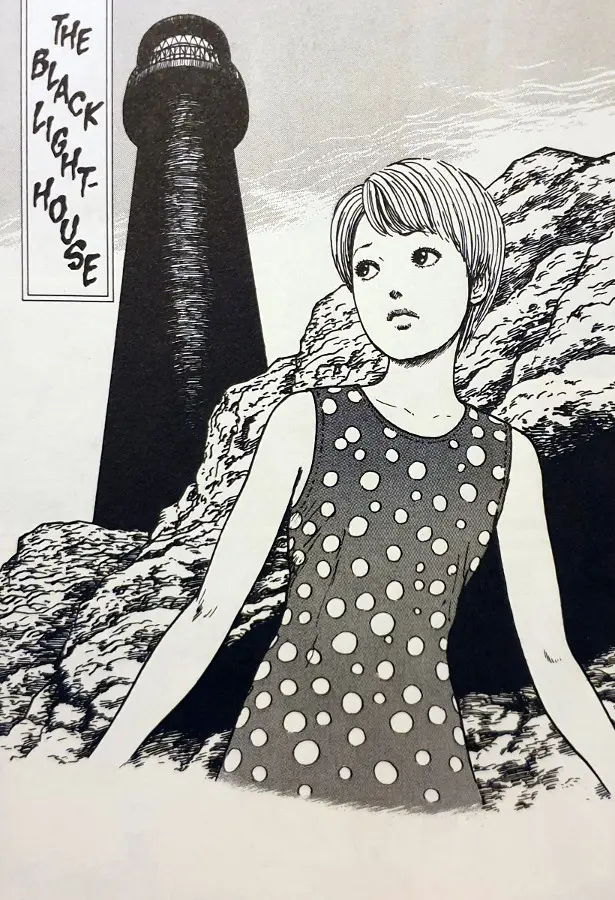
The Black Lighthouse (Uzumaki part 9)
The Black Lighthouse sits on the coast of Kurouzu-cho. Although thought to be abandoned, it suddenly begins emitting a strange swirling light every night at sundown. People decide to investigate…
As I walked further… spiral patterns appeared on the walls and ceiling. They glowed eerily in the dark.
Kirie describes her journey up the steps of The Black Lighthouse
The Black Lighthouse — synopsis
After sitting abandoned for quite some time, the lighthouse on the coast of Kurouzu-cho suddenly springs to life. At dusk, it begins shining out a powerful swirling beam all around through the night. This beam begins to mesmerise the townspeople more and more as the time goes on.
People can be seen in the streets running in circles as if possessed by the same spiral evil that now haunts the lighthouse. After some of these strange happenings some of the men in the town decide to head inside the lighthouse to get to the bottom of the mystery.
After the men have gone missing inside for some time, Kirie spots her younger brother with his friends heading towards what is known as The Black Lighthouse. Although she warns him, her brother runs inside with his three friends. Of course, she has no option but to run after them, which she does with gusto.
The further that Kirie climbs up the lighthouse steps, the stranger the place becomes. Patterns on the walls that give off a weird glow, lighting her way; the feeling of lost time and disorientation; and an horrific discovery that she finds towards the top.
As dusk approaches and Kirie still searches for her brother and his friends, what awaits them all in the Black Lighthouse’s top floor? And just what gruesome discoveries will they all find?


The Spiral Light
This is perhaps the furthest reach that the spiral has had over the town up until now. From its smaller beginnings of affecting individual people and their family’s lives, to the larger moments within Kurouzu-cho school — The Snail and Medusa, specifically. But never before has the spiral been so bold as to cast itself over the entire town at once.
The light stretches out over the town leaving no-one and nothing outside of its gaze. Even the light rays themselves seem to be beamed out in a spiral fashion. I also found that it reminded me of the Great Eye from Lord of the Rings. I wonder if that was an inspiration for Junji Ito in this chapter? In fact, when Kirie arrives at the tower’s top floor, she is greeted by the melted lens of the lighthouse’s light source — melted into a spiral-shaped eye!
And just as the Great Eye had it’s vision set across all of Middle-Earth, so too does the spiral have its gaze across all that it sees. Even a small boat nearing the town’s coastline is pulled in and run aground. There is quite literally nowhere to hide from this town’s curse of Uzumaki.

Claustrophobia
Despite the fact that the nature of this aspect of Uzumaki covers the widest amount of space, it also causes some interesting claustrophobic affects on the characters.
Although the power of the black lighthouse stretches out across the entire town and out to sea, the wider investigation of its power is done within its very narrow stairwell that seems to make those who ascend lose their sense of time. We see first-hand with Kirie the almost-dizzying effect this spiral staircase has on her, and the spiral patterns that emerge on the walls as she climbs higher. Uzumaki is literally closing in on her.
The real pay off in this chapter though, comes when Kirie discovers the burnt bodies of the men that went in some time before her. Beside which she finds two of her brother’s friends sat shaking in fear.
Spirals and charred remains
I advise you to really take the time to look over the depiction of those men’s remains too, as morbid as that sounds. Junji Ito’s detail of how he shows those men’s remains are impressive images to behold. He has painstakingly drawn in levels of details that lesser artists would have perhaps left out. Every crease and piece of charred flesh is accounted for.
And when I was taking the time to really focus in on those panels inside the stairwell, I then started to really notice the spiral patterns on the walls. Made up of hundreds of tiny little dots throughout every hallway depicted. A real inspiration and an insight into his patience and his craft.


In Conclusion
The Black Lighthouse is not my favourite of the Uzumaki collection, but it does however contain some of my favourite images from it. Namely the ones mentioned above with the fire-eaten remains of the men who went to investigate the lighthouse. As well as the spiral eye in the lighthouse’s lens remains.
I also felt this had a very interesting part towards the end, when Kirie comes face to face with the town’s curse. Although not the centre of the spiral madness (that comes later on in the collection), with the lighthouse’s lens melted into a strange swirling eye, Kirie is able to look straight into it. Perhaps somehow into the heart of the spiral itself?
I probably wouldn’t advise this being read out of the context of the collection, simply because I didn’t really feel it was able to stand apart from the greater cursed narrative that runs through it. As a part of the greater series arc it works really well and shows how the spiral is making itself more and more noticeable. However, it doesn’t stand as well on its own feet as perhaps chapters like Jack In The Box and The Scar do.
testing
Anything but a Ghost
Anything but a Ghost tells the story of a woman who is discovered by the side of a mountain road covered in blood. But when that woman revisits the one who found her, she reveals that not everything is as it seems with her.
She died giving birth to me. When I came out, she was already a ghost. But she still cared about me. Even after that, she would come to breastfeed me.
Misaki tells Shigeru about her twisted past.
Anything but a Ghost — synopsis
Whilst driving through a mountain area, Shigeru finds a woman stood at the roadside with her back to the road. On leaving his car and walking up to her, he sees that she seems completely stunned whilst being covered in blood. Without hesitation, he drives her to the nearest hospital to get her checked out. As it turns out, the blood is not hers and she isn’t even injured in the slightest.
After some time has past, Shigeru and his wife are going about their lives — they even have a child on the way. Then out of nowhere there is a knock at the door. On opening it, Shigeru sees a beautiful young woman standing there, but fails to recognise her straight away. She introduces herself as the woman he helped by the roadside that day, and tells him her name is Misaki.
But it seems that she is to have a negative impact on his life. Her and Shigeru begin seeing each other in secret and soon reveals a strange, twisted secret about herself — one that he simply doesn’t believe. However, as the closing pages of this manga reveal themselves, not only does her secret show itself to be true, but things also get a whole lot stranger and a lot more darker.


A twist on the ghost story
Anything but a Ghost is a ghost story where the ghosts are not the ones to be feared. Misaki is a young woman who seems to be somewhere between that of a ghost and that of a human. And even though she is drawn as a very innocent and delicate looking woman, she always has an air of creepiness to her. This is helped largely due to how she is introduced to us. We know something is not quite right — we just don’t know what it is at this point.
When she mentions that she can see Shigeru’s ghosts following him, I immediately thought of them as malevolent things. I was sure these ghosts she talked about would be grotesque monsters that live in the next plain of existence, just waiting to come through. But the truth is far more sinister than that.
I always enjoy how Junji Ito seems to be able to take our preconceived ideas of what typical sorts of horror stories are, and turns them on their head.

Strange food cravings
In horror fiction, I think we are used to seeing monsters that prey upon the weak before eating them. Whether that be vampires, werewolves, other-worldly beasts or even cannibals. But this is the first time, as is a lot of the times reading Junji Ito’s work, that I have seen the idea of eating one’s victims in quite this way.
The very idea of having a person who feeds on ghosts is an incredibly inventive one and, dare I say it, genius in it’s own way. But it doesn’t just end there. I absolutely loved how, when Misaki would bite down into her ethereal feast, somehow blood would spill out and cover her face. It’s almost like she is able to pull the ghosts of those who have passed, into our world, if only for a moment — for one last taste of pain and suffering. As if death wasn’t enough.
And without giving too much away, the visions that Junji Ito was able to put into my mind, purely by suggestion, were pretty horrific. When she bites into what she eats towards the end, I could see every single blood-curdling inch of it, yet Ito drew none of it. He is truly a master of not only his own imagination, but of toying with his readers’ imaginations too.


In Conclusion
This is an excellent stand-alone story from Junji Ito that is as unsettling as it is inventive. What was perhaps most noteworthy for me, was how it is completely grotesque — especially with what she eats towards the end — but without you actually seeing the action itself. Kind of like how Quentin Tarantino was able to gross out early 90’s audiences with his famous ear-cutting scene in Reservoir Dogs. Despite never even seeing the cut.
You never actually see her biting into any pound of flesh. But the result is no less effective. If anything it’s perhaps more so.
I would highly recommend this as a first read from Junji Ito’s catalogue of work. It is readable out in public without attracting people’s concerned stares, with no real displays of gore and flesh. However, it will perhaps leave you feeling like you have seen as much.
Anything But A Ghost is anything but a standard ghost story.
You can read Anything but a Ghost here. (Please support Junji Ito by buying his manga in your own language where available)
I bloody love David Lynch
A detective interrogates a monkey who is suspected of murder What did Jack do? No one but David Lynch. Love it – and I haven’t even watched it yet.

A detective interrogates a monkey who is suspected of murder
What did Jack do?
No one but David Lynch. Love it – and I haven’t even watched it yet.
Dracula by Bram Stoker
Then came another rush of sea-fog, greater than any hitherto — a mass of dank mist, which seemed to close on all things like a grey pall…

Selected Quotes
Then came another rush of sea-fog, greater than any hitherto — a mass of dank mist, which seemed to close on all things like a grey pall, and left available to men only the organ of hearing, for the roar of the tempest, and the crash of thunder, and the booming of the mighty billows came through the damp oblivion even louder than before.
from Chapter 7 — cutting from the dailygraph
Selected quotes from Meditations by Marcus Aurelius
Just some paragraphs from the book that rang a bell with me. Either for their meaning, or for how they sounded.
This collection is currently not finished – still picking out my favourite quotes. 🙂 — 14th January 2020
It was the critic Alexander who put me on my guard against unnecessary fault-finding. People should not be sharply corrected for bad grammar, provincialisms, or mispronunciation; it is better to suggest the proper expression by tactfully introducing it oneself in, say, one’s reply to a question or one’s acquiescence in their sentiments, or into a friendly discussion of the topic itself (not of the diction), or by some other suitable form of reminder.
Meditations, Book 1 — Paragraph 10
Wrong, wrong thou art doing to thyself, O my soul; and all too soon thou shalt have no more time to do thyself right. Man has but one life; already thine is nearing its close, yet still hast thou no eye to thine own honour, but art stalking thy happiness on the souls of other men.
Meditations. Book 2 — Paragraph 6
Never value the advantages derived from anything involving breach of faith, loss of self-respect, hatred, suspicion, or execration of others, insincerity, or the desire for something which has to be veiled and curtained.
Meditations, Book 3 — Paragraph 7
If the inward power that rules us be true to Nature, it will always adjust itself readily to the possibilities and opportunities offered by circumstance. It asks for no predeterminate material; in the pursuance of its aims it is willing to compromise; hindrances to its progress are merely converted into matter for its own use. It is like a bonfire mastering a heap of rubbish, which would have quenched a feeble glow; but its fiery blaze quickly assimilates the load, consumes it, and flames the higher for it.
Meditations, Book 4 — Paragraph 1
1917
1917 is the incredible film from Sam Mendes about two friends tasked with delivering an important message to save a battalion.

Time is the enemy.
The tagline from 1917
1917 is the incredible film from Sam Mendes about two friends tasked with delivering an important message to save a battalion..
Presented in one single take, or two depending on whether you count some unconscious hours as a cut, this film is a modern testament to stellar film-making.
The Plot
1917 centres around two friends stationed near the front line in world war one France. They are given the near-impossible task of taking an urgent order through no-man’s-land to the Front where a batallion of 1,600 men are about to run into a German-laid trap. Of course that is unless these two friends can get there to warn them in time.
The story takes us, every single step of the way, through some of the most brutal, and at times beautiful, war-time landscapes. Along the way they meet other people who happen across their path, some friendly; some hostile, but neither stop them on their forward momentum to deliver their message of utmost importance.
My Thoughts
I’d heard from a few different people that this film was really good and demanded being experienced in a cinema. In all honesty I maybe wouldn’t have gone to see this, at least not on its weekend of release, however, my lady wanted to watch it so we went this weekend.
It was absolutely incredible.
The first thing that I couldn’t help but notice was the impressive single camera shot opening (no visible editing cuts), which I only realised about five minutes in.
But that opening shot was more than just an opening shot – it became apparent to me that this was going to be a film that would be experienced in a single, unflinching scene!
(I used to read up on films before seeing them when I was going through my media-student phase. But I much prefer it now, where I know next to zero about films before I go in – save for perhaps what is in the trailers.)
Yes there would have been cuts throughout the film* – no film is going to be physically filmed in one single take, at least none have been to my knowledge. However, using some clever techniques, many of which no-doubt inspired by Alfred Hitchcock’s 1948 film Rope, director Sam Mendes has managed to pull off the same one-take effect but on a much grander scale.

Beautifully shot
The cinematography in this film was stunning to say the least – thanks to the film’s cinematographer Roger Deakins. From the close-ups of decaying corpses of both human and animal alike – half buried in the rubble and mud of battles past – to the wide-shot bold imagery taken against very grand battle-torn vistas.
This film managed to bring to the screen all manner of brutal war imagery. Some I could have perhaps imagined, but also definitely some I could never have imagined.
And the lighting! The lighting effects in some of these scenes just made my jaw drop, at least in my mind. One particular time was the beginning of the night-time sequence with the flares going up overhead. It looked both gorgeous and like something straight out of hell at the same time – not that the two have to be mutually exclusive.
There were certain shots I still remember now very vividly, which I thought I would share here. I will create a gallery below when I can get a hold of the shots I want to share – probably when the film is released on DVD/Blu-Ray.
An Emotional Story
The story of 1917 is a simple one at heart – deliver this message over there before this time. However, woven into that story is an incredibly strong beating heart that I couldn’t help but be affected by.
The way that we remain in these people’s immediate vicinity, and experience everything they do, couldn’t help but draw me into their lives. And the stories they tell about their homes and their backstory, helped to fill them out more as flesh and blood people – making their hardships even tougher to endure with them at times.
Other Notes
Main characters aside, I have to say that Andrew Scott was a stand-out performance for me. He is always enjoyable to watch on screen after I first saw him as Moriarty on TV’s Sherlock. And his role as the laid-back, battle-hardened Lieutenant Leslie was enjoyable too. Albeit if only for the 5 – 10 minutes that you actually see him.
Thomas Newman’s score was incredible as always, and easy identified with certain sounds I felt reminiscent of from his earlier work on Shawshank Redemption and American Beauty.
I couldn’t help but think of this film in terms of a computer game, with it’s varying ‘Levels’ and mini ‘Boss Fights’. I don’t mean this as a way to make the film’s techniques sound like a gimmick – after all games are true contenders in effective narrative storytelling nowadays, even more so than many films that are released. Just look at The Last Of Us, to name just one.
*I could be completely wrong about this, so apologies if I am – I am making some assumptions in this post.
Star Wars episode IX : The Rise of Skywalker
On New Year’s Day I saw my first film of the year — Star Wars : The Rise of Skywalker. In all honesty I was expecting to not like it all that much, mostly due to reviews and comments I’d heard from people I know. But you know what? I really enjoyed it. It was
On New Year’s Day I saw my first film of the year — Star Wars : The Rise of Skywalker. In all honesty I was expecting to not like it all that much, mostly due to reviews and comments I’d heard from people I know.
But you know what? I really enjoyed it. It was a fun and visually stunning two-and-a-bit-hour romp across the galaxy. A true good versus evil tale that left me feeling like I’d had a good time at the cinema. And that is precisely what I was hoping for.
If I’m honest I was hoping for more fight scenes with Rei and Ben as allies, like in the previous film The Last Jedi.
The one thing that really did take me out of it though is the kiss between Rei and Ben right at the end. I didn’t feel that it was needed at all, and just felt weird to me. Is there really a need for the climactic kiss in every film?
But on the whole I really enjoyed it. I’ll probably watch it again whilst it’s on at the cinema.

As an aside, I don’t get why there is always a group of people who lose their shit when something in the Star Wars universe doesn’t go how they thought or wished it would. People who presumably consider themselves “true” fans or “die-hard” fans. To those haters I’d just like to say either get over your sense of entitlement or just watch a different film.
Animal Farm by George Orwell
The story of Manor Farm and the animals who revolt after being inspired to fight for a better life.

All animals are equal. But some animals are more equal than others.
A single commandment
The story of Manor Farm and the animals who revolt after being inspired to fight for a better life. But those who assume command inevitably become the enemy of the society they are trying to create.
Animal Farm is a story that I was already aware of before reading — like many other people no doubt. I was aware of the rough idea of the animals taking over Manor Farm and eventually becoming a particular type of society. But even knowing this, I still enjoyed the book so much that I read it in two sittings pretty much.
The language of the book was pretty simple and to-the-point — language that is too fancy and, dare I say it, flamboyant, tends to throw me off the story sometimes. But yes, Animal Farm delivered it’s message in a straight-forward and to-the-point way.
I’m not sure if it was Orwell’s intention, or whether it was just my imagination working over it, but my internal pictures of the farm become more and more lacking in colour as it moved towards its conclusion. I pictured the farm and it’s inhabitants in a darkened black and white as they toiled over their labours towards the end.
The pigs in the manor house, however, I pictured in full colour as the other animals watched on on that final scene from the window.
I found some similar themes as I remember from Nineteen Eighty Four too. Namely the idea of rewriting history to suit the narrative being created by the ruling class. And then those under the boot just believe that they themselves must have been mistaken when originally reading their seven commandments.
I knew that there was a reason this book was regarded as a classic. Now I understand why.
Other book covers
Here’s a collection of cool covers for Animal Farm that I’ve found. These could get added to over time if I stumble over some more.


Pink Floyd’s Animals
Animals by Pink Floyd is one of my favourite albums ever made. Definitely in my top 10. Until I read Animal Farm I hadn’t made the connection between it and that album. I mean how could I miss out on the giant inflatable pig and not link that with the pig in power from the book?

Roger Waters, in his recent tours with his own solo band, has kept the spirit of this pig alive with warnings and messages to the people watching. Messages such as “Fear Builds Walls” and “Religions Divide Us“. Roger is one of my favourite artists from both his Pink Floyd-penned albums and his excellent solo material. I must write up my thoughts on his stuff soon.
There is a decent article here that discusses some of the similar themes between the album and the book. It is written better that I could attempt right now.
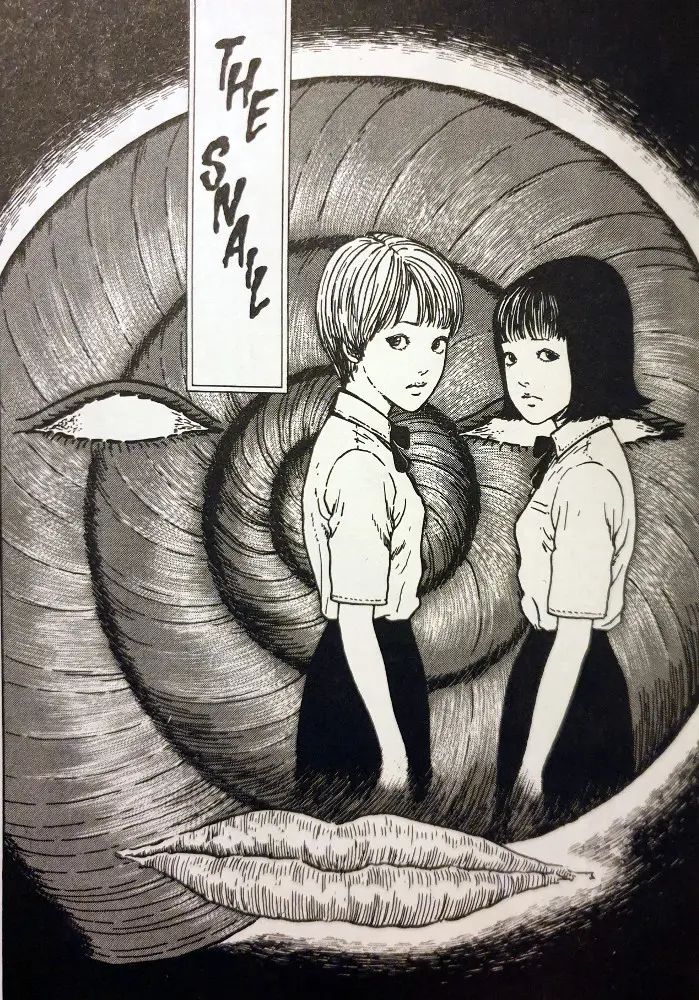
The Snail (Uzumaki part 8)
In The Snail, we meet a school boy named Katayama. He only comes to school when it’s raining — and today it’s pouring down.
Get off my back! He’s just a slug now! He’s not human anymore!!
Tsumura justifies himself poking Katayama with a long stick
The Snail — Synopsis
Katayama is a bit of a joke amongst his classroom peers — one of which is Uzumaki main-stay, Kirie Goshima. One morning Kirie and her friend remark on how it is raining for the first time in a while, and that they predict that Katayama will come to school that day. Sure enough he walks in, late as always, and slowly takes his seat.
As each day passes, with the rain continuing, Katayama keeps arriving later. However, his appearance begins to change with each passing day. Firstly a spiral bulge becomes visible from underneath his wet school shirt. Until, by the end of the week, he has somehow managed to transform into a giant snail. Yep, the title of this chapter is very literal.
Just how will the other school students deal with this very odd turn of events? Will they attack or will they try to help? And what will happen once another one of those very students begins to display signs that they may be going down a similar path?


The Spiral Rises
There are two starting points for the spirals in Uzumaki, as I can see. The first is in spirals that already exist in the world. Like with small whirlpools in water, snail shells and in coiled springs. Then there have been the appearances of spirals that have seemingly come from nowhere. Like with Kirie’s hair problems and the girl with the scar.
In The Snail, we see the latter — a large spiral mark on Katayama’s back seems to point to the origin of his grotesque transformation. Once this mark is discovered, after Tsumura drags a naked and humiliated Katayama into the hallway, the transformation seems to speed up. Presumably, to get the reputation of being slow, it would have to have been a part of his personality for a while before this chapter begins. It’s almost as if the spiral speeds up the transformation process once it is discovered.
There was one thing I noticed that I found very interesting to note too. Once Katayama turned, and was given sanctuary in the shelter on school grounds, Tsumura starts poking him with a stick. Soon afterwards he himself begins to show signs of slowing down. Then later on, when another character destroys the snail eggs left behind in the woods, they too seem to be targeted.
I wonder whether the spiral is completely self aware and is actually beginning to target these people out of malice or revenge. If so, it would indeed give some new angles from which to view other chapters in the Uzumaki collection.

Enter the grotesque
There haven’t been too many moments in Uzumaki so far, where I have had to squint from disgust. Save perhaps for when Shuichi’s mother stabbed herself in her ears and cut her own finger tips off. But with how Junji Ito manages to capture the depictions of human-sized snails, he almost got me wincing from the page.
Everything from the bumpy slimy textures of the bodies, to the bulging, elongated eye sockets. Even down to the way he shows Snail-Katayama peeling slowly off the school’s outer wall as he is forced off by students with brooms. These Kafka-esque depictions of spiral-controlled snails display a horror manga artist at the top of his game.
There was another thing that I found worked at both the grotesque and the dark comedy levels too. The moment when both Katayama and Tsumura, both fully-transformed, are kept together in the pen. They soon begin to mate, as snails do, which brought a whole new layer to the story. Not only are these both young men at heart, or at least they were, they were also the complete opposite of friends. The idea that you have a bully and his victim now mating as human-sized snails, brings a whole new level of horror, and dare I say comedy, that only someone like Junji Ito could conjure up.


In Conclusion
I feel like The Snail is more of a mid-level entry into the weirdness of Junji Ito’s worlds. You are safe from the violence and body horror found elsewhere, however, instead you are treated to spine-tingling depictions of gross transformations.
I think it works really well as a standalone story too. The fact that Katayama is slow by reputation, means that the story doesn’t need to rely on the surrounding spiral nightmares of the town of Kurouzu-cho. This could just as easily be a one-shot nightmare of Ito’s.
If you are feeling particularly brave you could go in with reading The Snail first. It will give you some great examples of Ito’s artwork and indeed his comedy-aware writing style. Or you could start at the beginning of the Uzumaki Collection and let this one sneak up on you slowly. Give it a read if you think you can stomach it.
Death Stranding finished. What an amazing experience. Now time to platinum it. 😅💚
Getting me through the worst job

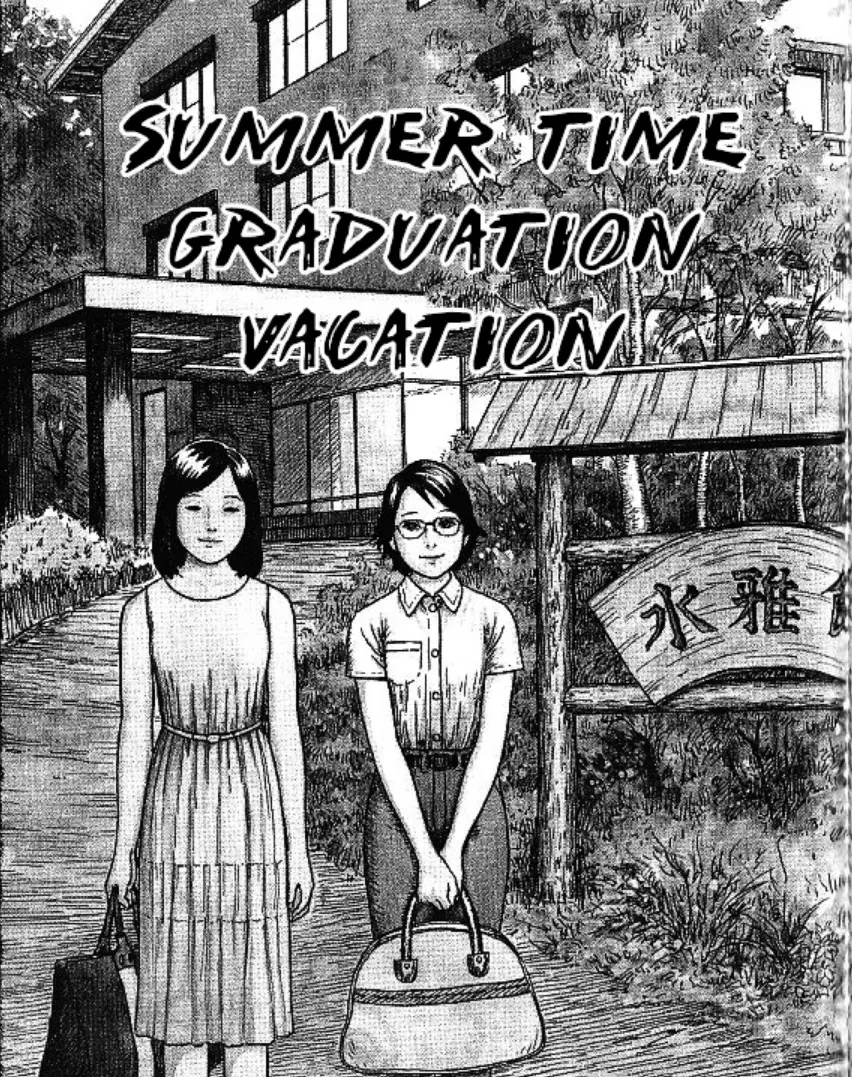
Summer time graduation trip
In Summer time graduation trip, an eerie bathhouse beneath a picturesque inn hides a mysterious secret.
Not a single person speaking… And during the whole time we were there, not a single person got up…
Hezi describes her experience in the bath house
Summer time graduation trip — synopsis
A woman recalls her time after her graduation thirty years ago. During that time, she and a friend took a trip to a holiday inn towards the north-west of the country. The place was relaxing and surrounded by beautiful scenery. However, hidden beneath the inn was a bath house with an eerie secret.
On arriving at the inn, the pair decide to investigate the local facilities — first on their list was the bathhouse. As they descend the steps towards the bathhouse below, they notice how the stairwell seems to take far longer than it should do to get down. In fact, the further they go down, the darker the bottom seems. Then as they look back up the way they came, nothing but darkness there too.


Before long, they pass a strange woman who is walking towards them up the steps. This woman is lit only by a small lantern she is carrying. She nods to them that they are heading in the correct direction to the bathhouse. Then as if by magic, they are at the foot of the steps, feeling the steam from the bath behind the door.
The main character then takes off her glasses before entering the large bath, severely limiting her vision. It is one of those large public steam baths. Sat in the water, she can make out shapes of people close to her, but can make out none of their facial features. She just sees shapes and shadows in the steamy water around her.
Suddenly, her friend Hezi taps her on the shoulder and urges her out of the water and to leave with her immediately. But what did Hezi, with her much more attuned eyesight, see in the bath’s waters? What was it that the main character could not see? And just who was that mysterious figure in the stairwell?

Almost a ghost story
At first read, I couldn’t really think of how to approach writing about Summer time graduation trip. You see, it kind of ends just as it seems to begin. We get introduced to the location of the inn, then we see the mysterious lady who passes them in the hall. Following that we get the reveal of the strange people in the bath, all with their heads facing away from the girls. And then just as the inn worker seems to be about to reveal a clue to move the story along, it ends.
After reading some comments by others, I was introduced to the idea that this could actually be a troll ghost story. In fact, it’s a ghost story where the characters actually make smart decisions and get out before anything bad happens to them. If the story had taken a normal route, then perhaps the maid would have revealed a history of the building and the origins of the lady on the stairs. This would probably have led to some investigation, followed by some trouble with ghosts.
But what’s almost funny is, is the girl just stops the maid in her tracks and screams “Never mind, Ma’am! […] If we continued to listen to her, it might turn out to be really scary, right?”. In fact, the more I think about this story, the more I’m convinced that it is in fact a comedy. But it’s only a comedy in the punchline, like a dry-witted comedian who you didn’t realise was telling a joke until you find youself laughing at the end.

Lost potential?
Although I respect Junji Ito for taking a chance on the story in how he ended it, I cant help but want more of the story revealed. If only the girls had taken the other route, and pursued a line of enquiry that would have inevitably meant risking their lives and possibly their sanity.
I loved the imagery of the bath house full of people too, all with their backs to the girls. We are left to wonder whether they are perhaps disfigured or dead… or both. Maybe it’s like a nightmare where if they are turned around they would reveal nothing more than the backs of their heads once again.
And that lady on the stairs too. She seemed like an interesting chaarcter, carrying her small lantern and apparently disappearing up the steps behind them. What was her purpose? Was she some kind of overseer of the dead below? Was she evil? Good? Or maybe an impartial lost spirit just searching for rest?
Maybe it was all some lost potential for a longer tale? Or maybe it was further strokes of genius from Junji Ito, in letting us imagine for ourselves just what was happening at that inn.

In Conclusion
Summer time graduation trip is one of Junji Ito’s manga stories that has had to take time to grow on me. I don’t think I really “got it” on first reading. I may have even thought I didn’t have the complete version — I don’t remember. But it has grown on me and even makes me smile when I think about the ending to this one.
It’s a risky choice to write a ghost story but then end it before any meaty ghost encounters occur, but if there’s one thing I’ve come to expect from the master is that he isn’t afraid to take some chances. If you want gory or ghosts, or people with seemingly doomed fates, then you can find those aplenty amongst his other works.
However, with Summer time graduation trip what you are getting is, as I believe, a tongue-in-cheek ghost story. I can even picture Ito watching your reaction as you approach the end, just to see if you get it. I mean, I could be completely way off, but these are just my opinions. Let me know in the comments if you have any other takes on this one.
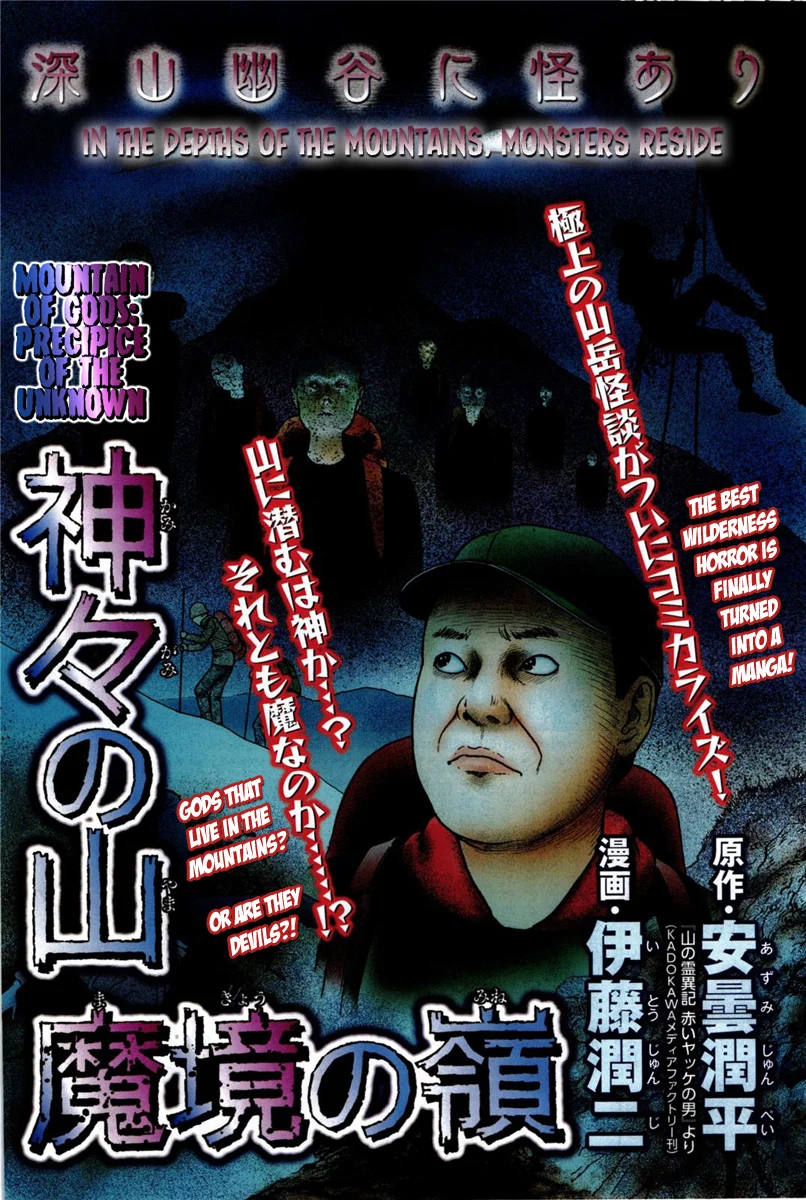
Mountain of Gods: Precipice of the Unknown
Mountain of Gods is one of the chapters in an anthology of manga stories about mountain demons called Yama Kaidan. Yama Kaidan roughly translates to “Mountain Stairs”.
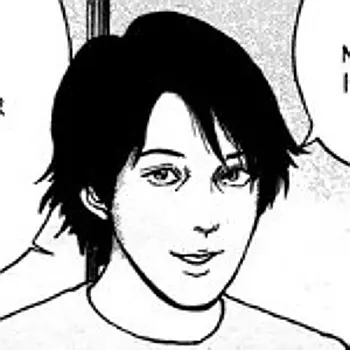
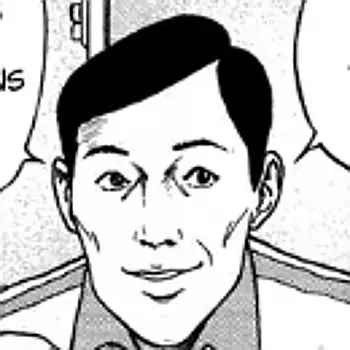
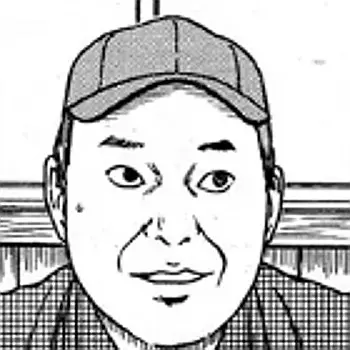
That man wasn’t smiling. He was sneering at me with immense hatred.
Ishida describes his encounter with The Sneering Man
Mountain of Gods — Synopsis
This story tells of three hikers who are comparing their past hikes with one another. However, the story soon veers into the spooky as the subject of a recently-missing woman hiker comes into the conversation. All that they know is that she went out hiking from the same cabin they now sit in, happy as can be – according to the cabin manager, but who was discovered dead at the foot of a snowy drop.
This brings to mind eerie encounters that each of them has had on their past hikes, which they each describe in turn. One tells of becoming alone on a mountain-top path before seeing a very thin, sneering man coming towards him at an unnatural pace. Another tells of a similar face pressing its way through his tent, Freddy Krueger style.
But will the mystery of this sneering man (is it even a man?) or the death of the lady hiker ever be solved?
Ghost stories
I think that this story is supposed to do what nearly all ghost stories do. It tells of an unnatural occurrence with some malevolent force, but never gives any explanation of it. This is told purely from the perspective of the hikers in the cabin and their own memories and imaginations on what they think could have happened. We are left to wonder whether there even is such a person as the sneering man, or whether it is a common hallucination from being up so high in the altitude.
It felt almost light in content when I first read it, partially due to the static nature of the main characters. But as I re-read it multiple times, the grimacing face of the sneering man began to grow on me. And once I learned it was actually part of a larger anthology from multiple artists, it all came together. Although I do enjoy this for what it is, a short ghost story about a hiking urban legend, I believe that it would sit much better when read along with the other stories in its collection.

I haven’t been able to find any of the other chapters from the Yama Kaidan anthology. All I know is that it is a collection of mountain-related ghost stories about gods or demons that could live in the mountains. If you find any of the other chapters, please do let me know in the comments below. Thank You. 🙂
The Sneering Man
The Sneering man, like Fuchi from Fashion Model, is a character that I would love to see much more of. It’s almost teasing that we get the short glimpses of this person in Mountain of Gods.
Despite this being a lesser-known Junji Ito work, I think it is one of the best examples I’ve seen of him slowly revealing horror on the page. If you look at the first glimpses of the sneering man, and the switching between it and Ishida as they get closer, the way in which the true nature of the strange figure is revealed is incredible. The way that the smile reveals slight arching in the corners of the mouth as it comes into focus. The darkening of the facial features as the distance between them shortens. Then that horrific grimacing full-page face that almost scares you out of your seat.
A big part of me is always glad when a menacing figure such as this remains mysterious. There’s nothing worse than having everything explained to you when your own imagination can be so much scarier at times. But there is a small part of me that would kind of like to know where this sneering man came from.


In Conclusion
Mountain of Gods: Precipice of the Unknown is a great short story to give you the creeps before bed time. The character of the Sneering man will surely stick with you after reading — I think that face is almost etched on the back of my eyelids. 😀
Due to it’s minimal graphic horror, I think this would be perhaps a good introduction to Junji Ito’s work, for those who haven’t read his stuff before. I mean, it in no way represents the crazy imagination that you will find in say, Uzumaki or Tomie. But if you are looking to tread lightly into Ito’s world, this could be a good choice for you.
I’ve only been able to find this story in a translated version for my own language on Manga Rock. But please always support Junji Ito where you can by buying his official works.
Be careful when you go out walking…