It will be officially released on the 14th May 2020.
From the picture above it looks like its a good size too — a little larger than A4 size I reckon. All the better to focus in on Junji Ito’s excellent craftsmanship and twisted imagery.
I’m looking forward to this one as it looks to contain many pieces of Junji Ito’s original artwork. Perhaps even some that were cut from some of his stories?
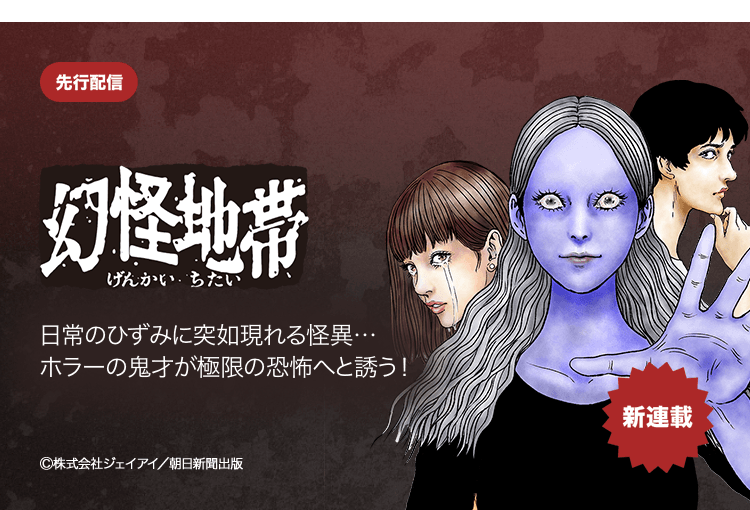
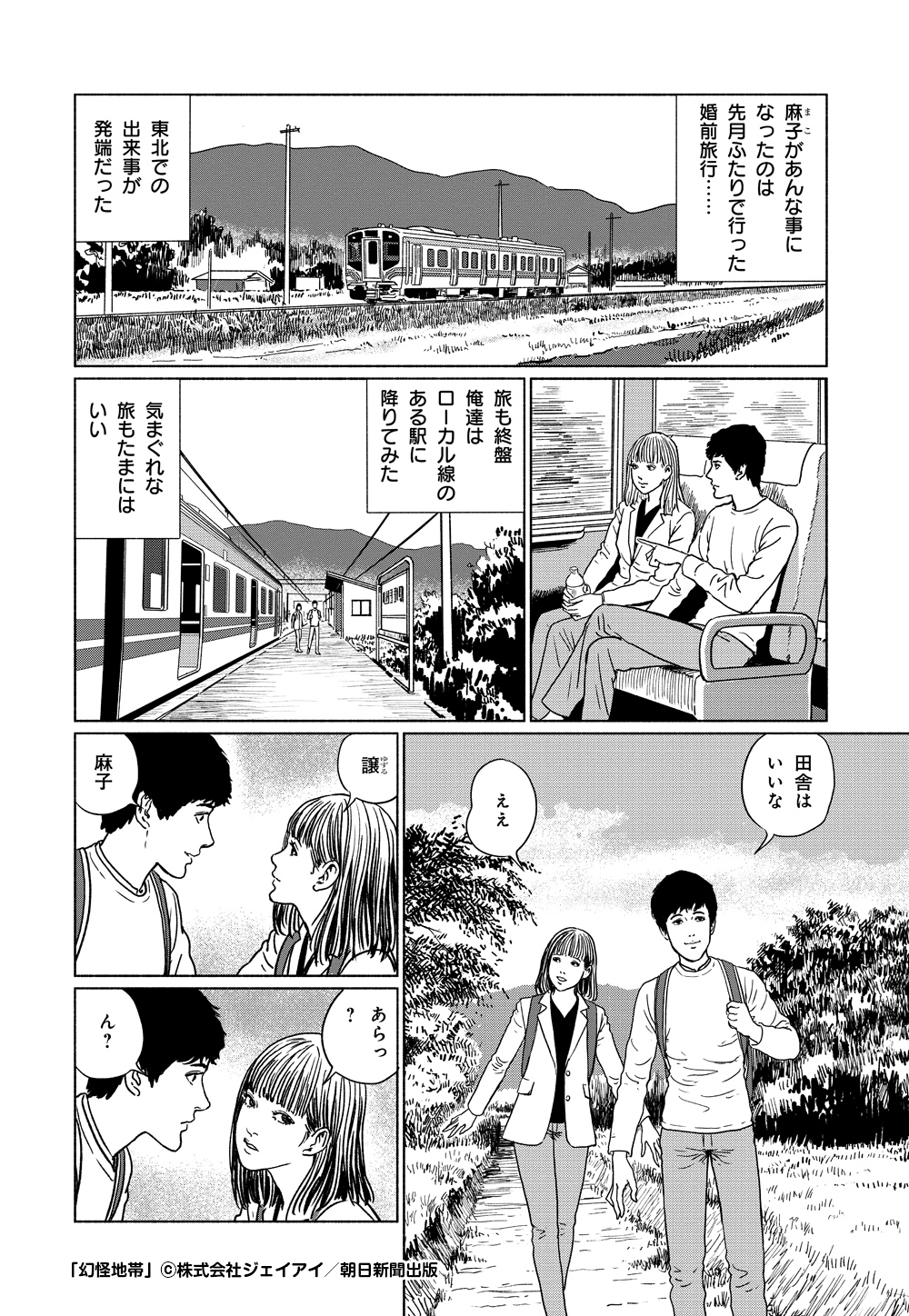
Junji Ito has launched a brand new horror manga called Genkai Chitai, which is Japanese for Disturbing Zone. It seems to be a part of a new horror omnibus series called “Phantom Zone”.
From what I can find out so far, it revolves around the more mundane aspects of every day life and how strange occurrences around those things happen. No doubt bringing weird and interesting horror themes into the lives of some very unsuspecting characters.
It has been released through a publication called “Line”. I have found a website called Line Manga, however, it is only available to be viewed from Japan. 🙁
I’m really looking forward to reading this one and can’t wait for an official U.K. release.
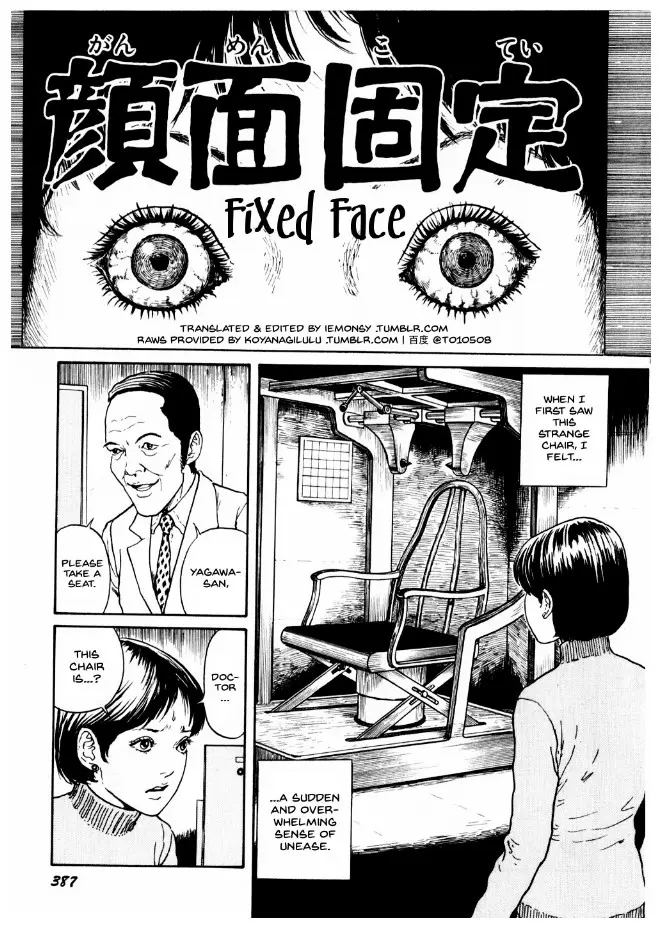
This is a facility made specifically to capture the features on the lower portion of the face.
The Doctor explains the chair that makes Yagawa feel so uneasy.
Synopsis — Fixed Face
Fixed face is one of Junji Ito’s shorter stories, but is no less terrifying in its smaller page count.
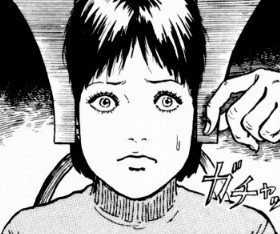
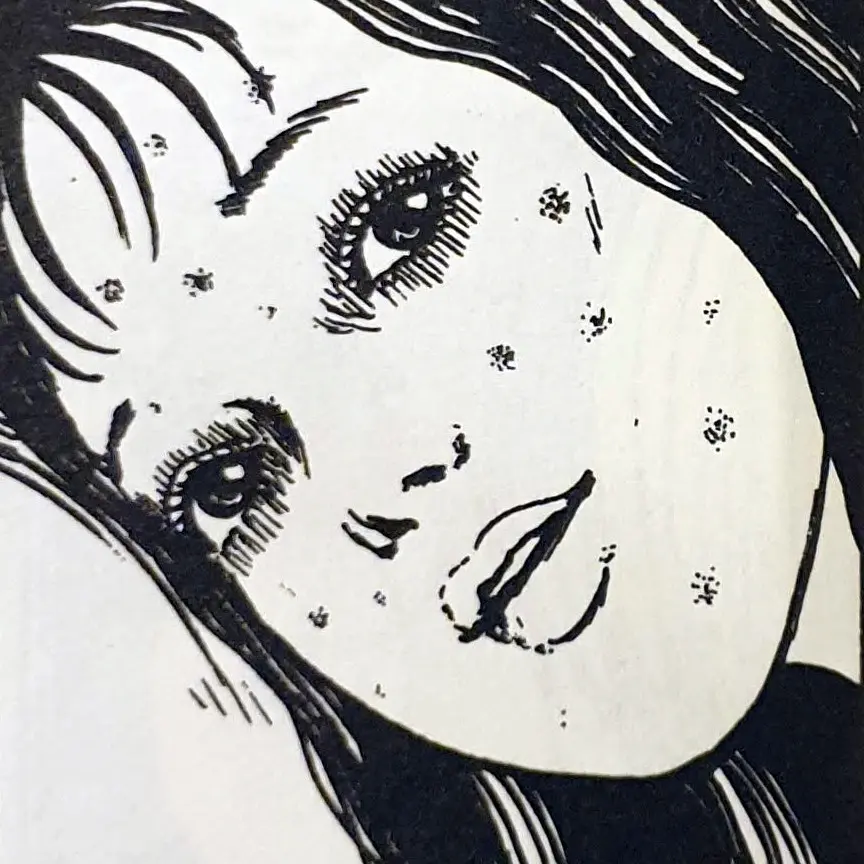
Yagawa is a young lady who has gone to a dental hospital for some unknown reason. We don’t know her treatment and, for the purposes of this story, it isn’t really important. On arriving, the doctor welcomes her to take the only seat — the dental chair — and to place her head between two ominous-looking clamps.
These clamps, the doctor says, are to fix the person’s head in place to allow them to capture exactly the features of the lower part of their face. The clamp is made up of a huge over-arching machine. That machine reaches round a person’s head with pointed metal pieces that are to be placed inside the person’s ears.
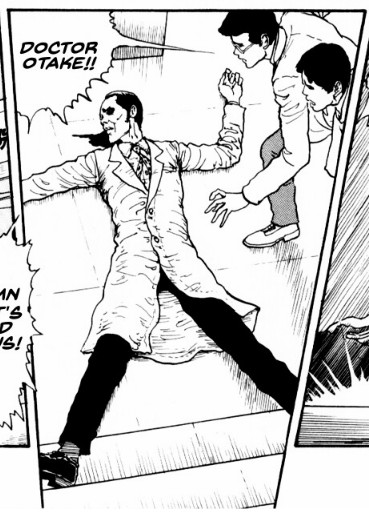
However, on fixing the lady in place, the doctor realises he needs to leave the room for a moment. Not long after leaving, he trips down the stairs on one of the hospital’s lower floors — killing himself.
The location of the dental room is an area of the hospital not often covered by many people. So the lady is left alone, head clamped in place, without a word from the doctor or any other soul.
She has no idea about the fate of her doctor. And has no way to get herself out of the place in which she is trapped. What will happen to the lady? Will she ever get out? And if so, at what cost will she manage to break free?
Doctor OtakeYagawa
Fear of never being found
I remember hearing an urban legend when I was younger about a person buried alive and never being found. The thought of being trapped in a place where nobody knows where you are is scary in itself.
But Junji Ito has created a similar story here, no doubt inspired by his own time as a working dentist. When Yagawa is fixed in place into the dental chair and then left, she is left in a very vulnerable position. But when we see how the Doctor ends up dying, she has no idea — however, we as the readers do.
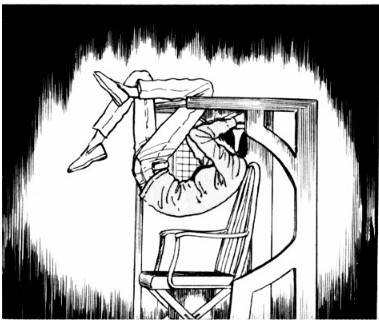
We have a power over her that somehow reinforces Yagawa’s increasing anxiety. As she freaks out in the chair, unable to free herself and with seemingly no one coming to her help, we are forced to just watch her struggle.
What I found interesting too, was that there are no malevolent forces in operation here. There are no evil spirits, forces of nature, or a bad doctor trying to trick her. It is a situation of pure bad luck — for both Yagawa and her doctor. A situation that Yagawa must then try to escape from.
Yagawa tries to get out
It reminded me of Tomie: Babysitter and Amigara Fault
In Tomie: Babysitter, the main character, Erita, falls into a similar situation. After being locked in a family’s baby’s nursery as a precaution, she ultimately finds herself trapped. With the only people who know she’s there unable to let her out. Although it is for very different reasons that her captors are unable to free her, the result is still similar.
Perhaps this fear of been locked away, or being forgotten, is a legitimate fear of Junji Ito’s? And maybe it’s that fear that he lets feed into his work in these stories? Or maybe it is just that the fear of being forgotten is such a common human fear, that it naturally ended up finding its way into his work.
Another similarity I felt in this story was of The Enigma of Amigara Fault. When we see Yagawa struggling and convinced that the ear clamps are pinching further into her head, it reminded me of the closing panels of Amigara Fault. Where we would see the tunnels gradually squeezing and bending the people who entered out of shape.
That idea of being trapped and seemingly under the control of some outside force closing in on you is scary. And I think that similar theme was used well here in Fixed Face too — albeit without the human-shaped holes.
Doctor Otake falls down deadYagawa starts freaking out
In Conclusion
I find Fixed Face to be a very effective little horror story that is light enough on its surface to make for an easy read. But I think there is a lot to admire in those moments where Yagawa is getting more and more frightened in her fixed position.
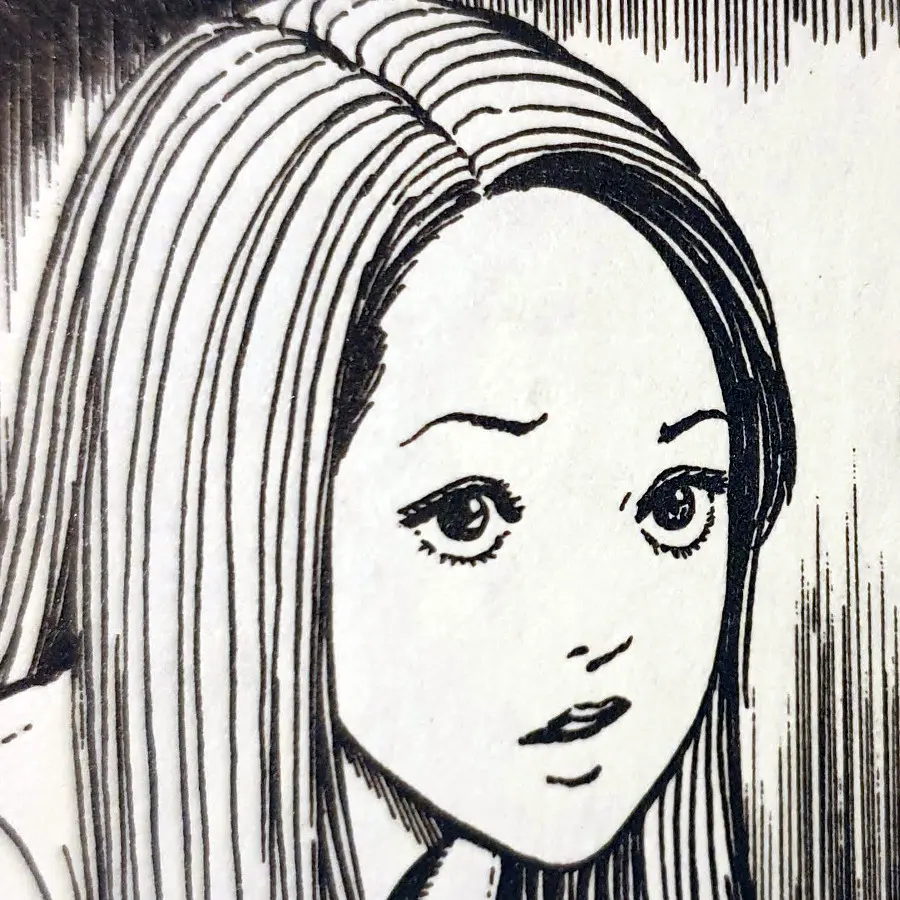
There are some great examples of Ito’s penmanship on display. This is especially apparent where we see the lady’s close up face broken out into a sweat and panic. The fear is palpable and really jumps out of the page. Even the sense of motion as Ito draws her swinging to get out of her trap is really well done. Her increasing stress and anxiety is put across in a way that made it feel as though the pace was truly picking up. Almost as though I could hear the woman’s ever-increasing heart beat growing louder and louder.
Despite the slightly-contrived way in which Ito sets up this situation — the man just having to leave the room and just so happens to trip and die — this is still up there as a favourite of mine. This is less of an evolving story per-se. It is more of a situation that this woman, and by extension us as readers, must endure.
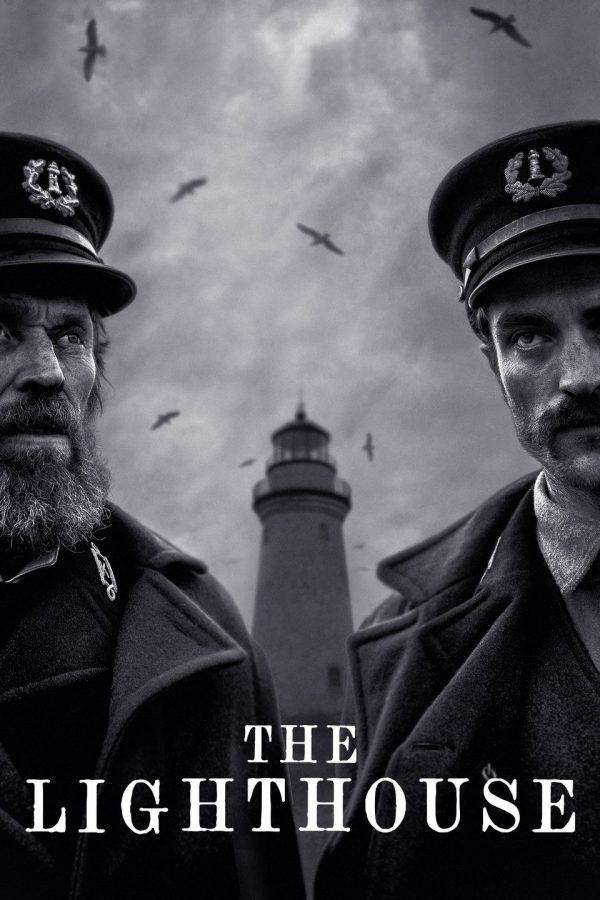
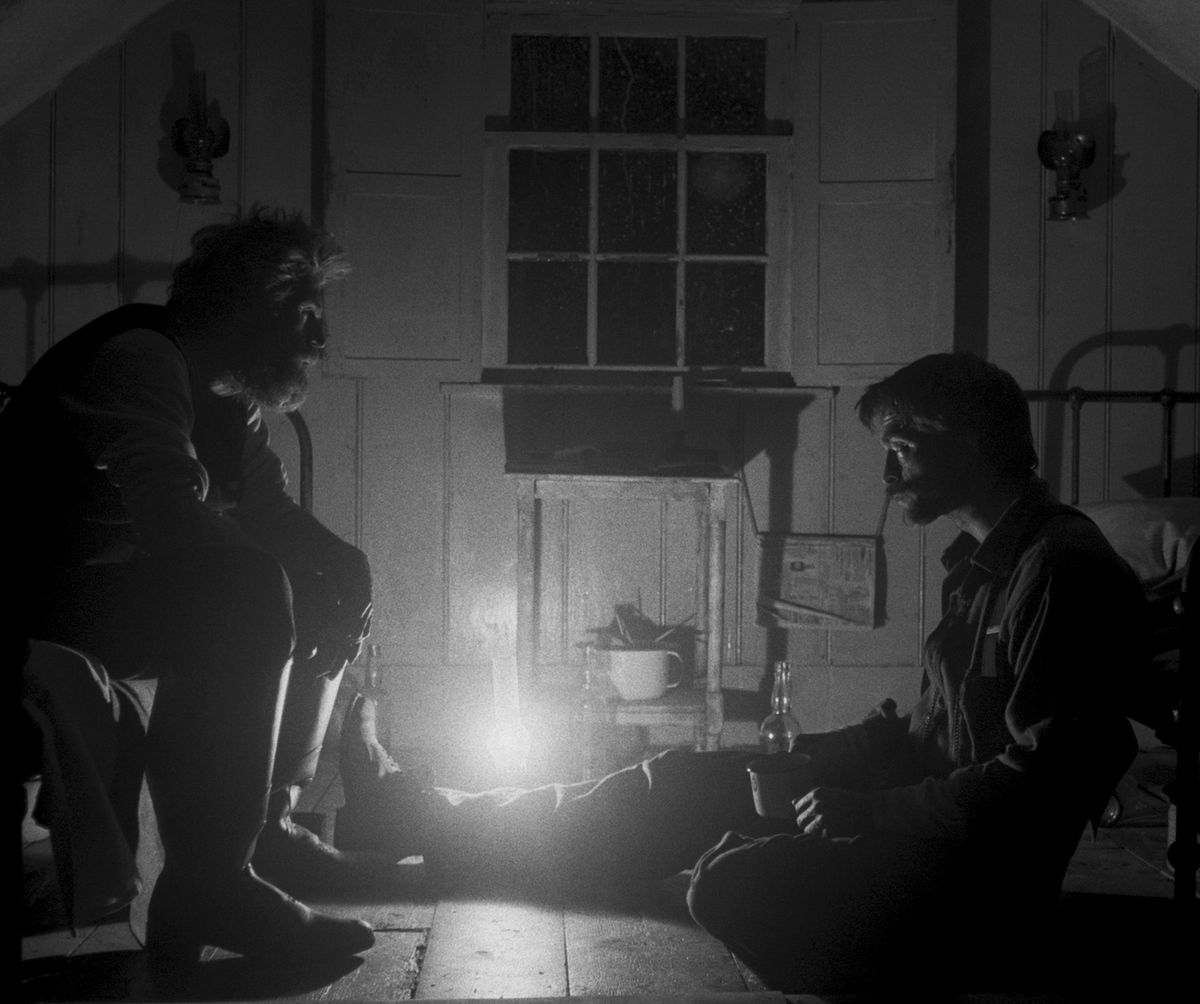
The Lighthouse is a slow-burn descent into madness expertly portrayed by Robert Pattinson and Willem Dafoe.
They play lighthouse keepers with the task of manning the lighthouse on a rock out at sea for four weeks. But their isolation and growing annoyances of the other, soon guide them down the path of madness.
Directed by Robert Eggers, the man behind another favourite film of mine from recent years — The Witch.
I found myself completely transfixed to these two people throughout the entirety of this film. From their initial landing on the island — passing their predecessors on the walk to their new, month-long home — up to the crazy final scenes that played out like some kind of demonic version of Alfred Hitchcock.
While I’m not going to spoil anything here, what I will say is roughly what the film is about — very roughly.
Pattinson and Defoe play two lighthouse keepers. Pattinson is new to the job and quiet initially, whilst Defoe plays an almost-caricature of a typical old sea-dog with many old tales and superstitions to impart.
Their relationship is pretty intense throughout, as would be expected between boss and worker that also live together — especially in such a close and isolated proximity.
I’ve lived and worked with a boss-like figure in the past and I can tell you for one that it can get pretty tense pretty fast if you’re not careful.
They often argue and disagree, usually with Defoe coming out on top, but at times they let off steam by getting completely drunk and sing songs of old times in their drunken stupor.
The film’s climax is one that I will be thinking about for days to come, I think. It has no hard explanation, at least not that I could tell. What it does have is a heart-pumping ending that leaves itself open to interpretation — complete with metaphor and Greek mythological imagery.
Pattinson and Defoe
I’d not seen Robert Pattinson in anything before, so didn’t know what to expect. Willem Dafoe, on the other hand, I had seen a few times and so was aware of him and his idiosyncrasies as an actor.
What I found was that both of their performances were absolutely incredible. As I heard in a review after watching the film, this film displays the whole gamut of human emotions. We see both characters at their most powerful and their most vulnerable too, I would say. From the heights of joy in alcohol-fuelled excitement, to some moments of personal fantasy and depravity.
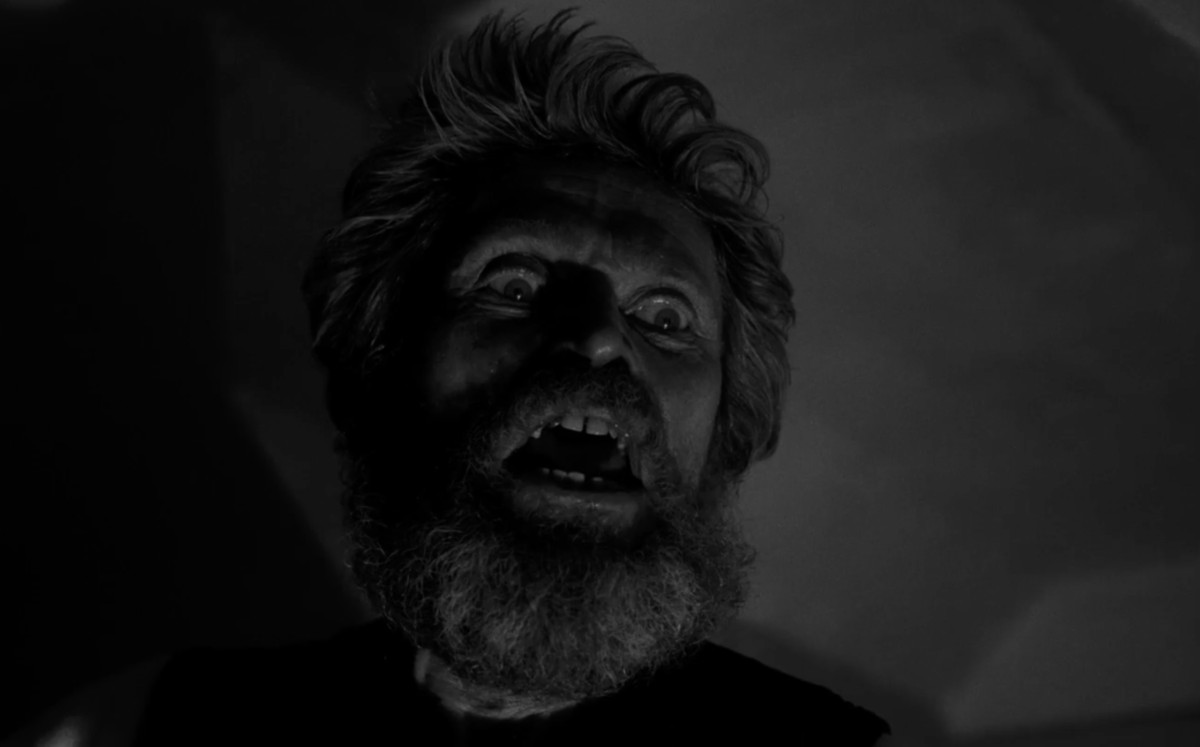
Willem Dafoe’s Shakespearean, powerful monologues were absolutely hypnotic to watch — as were his eyes whilst he delivered said speeches. Lit up like someone would be at a campfire telling ghost stories — a piercing light shining from below and up against his intense expression. He became almost scary to see but I found myself unable to look away.
I’d only heard about Robert Pattinson through knowing about his starring roles in the Twilight films, so that had coloured my perception of him if I’m honest (despite having never seen them). But all I can say is “wow”, based on his role in The Lighthouse. His descent into madness and the odd visions that he witnesses in the desolate, rocky surroundings, are pieces of cinema I wont forget in a hurry.
Superstition and suspense
The was a heavy air of suspense throughout the entire film, which for me didn’t really end until the very final shot. At times I felt like I was watching the love child film of both Alfred Hitchcock and David Lynch.
The film was presented in an old-style square frame as opposed to the typical widescreen format that we are used to nowadays. It was also shot completely in black and white. These two factors, along with the fucking incredible score by Mark Korven gave the story the added claustrophobia that the characters on screen were no-doubt facing themselves.
And as for that score, it was intense, atmospheric and downright terrifying at times. That, coupled with the films overall great sound design, made for what I can’t help but feel will be one of the greatest auditory experiences I will experience in the cinema this year.
It was just a shame that some dick in the row in front of me kept piping up to his mate with short sentences after some of the film’s big moments.
In Conclusion
What can I say other than this is a film that will treat all of your cinema-viewing senses to a real treat. The performances are incredible; the story itself is left up to you to interpret; and the atmosphere is one of constant isolation and sustained dread.
I loved it from beginning to end and found myself enjoying the emotional journey that these two men were going on. The more I sit and think about it now afterwards, the more my mind is starting to think about the possible symbolism throughout the film. And the more I am starting to form my own interpretations of what I have seen tonight.
Maybe I’ll write these interpretations into a separate post once I have some kind of coherent way of putting those thoughts together.
If you enjoyed The Witch, to which this is a sort of spiritual companion, or are simply open to something very different from your regular cinema experience, then I can’t recommend The Lighthouse enough. If you can watch it for the first time at a cinema then you definitely should.
What have you done to it?! What have you done to its eyes?!
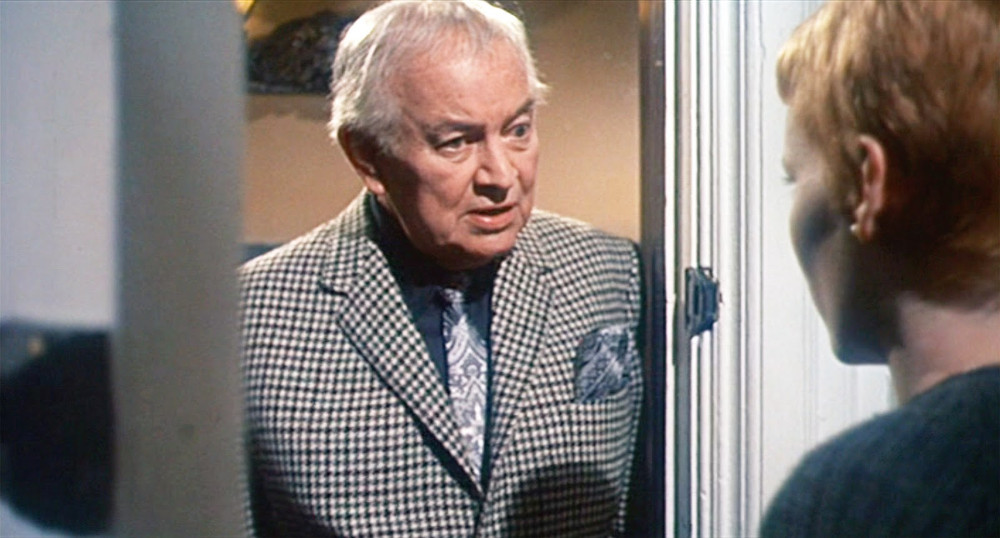
Rosemary Woodhouse
A Horror Classic
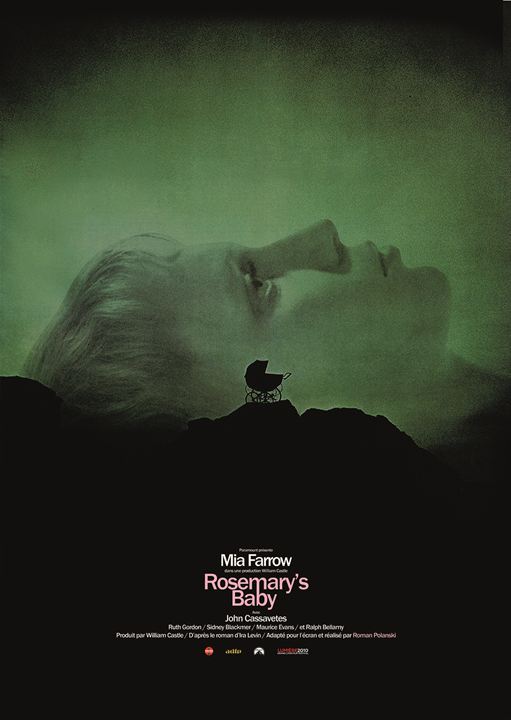
Rosemary’s Baby is one of those classic horror films that I have known about for years, yet never got round to watching it. But I decided it was time to sit down and finally watch it — and I was so glad I did.
I can’t offer any in-depth analysis or deeply philosophical film essays on this, or any other films I watch to be honest. What I will do though, is give my thoughts and feelings about it.
From it’s opening shot across Manhattan, this film felt very much like a Hitchcock film to me. Which was an instant hit for me. However, this isn’t a Hitchcock film – it was in fact made by Roman Polanski. In fact, it was the first film of Polanski’s that I have seen, that I remember.
Overlooking the apartment building in the opening from Rosemary’s Baby — reminded me of shots from Alfred Hitchcock’s Vertigo.
Sustained terror and paranoia
I absolutely loved the feeling of sustained terror throughout most of the piece. It has been referred to as a “horror film that contains no horror”, although I would argue that the scenes depicted in Rosemary’s “nightmare” on baby night got pretty bloody scary. The images in that nightmare brought up the thought of witches in my mind. And there’s something about witches in older cinema that just creeps me out — even the film version of Roald Dahl’s “The Witches” still haunts me to this day.
But for most of the film, the kind of horror that it uses is that of paranoia. The paranoia that builds up in Rosemary as the baby gets closer and closer to it’s due date, and the paranoia I felt towards the excellent cast that surround the actress playing Rosemary, Mia Farrow.
Even in their very first scenes, I could tell that certain characters were dodgy. But I’m not sure whether that is because I am watching it 52 years after it’s release – with, no doubt, many known films I had seen having being inspired by it.
Ruth Gordon and Sidney Blackmer were great as Minnie and Roman Castevet. They have a certain friendliness and over-familiarity that I couldn’t help get the heeby jeebies from.
Rosemary receives a giftRosemary in the phone boxMinnie Castevet is at the doorRosemary wakes after “baby night” with cutsRosemary Roman and Hutch
A false sense of security
Something else occurred to me whilst writing this post too. I don’t remember there being any dark, particularly scary moments, except for the nightmare I mentioned above. The film takes place mostly in the day time with well-lit rooms and colourful surroundings — I absolutely loved the colours and the choice of camera used here.
The people that are around Rosemary seem to be always brightly coloured too. It’s almost like the film is trying to put you at ease with it’s colourful, welcoming surroundings whilst the possibility of a dark, sinister underbelly becomes more and more likely as it moves forwards.
On looking back, it really did feel that the film was easing me into a false sense of security.
As so many people have said before me, this really is a horror classic. It stands the test of time for me as both a psychological horror and at times a dark comedy — especially with those scenes involving those over-familiar neighbours of theirs.
I’d urge you, if you haven’t already, to give this film a watch. Don’t leave it as long as I have. It has scenes that I’m still thinking about now — days after I actually saw it. And I don’t doubt that I’ll be thinking about them again in the future.
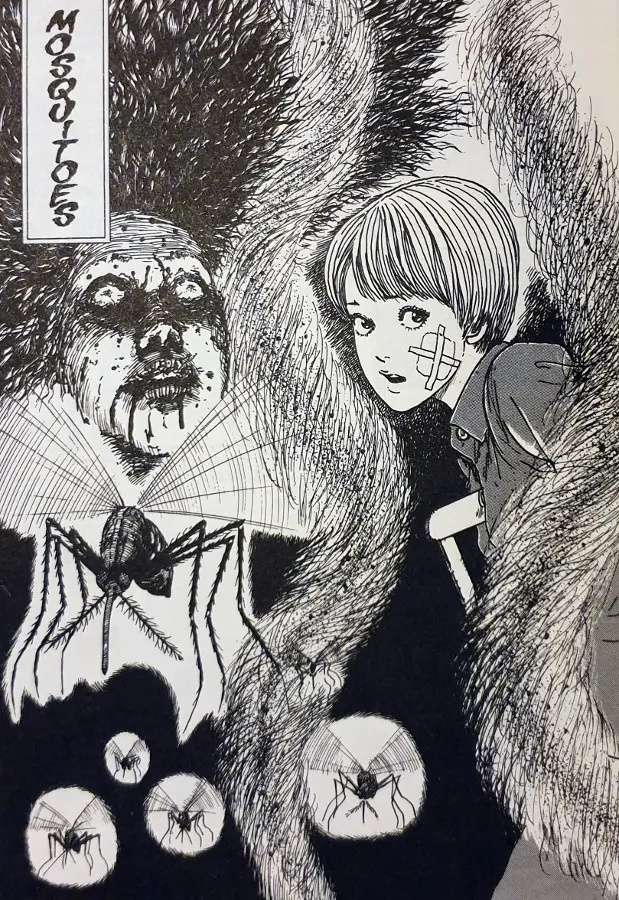
It is Summer time in Kurouzu-cho and Kirie Goshima is in hospital. She is still being treated for the wounds that she incurred when she and her brother escaped from the Black Lighthouse in the previous chapter. But what is not helping her heal, is the number of mosquitoes that have increased in numbers recently.
In fact, during a quick walk around the outside of the hospital Kirie and her friend notice a huge, thick collection of mosquitoes all buzzing around in a tight circular motion. Her friend tells her about how this is called a “Mosquito Column”, and occurs when all of the males get together to try and attract a mate. But within seconds of them seeing the column, things go from curious to horrific very quickly.
Kirie and her friend discover the body of a pregnant woman in the hospital grounds, with a face contorted into a look of pain and a body mutilated and full of holes. Soon after, more and more pregnant women get admitted to the hospital, as a result of mosquito swarm attacks. One of which is Kirie’s cousin Keiko.
As the story moves forward, more strange and horrific things begin to occur within the walls of the hospital. But what will Kirie and her Keiko do when they find themselves at the centre of a hellish nightmare?
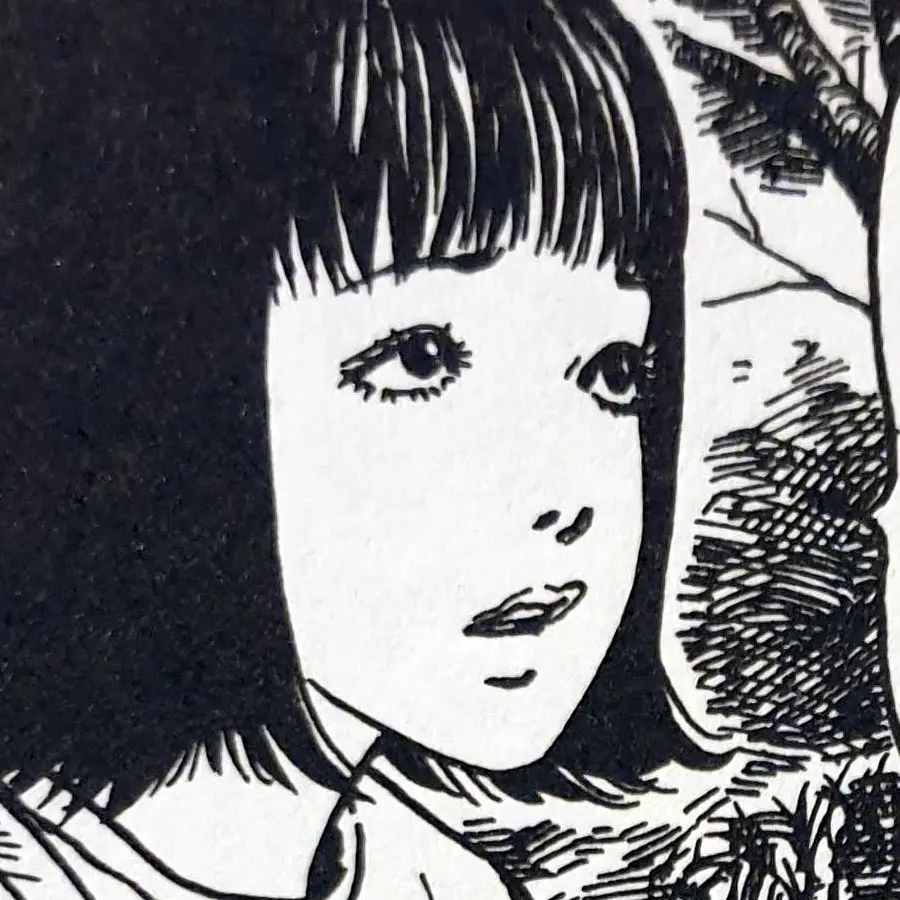
Kirie
Kirie’s Friend
Keiko
Shuichi
Vampyric tendencies
Vampires are a staple of horror and have been so for over a hundred years – arguably starting with the Bram Stoker novel Dracula. Many modern-day horror stories that tackle the idea of the vampire lean very heavily on the story of Dracula too. Especially with both his strengths and his weaknesses. But what I loved about Mosquitoes by Junji Ito, was how he has managed to create his own vampire-like story with absolutely no mention of vampires.
The blood sucking women throughout the second half of the story are not controlled by some greater being that has sired them. Except, of course, if you consider the spiral at the centre of all things in Kurouzu-cho to be the controller. Instead, these women have simply taken on the attributes of the mosquitoes.
And that is the stroke of genius that sits at the heart of this chapter: “What if people took on the same behaviours as mosquitoes?”. And in Junji Ito’s own unique way, he has explored that question with gusto. Here you have pregnant women drilling holes in people to drink their blood, in order to feed the unborn babies inside of them.
The women are demonic looking
Gripping and Horrific
Mosquitoes packs so much into its thirty or so pages that I couldn’t help but feel wiped out by the end of it. This is possibly the most horrific night that Kirie has had so far in Uzumaki. Taking the deceptively simple premise of “what if people started becoming like mosquitoes” opened up a whole load of horror possibilities.
As mentioned above, the similarities with vampires was a comparison that I couldn’t help but make. But so too there are similarities with zombie films. There is one panel in particular where Kirie steps out to investigate a strange noise that she hears in the corridors. That investigation takes her straight towards a group of demonic-looking women all after one thing — blood.
Despite them being mindful of what they are doing and how they are doing it, the horde of evil ladies drew big parallels with scenes I’d seen from zombie films. Such as the group pursuing as one demonic pack; the people who come out to investigate and get caught and devoured. But perhaps my favourite part was when Kirie manages to escape the horde and lock herself back in her own room, only to be locked inside with something already lurking in there.
In Conclusion
Without a doubt, Mosquitoes is one of my top three favourite Uzumaki chapters. I’m not quite sure if it’s my absolute number one yet. But I think it’ll be a close one.
What’s great too, is that this story works great as it’s own standalone tale, separate from the surrounding story of the spiral nightmare. Junji Ito’s genius is on full show here with his gruesome depictions of blood-thirsty women being like mosquitoes. But instead of them just being pests as their tiny counterparts tend to be, these women are wild-eyed, demonic animals. And they will kill on site anyone who crosses their path.
Despite this being able to stand on it’s own story merits, it is actually followed on directly by the next chapter, “Umbilical Cord”. I can’t remember the story itself, having only just read the next chapter’s title. But seeing as it deals with the babies that came as a result of that evil night, it definitely feels like it will be just as crazier — perhaps more so.
If you’re looking for a reason to start reading Uzumaki, or even just Junji Ito in general, please do give this one a read. You could even go to your local bookshop that has it in stock, and jump straight to page 299. I guarantee you will at least enjoy the experience. But you’ll more likely than not end up buying the collection then and there.
On nights like this, I go out onto the streets, and suck blood out from women’s jugular veins.
Souichi displaying some of his madness to Michina
Fun Summer Vacation — Synopsis
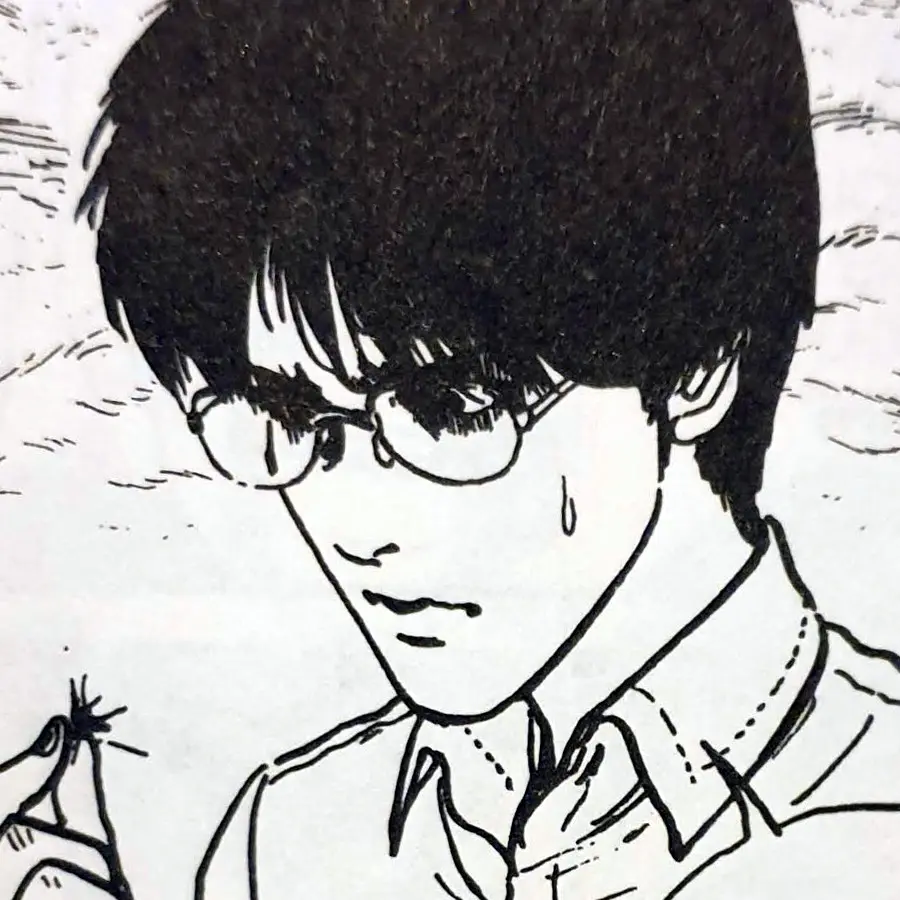
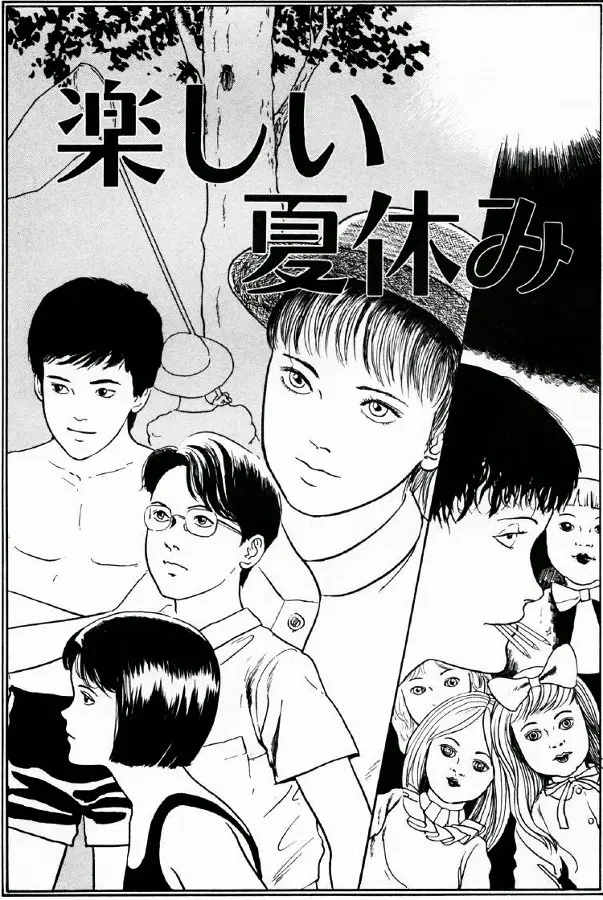
Yuusuke and Michina have travelled on the train to see some relatives of theirs. These relatives are six people who live in the same home. The Mother; Father; Grandfather; two sons and the daughter. Most of the family are very warm and welcoming to the visiting brother and sister. However, they soon get to meet their reclusive, and ever-so-slightly evil, younger son — Souichi.
The very first thing that we see of Souichi, is him spitting a small metal nail at the visitors. This is as they try to take him some food up to his room. You see, by this time they had yet to meet him and so they are trying to say hello to him. Souichi’s first response is to be hostile towards them.
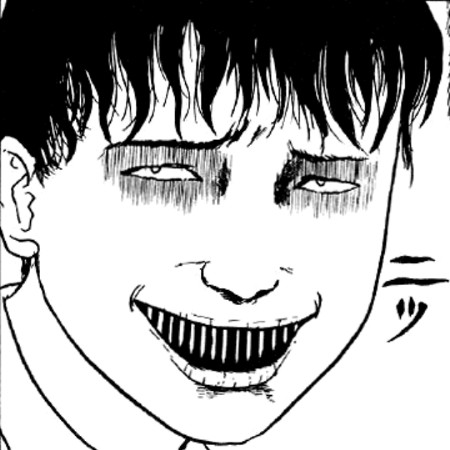
As their family holiday passes each day, Souichi displays more strange behaviours — sinister laughs; curses on the family; attacks with deadly nails. With his hostility specifically targeted towards his visiting cousins. But how far will Souichi go to make his presence known to them, despite being so introverted?
MichinaYuusukeKouichiSayuriSouichi
Characters from Fun Summer Vacation
Introduction to Souichi
When I had previously thought about Souichi, I had only remembered him from the manga “Souichi’s Selfish Curse”. I think that is the most popular Souichi story, possibly due to it being an early episode in the Junji Ito Anime Collection. But I was surprised, and happy, to learn that there are in fact a whole bunch of manga stories involving the evil-doing, twisted young boy.
What is perhaps interesting too, is that he isn’t really the central character of this particular manga — Fun Summer Vacation. He is just the strange young son who seems to haunt his family from the shadows. Driven by some strange internal need to punish and hurt those around him.
He is seen skulking about in his room, sucking on old nails and trying to curse people with his doll replicas of them. He isn’t the most likeable of Junji Ito’s characters but I would be lying if I said that I didn’t have a small piece of my heart set aside for this boy-terror.
Does he just need some love?
His actions towards Michina, although twisted and selfish, opened up a crack in his evil facade for me. I couldn’t help but feel that he was trying to curse her simply to get her to stay back at the family home with him. That way they could remain together, while the others went out to the swimming pool again. Maybe he was lonely after all and felt that he could only really connect with her. Perhaps he was even in love with Michina in some twisted sort of way?
Despite his appearance of hostility, maybe Souichi is just a little boy lost? His mother seems to enable some of his behaviour by taking his meals to his room, and allowing him to stay locked away. His father doesn’t really seem to do much by the way of discipline either. And his older brother seems to just wish that Souichi was something that he isn’t. Perhaps if the parents had set similar boundaries and punishments as they presumably had for the eldest two siblings, maybe he wouldn’t be acting out in this way?
Or maybe Souichi is just a little evil-incarnate brat who simply loves to see people in pain. Whatever it is that drives him, I can’t help but feel that there is more below his diabolical surface than meets the eye.
Souichi comes to Michina when they are alone in the homeThe family play cards whilst Souichi hides in the shadowsYuusuke and Michina find Souichi talking to his dolls
In Conclusion
I really want to say that I loved this story, but in all honesty it isn’t too high on my list of favourites. Now don’t get me wrong, this is still a good manga to read – especially as it is the first appearance (I believe) of the now-famous character of Souichi. However, I can’t recommend it over more memorable stories such as Flesh Colored Horror or Army of One.
But despite the story not being one that particular drew me in too much, Souichi is definitely a favourite character of mine. Even if I’ve only seen him in three stories (including this one) at the time of writing this post. I trust Junji Ito enough to believe that he can take Souichi into some pretty dark and even comedic places before reaching the end of the crazy boy’s story.
I’m looking forward to further exploring the world of Souichi, his curses, and just how those around him manage to survive.
As I walked further… spiral patterns appeared on the walls and ceiling. They glowed eerily in the dark.
Kirie describes her journey up the steps of The Black Lighthouse
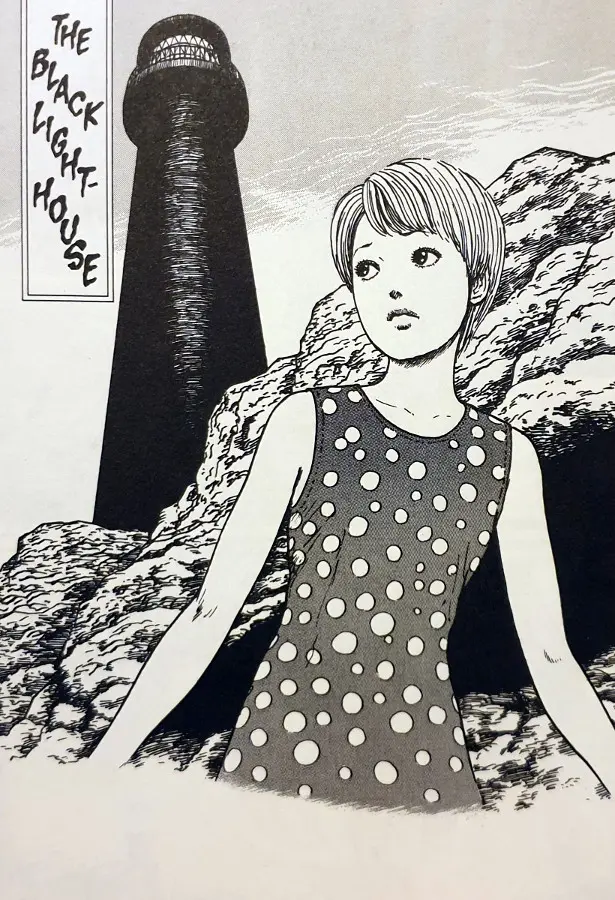
The Black Lighthouse — synopsis
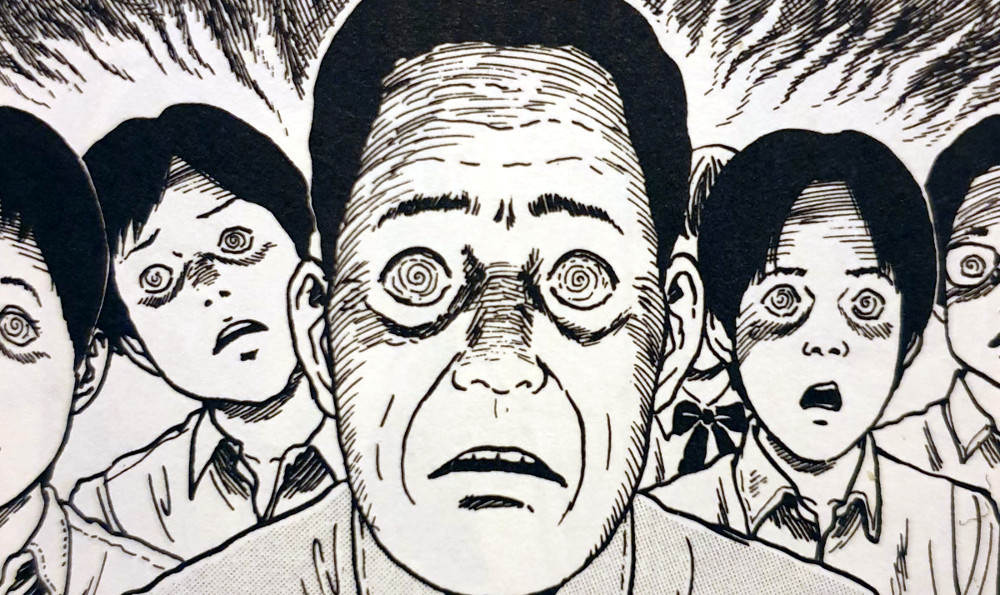
After sitting abandoned for quite some time, the lighthouse on the coast of Kurouzu-cho suddenly springs to life. At dusk, it begins shining out a powerful swirling beam all around through the night. This beam begins to mesmerise the townspeople more and more as the time goes on.
People can be seen in the streets running in circles as if possessed by the same spiral evil that now haunts the lighthouse. After some of these strange happenings some of the men in the town decide to head inside the lighthouse to get to the bottom of the mystery.
After the men have gone missing inside for some time, Kirie spots her younger brother with his friends heading towards what is known as The Black Lighthouse. Although she warns him, her brother runs inside with his three friends. Of course, she has no option but to run after them, which she does with gusto.
The further that Kirie climbs up the lighthouse steps, the stranger the place becomes. Patterns on the walls that give off a weird glow, lighting her way; the feeling of lost time and disorientation; and an horrific discovery that she finds towards the top.
As dusk approaches and Kirie still searches for her brother and his friends, what awaits them all in the Black Lighthouse’s top floor? And just what gruesome discoveries will they all find?
Kirie GoshimaMitsuo
The Spiral Light
This is perhaps the furthest reach that the spiral has had over the town up until now. From its smaller beginnings of affecting individual people and their family’s lives, to the larger moments within Kurouzu-cho school — The Snail and Medusa, specifically. But never before has the spiral been so bold as to cast itself over the entire town at once.
The light stretches out over the town leaving no-one and nothing outside of its gaze. Even the light rays themselves seem to be beamed out in a spiral fashion. I also found that it reminded me of the Great Eye from Lord of the Rings. I wonder if that was an inspiration for Junji Ito in this chapter? In fact, when Kirie arrives at the tower’s top floor, she is greeted by the melted lens of the lighthouse’s light source — melted into a spiral-shaped eye!
And just as the Great Eye had it’s vision set across all of Middle-Earth, so too does the spiral have its gaze across all that it sees. Even a small boat nearing the town’s coastline is pulled in and run aground. There is quite literally nowhere to hide from this town’s curse of Uzumaki.
People of Kurozu cho staring at the light
Claustrophobia
Despite the fact that the nature of this aspect of Uzumaki covers the widest amount of space, it also causes some interesting claustrophobic affects on the characters.
Although the power of the black lighthouse stretches out across the entire town and out to sea, the wider investigation of its power is done within its very narrow stairwell that seems to make those who ascend lose their sense of time. We see first-hand with Kirie the almost-dizzying effect this spiral staircase has on her, and the spiral patterns that emerge on the walls as she climbs higher. Uzumaki is literally closing in on her.
The real pay off in this chapter though, comes when Kirie discovers the burnt bodies of the men that went in some time before her. Beside which she finds two of her brother’s friends sat shaking in fear.
Spirals and charred remains
I advise you to really take the time to look over the depiction of those men’s remains too, as morbid as that sounds. Junji Ito’s detail of how he shows those men’s remains are impressive images to behold. He has painstakingly drawn in levels of details that lesser artists would have perhaps left out. Every crease and piece of charred flesh is accounted for.
And when I was taking the time to really focus in on those panels inside the stairwell, I then started to really notice the spiral patterns on the walls. Made up of hundreds of tiny little dots throughout every hallway depicted. A real inspiration and an insight into his patience and his craft.
The Black Lighthouse on the rocksPeople start to behave very strangelyKirie investigates the Black Lighthouse
In Conclusion
The Black Lighthouse is not my favourite of the Uzumaki collection, but it does however contain some of my favourite images from it. Namely the ones mentioned above with the fire-eaten remains of the men who went to investigate the lighthouse. As well as the spiral eye in the lighthouse’s lens remains.
I also felt this had a very interesting part towards the end, when Kirie comes face to face with the town’s curse. Although not the centre of the spiral madness (that comes later on in the collection), with the lighthouse’s lens melted into a strange swirling eye, Kirie is able to look straight into it. Perhaps somehow into the heart of the spiral itself?
I probably wouldn’t advise this being read out of the context of the collection, simply because I didn’t really feel it was able to stand apart from the greater cursed narrative that runs through it. As a part of the greater series arc it works really well and shows how the spiral is making itself more and more noticeable. However, it doesn’t stand as well on its own feet as perhaps chapters like Jack In The Box and The Scar do.
She died giving birth to me. When I came out, she was already a ghost. But she still cared about me. Even after that, she would come to breastfeed me.
Misaki tells Shigeru about her twisted past.
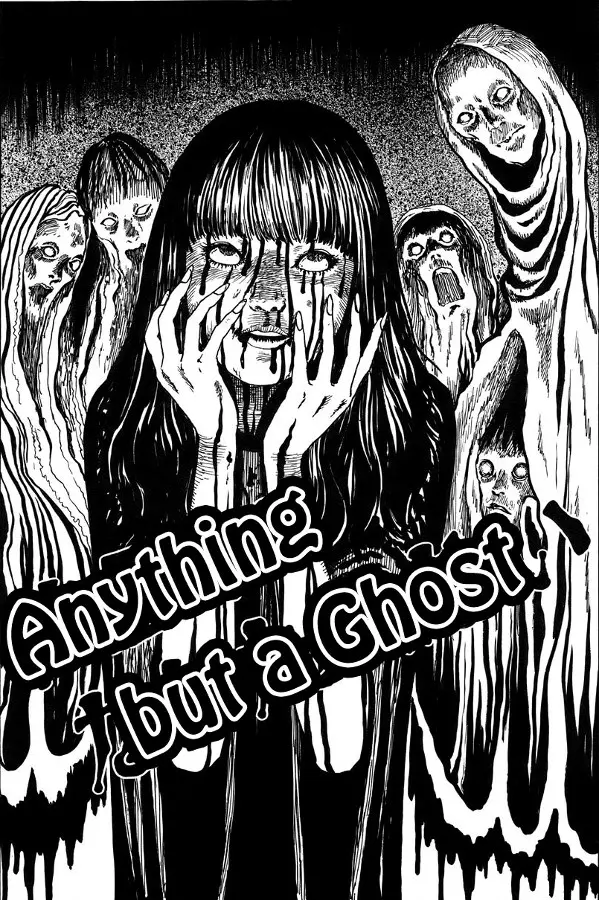
Anything but a Ghost — synopsis
Whilst driving through a mountain area, Shigeru finds a woman stood at the roadside with her back to the road. On leaving his car and walking up to her, he sees that she seems completely stunned whilst being covered in blood. Without hesitation, he drives her to the nearest hospital to get her checked out. As it turns out, the blood is not hers and she isn’t even injured in the slightest.
After some time has past, Shigeru and his wife are going about their lives — they even have a child on the way. Then out of nowhere there is a knock at the door. On opening it, Shigeru sees a beautiful young woman standing there, but fails to recognise her straight away. She introduces herself as the woman he helped by the roadside that day, and tells him her name is Misaki.
But it seems that she is to have a negative impact on his life. Her and Shigeru begin seeing each other in secret and soon reveals a strange, twisted secret about herself — one that he simply doesn’t believe. However, as the closing pages of this manga reveal themselves, not only does her secret show itself to be true, but things also get a whole lot stranger and a lot more darker.
ShigeruYuinaMisaki
Characters from Anything but a Ghost
A twist on the ghost story
Anything but a Ghost is a ghost story where the ghosts are not the ones to be feared. Misaki is a young woman who seems to be somewhere between that of a ghost and that of a human. And even though she is drawn as a very innocent and delicate looking woman, she always has an air of creepiness to her. This is helped largely due to how she is introduced to us. We know something is not quite right — we just don’t know what it is at this point.
When she mentions that she can see Shigeru’s ghosts following him, I immediately thought of them as malevolent things. I was sure these ghosts she talked about would be grotesque monsters that live in the next plain of existence, just waiting to come through. But the truth is far more sinister than that.
I always enjoy how Junji Ito seems to be able to take our preconceived ideas of what typical sorts of horror stories are, and turns them on their head.
Misaki shows her true self
Strange food cravings
In horror fiction, I think we are used to seeing monsters that prey upon the weak before eating them. Whether that be vampires, werewolves, other-worldly beasts or even cannibals. But this is the first time, as is a lot of the times reading Junji Ito’s work, that I have seen the idea of eating one’s victims in quite this way.
The very idea of having a person who feeds on ghosts is an incredibly inventive one and, dare I say it, genius in it’s own way. But it doesn’t just end there. I absolutely loved how, when Misaki would bite down into her ethereal feast, somehow blood would spill out and cover her face. It’s almost like she is able to pull the ghosts of those who have passed, into our world, if only for a moment — for one last taste of pain and suffering. As if death wasn’t enough.
And without giving too much away, the visions that Junji Ito was able to put into my mind, purely by suggestion, were pretty horrific. When she bites into what she eats towards the end, I could see every single blood-curdling inch of it, yet Ito drew none of it. He is truly a master of not only his own imagination, but of toying with his readers’ imaginations too.
Shigeru finds the blood covered woman beside the roadShigeru starts seeing Misaki in secretWhat is Misaki eating?
In Conclusion
This is an excellent stand-alone story from Junji Ito that is as unsettling as it is inventive. What was perhaps most noteworthy for me, was how it is completely grotesque — especially with what she eats towards the end — but without you actually seeing the action itself. Kind of like how Quentin Tarantino was able to gross out early 90’s audiences with his famous ear-cutting scene in Reservoir Dogs. Despite never even seeing the cut.
You never actually see her biting into any pound of flesh. But the result is no less effective. If anything it’s perhaps more so.
I would highly recommend this as a first read from Junji Ito’s catalogue of work. It is readable out in public without attracting people’s concerned stares, with no real displays of gore and flesh. However, it will perhaps leave you feeling like you have seen as much.
Anything But A Ghost is anything but a standard ghost story.
You can read Anything but a Ghost here. (Please support Junji Ito by buying his manga in your own language where available)
Then came another rush of sea-fog, greater than any hitherto — a mass of dank mist, which seemed to close on all things like a grey pall, and left available to men only the organ of hearing, for the roar of the tempest, and the crash of thunder, and the booming of the mighty billows came through the damp oblivion even louder than before.
Get off my back! He’s just a slug now! He’s not human anymore!!
Tsumura justifies himself poking Katayama with a long stick
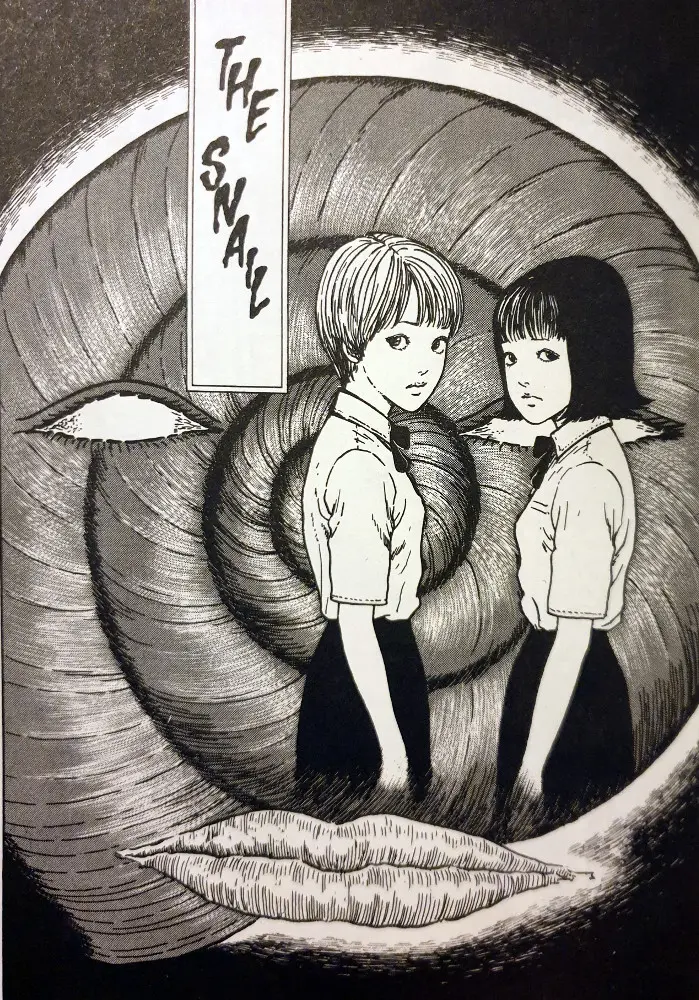
The Snail — Synopsis
Katayama is a bit of a joke amongst his classroom peers — one of which is Uzumaki main-stay, Kirie Goshima. One morning Kirie and her friend remark on how it is raining for the first time in a while, and that they predict that Katayama will come to school that day. Sure enough he walks in, late as always, and slowly takes his seat.
As each day passes, with the rain continuing, Katayama keeps arriving later. However, his appearance begins to change with each passing day. Firstly a spiral bulge becomes visible from underneath his wet school shirt. Until, by the end of the week, he has somehow managed to transform into a giant snail. Yep, the title of this chapter is very literal.
Just how will the other school students deal with this very odd turn of events? Will they attack or will they try to help? And what will happen once another one of those very students begins to display signs that they may be going down a similar path?
KatayamaKirieKirie’s friendTsumuraMr Yokota
The Spiral Rises
There are two starting points for the spirals in Uzumaki, as I can see. The first is in spirals that already exist in the world. Like with small whirlpools in water, snail shells and in coiled springs. Then there have been the appearances of spirals that have seemingly come from nowhere. Like with Kirie’s hair problems and the girl with the scar.
In The Snail, we see the latter — a large spiral mark on Katayama’s back seems to point to the origin of his grotesque transformation. Once this mark is discovered, after Tsumura drags a naked and humiliated Katayama into the hallway, the transformation seems to speed up. Presumably, to get the reputation of being slow, it would have to have been a part of his personality for a while before this chapter begins. It’s almost as if the spiral speeds up the transformation process once it is discovered.
There was one thing I noticed that I found very interesting to note too. Once Katayama turned, and was given sanctuary in the shelter on school grounds, Tsumura starts poking him with a stick. Soon afterwards he himself begins to show signs of slowing down. Then later on, when another character destroys the snail eggs left behind in the woods, they too seem to be targeted.
I wonder whether the spiral is completely self aware and is actually beginning to target these people out of malice or revenge. If so, it would indeed give some new angles from which to view other chapters in the Uzumaki collection.
Everything from the bumpy slimy textures of the bodies, to the bulging, elongated eye sockets. Even down to the way he shows Snail-Katayama peeling slowly off the school’s outer wall as he is forced off by students with brooms. These Kafka-esque depictions of spiral-controlled snails display a horror manga artist at the top of his game.
There was another thing that I found worked at both the grotesque and the dark comedy levels too. The moment when both Katayama and Tsumura, both fully-transformed, are kept together in the pen. They soon begin to mate, as snails do, which brought a whole new layer to the story. Not only are these both young men at heart, or at least they were, they were also the complete opposite of friends. The idea that you have a bully and his victim now mating as human-sized snails, brings a whole new level of horror, and dare I say comedy, that only someone like Junji Ito could conjure up.
Katayama’s back becomes swollenForcing the snail off the school wallKatayama and Tsumura begin mating as snailsKatayama leaves a slime trail
In Conclusion
I feel like The Snail is more of a mid-level entry into the weirdness of Junji Ito’s worlds. You are safe from the violence and body horror found elsewhere, however, instead you are treated to spine-tingling depictions of gross transformations.
I think it works really well as a standalone story too. The fact that Katayama is slow by reputation, means that the story doesn’t need to rely on the surrounding spiral nightmares of the town of Kurouzu-cho. This could just as easily be a one-shot nightmare of Ito’s.
If you are feeling particularly brave you could go in with reading The Snail first. It will give you some great examples of Ito’s artwork and indeed his comedy-aware writing style. Or you could start at the beginning of the Uzumaki Collection and let this one sneak up on you slowly. Give it a read if you think you can stomach it.
You should know I take this as a challenge… I’ll stand out too… you wait and see.
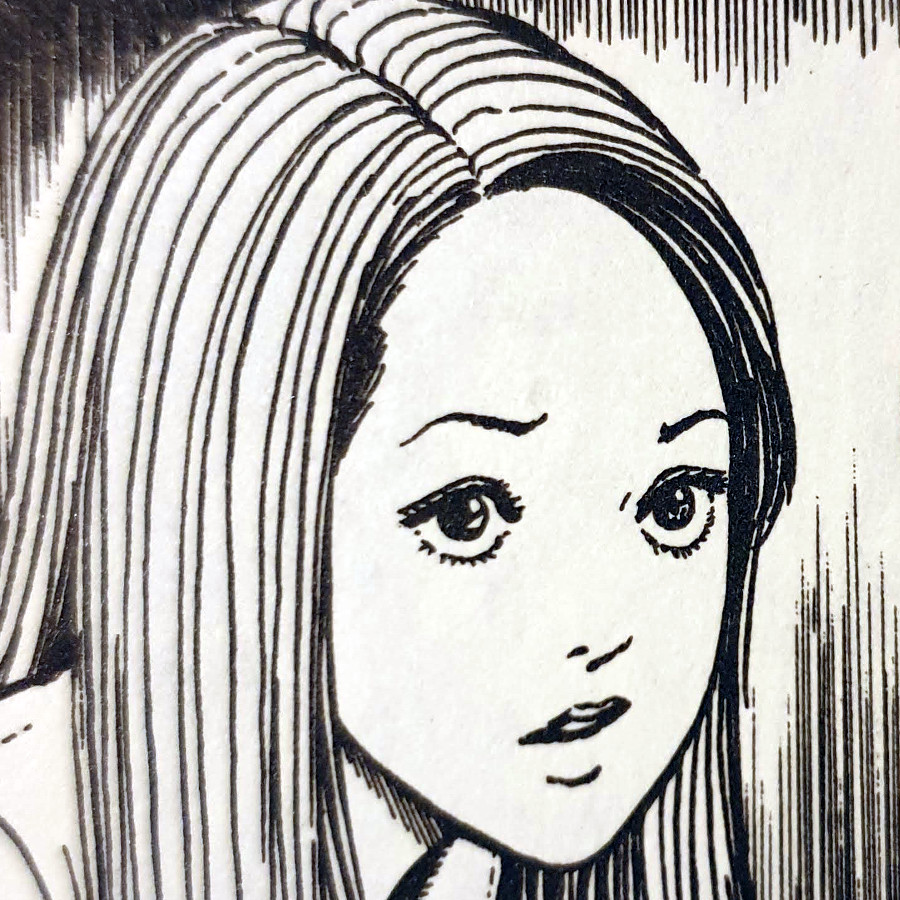
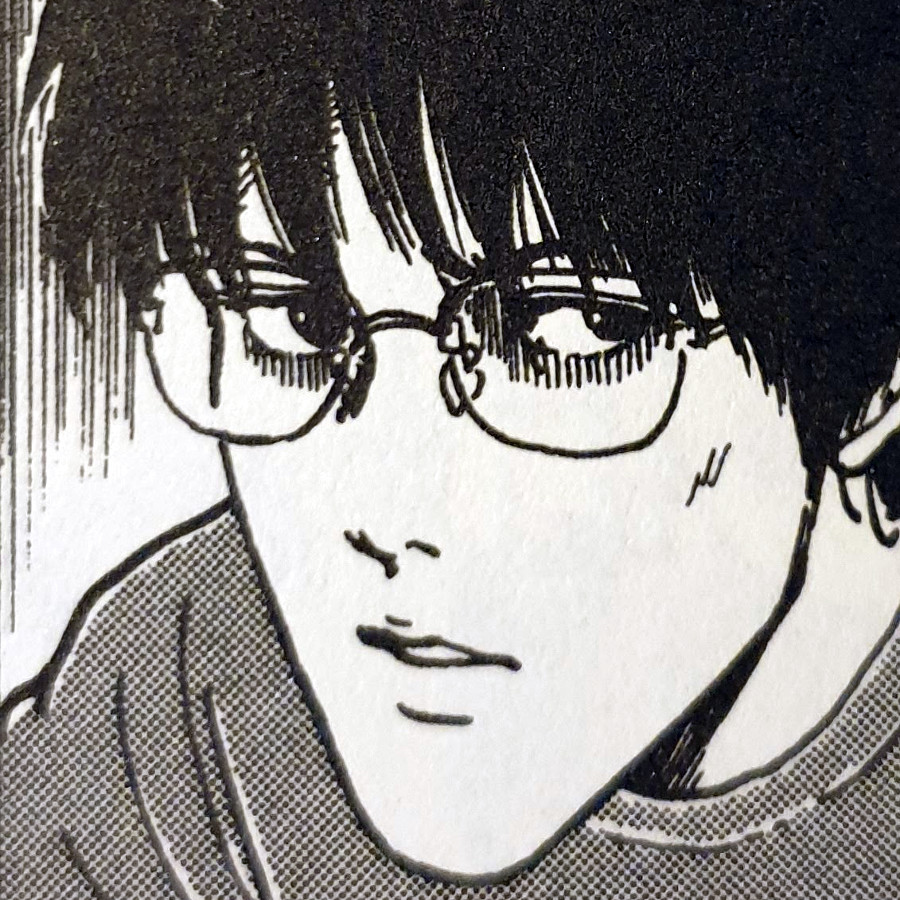
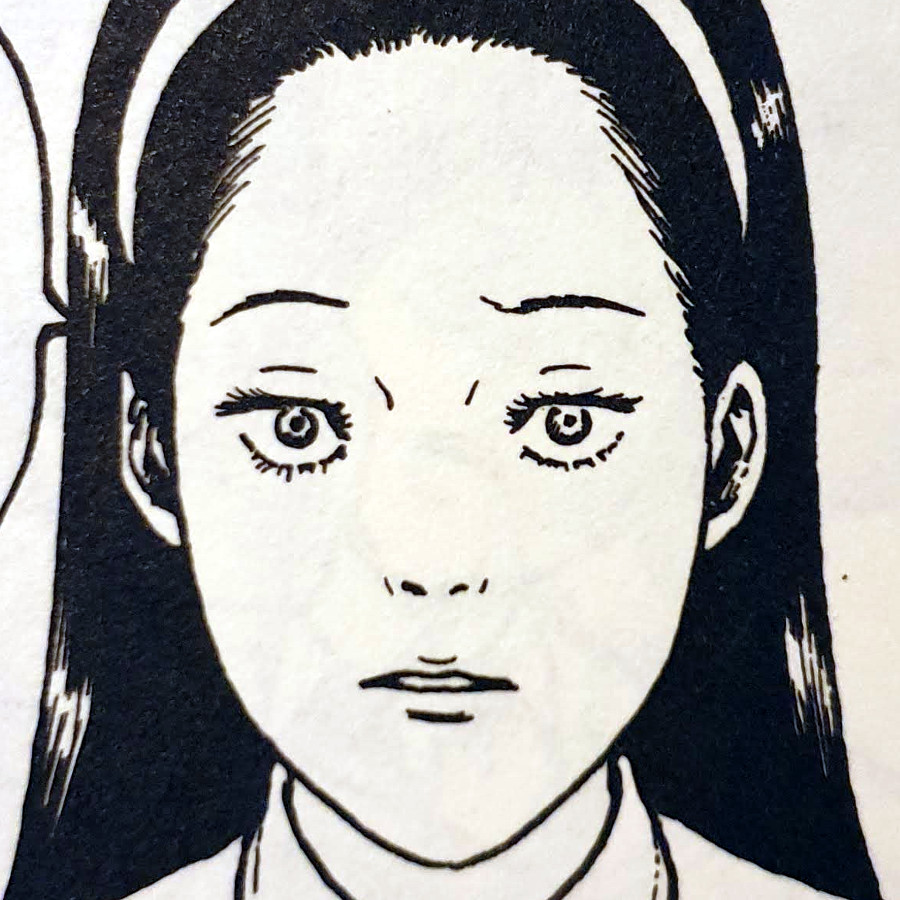
Sekino gives Kirie a thinly-veiled warning about her new hair.
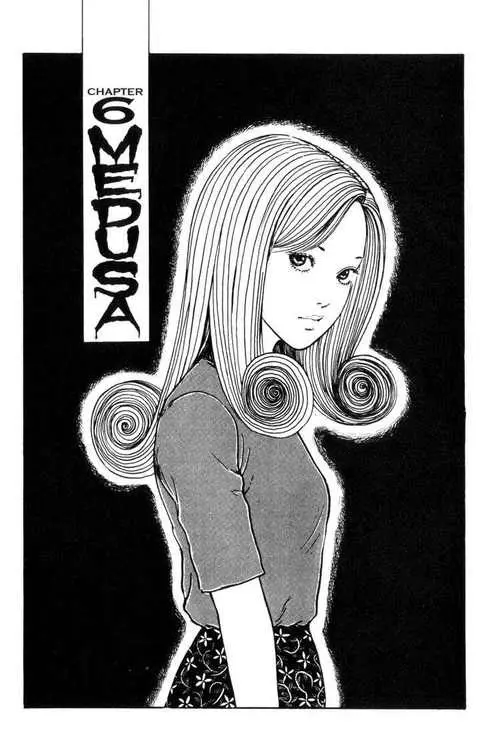
Medusa — synopsis
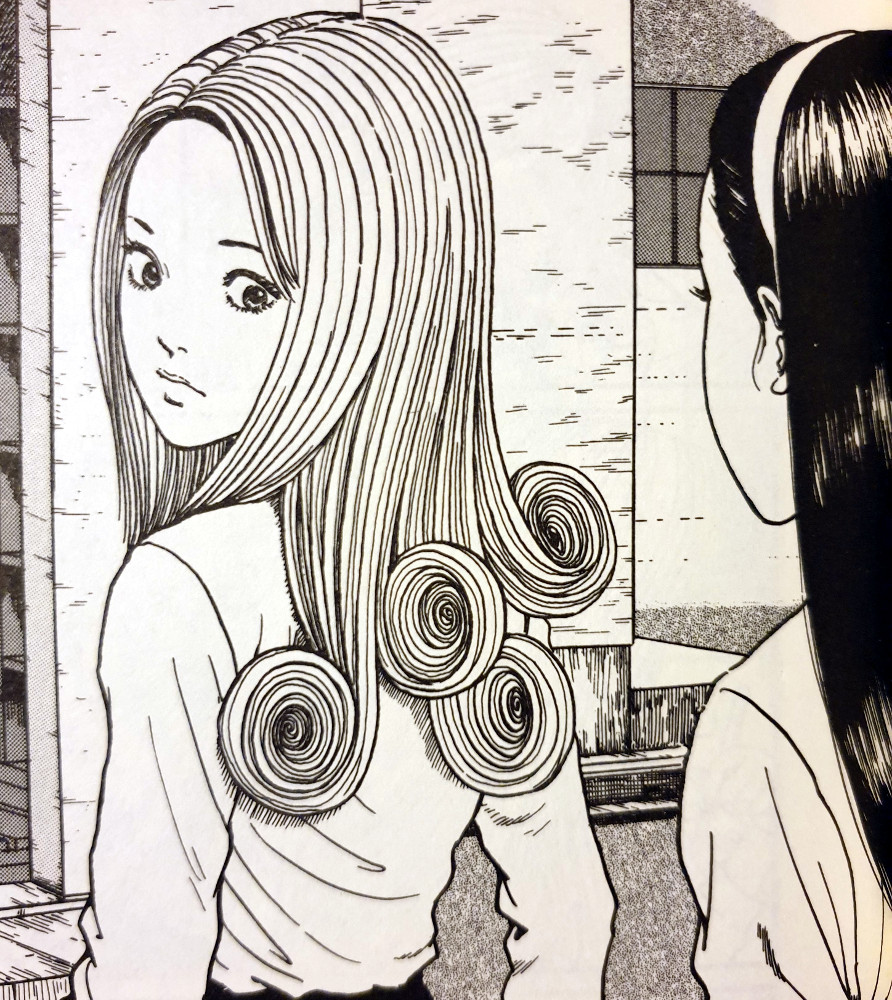
Up until now, the Spiral has been affecting the people around Kirie Goshima. Her boyfriend Shuichi’s parents; her own father; a friend at school. But in Medusa, the Spiral is finally catching up to her and has it’s sights set directly on a particular part of her body — her hair.
After a school boy’s death and some discussions with a friend over people’s sudden desires to be noticed, Kirie’s hair begins displaying the cursed Spiral in its curls. This seems to have happened out of nowhere, after a sudden growth of her hair. Will she now finally fall victim like so many before her?
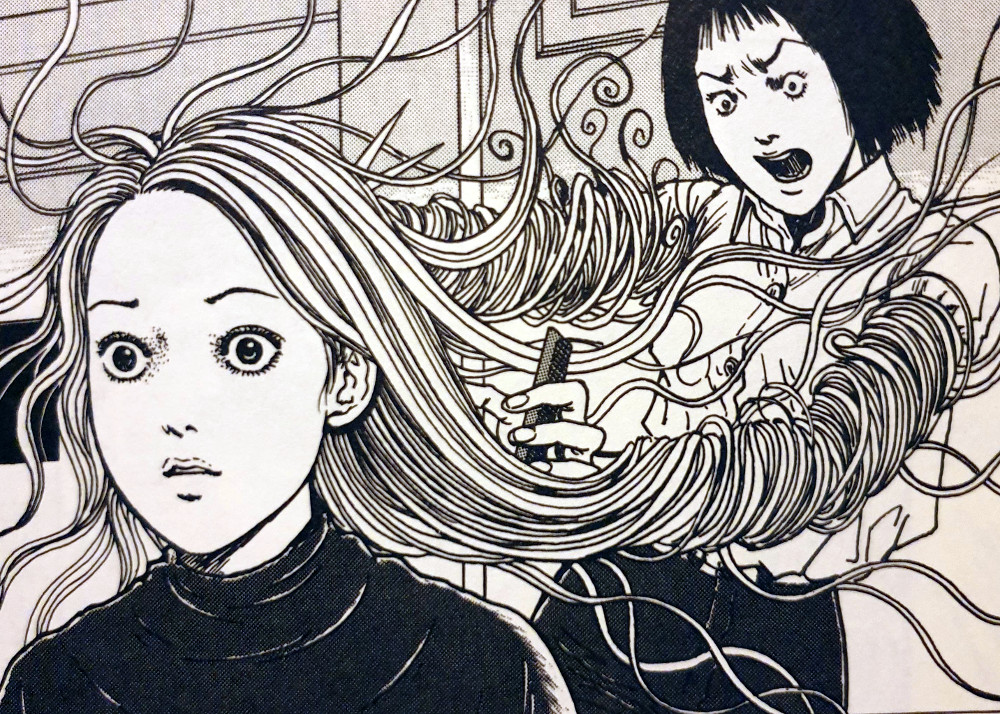
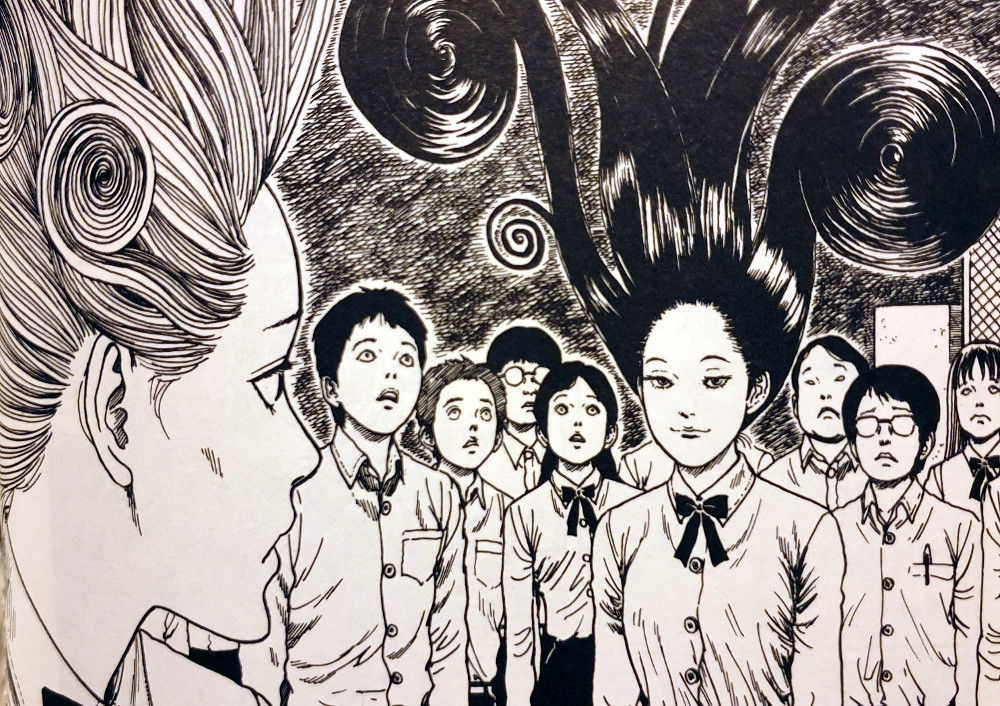
When the curls in her hair are threatened, they begin to take on a life of their own — the spiral protecting itself. The hair grows faster than is naturally possibly and even physically fights back against those that would do it harm. But when a school friend of Kirie’s see’s these ever-growing curls as a threat to her own dominance, that friend decides to challenge her in one of the craziest showdowns I’ve ever seen in a manga.
KirieShuichiSekino
A hairdresser’s nightmare
The subject of hair in Junji Ito’s body horror is something that you may have seen before. In his Tomie chapter “Hair“, characters attach strands of Tomie’s hair to their heads in order for them to obtain her beauty. But in Uzumaki’s Medusa, the Spiral is drawing these people’s own hair out of their heads in order to seduce and mesmerise those around them.
The idea of parts of one’s own body being out of ones control is a scary one. These have been explored in horror before, whether it’s the classic “arm transplant but the arm is that of a murderer’s” or “an eye transplant that lets you see ghosts”. But the idea of using hair against the person who owns it is a fresh one to me.
I loved how the hair became so flamboyant and ridiculous as to lure in those around it. But what I found even more effective was how the hair, whilst growing at such a fast rate, took its toll on the owner. You could see it in Kirie’s eyes as the hair lusted after a bigger audience. But it wasn’t until the closing pages that you see its true effect on a host.
Kirie’s hair fights back against the hairdresser
The spiral effect grows
We’ve seen pretty isolated cases of the spiral at work until now. Limited to families and those closely related. Even the episode with Shuichi’s mother in the hospital could be written up as a woman’s madness on the doctor’s report. But the actual encounters with inexplicable spirals has been limited save for those involved.
In Medusa, however, the hair that grows from Kirie, and later her friend Sekino, is so unnatural that it just can’t be explained away. No amount of hair spray could have kept those curls up. It would have been plain to all that this is some unnatural force at work. Could it be that the Spiral curse is ready to show itself more widely now? Is it no longer content with appearing in the corners of Kurouzu-cho and instead now wants a larger audience for itself?
Interestingly, the Spiral only seemed to target Kirie after she had been clear to her friend about not wanting to stick out. She was content with just moving along in life. The idea that her friends’ obsessions with being noticed was intrinsically linked to the spiral’s presence, seemed to be confirmed when she was made the centrepiece of the Spiral’s plans within the Kurouzu-cho school.
Kirie’s hair becomes infected with spiralsPeople become mesmerised by Kirie’s hairThe showdown of the hair
In Conclusion
The image of the woman with the large curls floating over her head is a common one from Uzumaki. When seeing images from the manga or even clips from the Uzumaki film, it is a pretty staple image. Indeed it does represent both how incredibly inventive and at times ludicrous the world within Kurouzu-cho becomes.
Medusa is a calmer story than most from Uzumaki with absolutely zero gore. The goriest image is that of a girl whose life is visibly drained from her face; her skin and eyes sunk back. But nothing more than how you would expect a mummy to look in a museum. In fact, the story is home to more humour than gore. Granted it is a particular kind of humour, but it is there nonetheless.
This story seems to be opening up the Spiral to a wider array of people within the town. Many more are becoming affected by it, and it’s only a matter of time until the Spiral’s full force is released. I think Kirie will still serve as the central character, but the curse looks to be spreading its wings wider and wider from here on out.