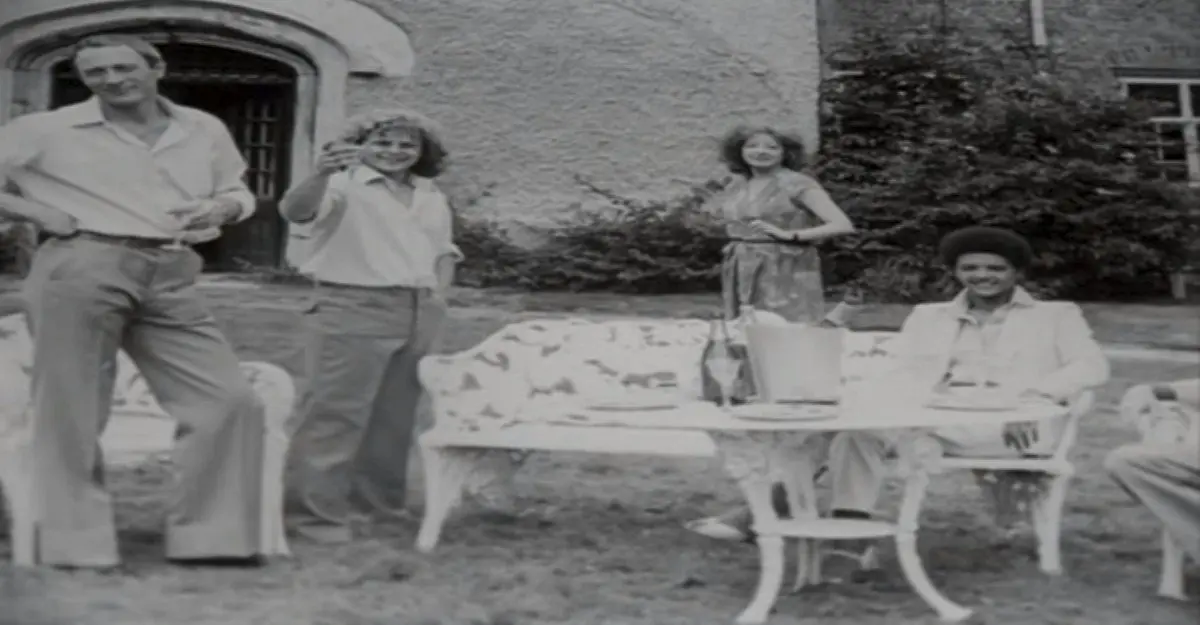
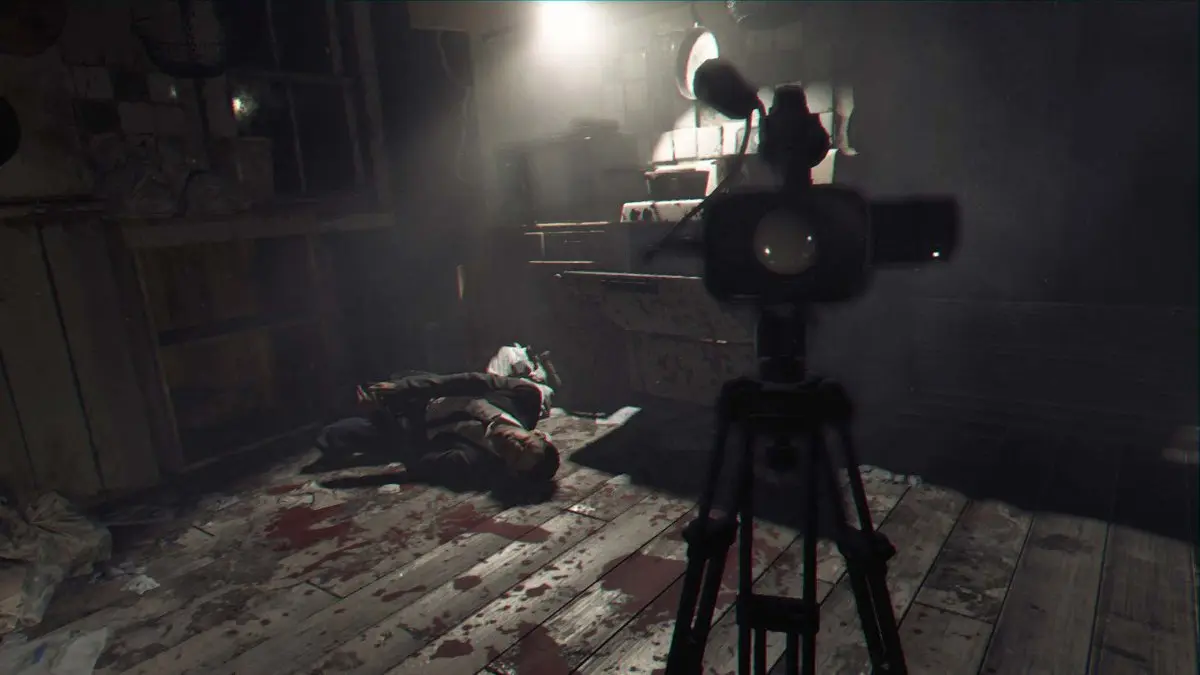
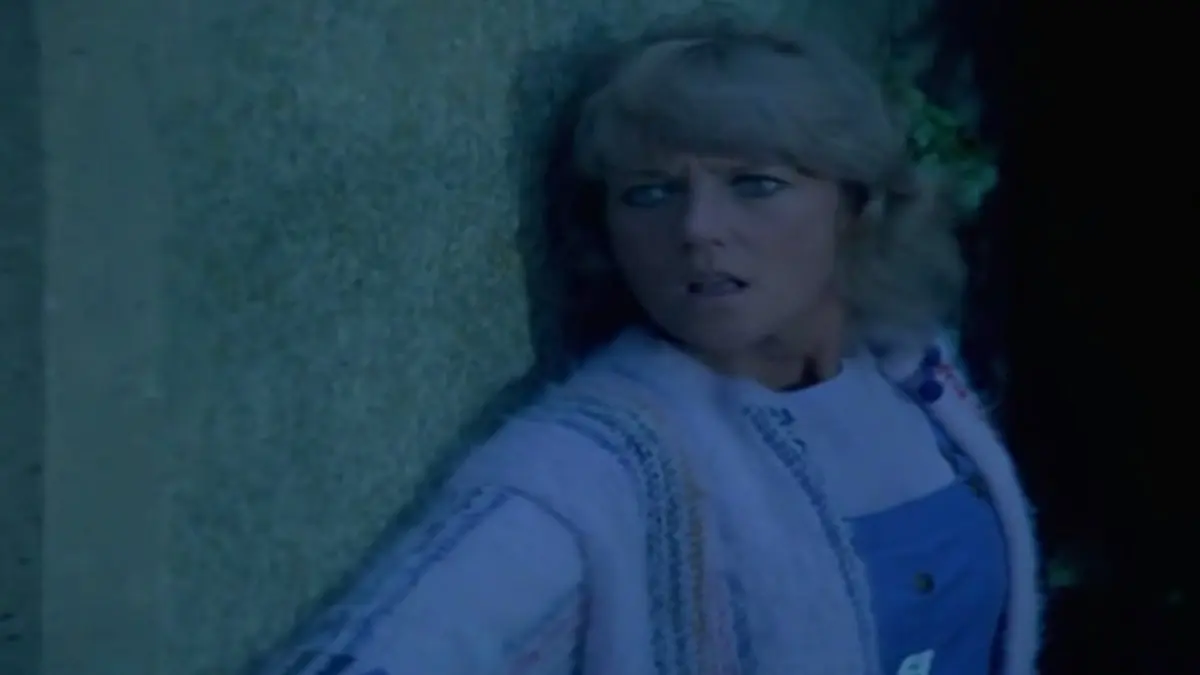
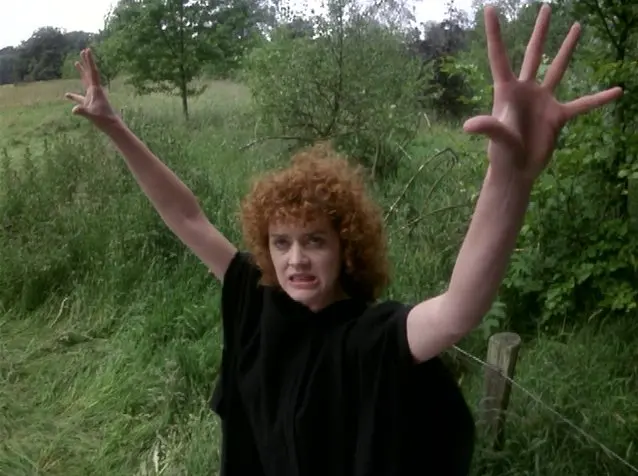
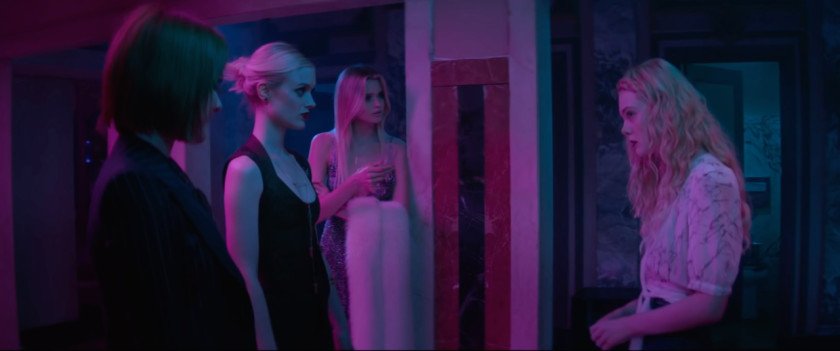
Watching Five Dolls for an August Moon by Mario Bava.


Didn’t you hear the wind last night? The voice of the storm was calling your name!
Kirie is the target of the spiral that haunts Kurouzu Cho, as it seemingly controls a violent typhoon to hit the town hard. As her close friend Shuichi and Her sit on the beach together, Shuichi gets the feeling of the approaching typhoon before the weather forecasters soon confirm it.
Before long the typhoon tears through the town, destroying homes and the streets surrounding them. Kirie does attempt to still take some food to Shuichi that evening but it looks that she is put off by the storm’s power — coupled with the fact that it seems to call out her name on the wind.
All through the night the storm seems to be calling out to Kirie, which confirmed a long-standing theory of mine: the spiral curse is targeting Kirie for some strange reason. As she makes her way to Shuichi’s the next day, He finds her walking halfway there — to his horror.
He warns her that the eye of the storm, the typhoon’s central point, is directly overhead and is watching her! What follows is a violent chase through the streets of Kurouzu Cho as they attempt to escape the storm’s focused eye.


Something about Dragonfly pond wasn’t right ever since those first chapters where it would pull in and absorb the cremation smoke from recent funerals. And now it makes its reappearance as it seems to be the very thing that pulled the typhoon into the town.
Rather than the typhoon and storm being controlled by the spiral curse, it is more likely that something inside Dragonfly Pond is capable of pulling in surrounding things to its centre.
Throughout recent chapters of the Uzumaki Collection, the power that the spiral curse has being displaying has been increasing somewhat. The gross transformations in The Snail; The violent, bloody events at the hospital and the resulting babies born in The Umbilical Cord. The stakes are getting higher and the surrounding people that are being affecting is increasing too.
And at the centre of it all seems to be Dragonfly Pond.

Kirie is front and centre the target of the typhoon, and by extension the spiral curse itself. But this is nothing unusual. She has always been around many of the strange occurrences in the town. This may even have led some to think she was a cause of them. However, this chapter seems to make clear that the spiral is actually targeting her.
Could it be that all of the things that happened before were in fact ways that the spiral was trying to get close to her? The parents of Shuichi right back at the start; her father’s furnace in The Firing Effect; her admirer in Jack in the Box; even the boy who transformed into The Snail in her classroom.
Part of my own theory about Kirie is to do with the location of her family home. She lives with her family right next to Dragonfly Pond — the place where a few of the occurrences of the spiral have happened. There was the cremation smoke in The Spiral Obsession part 2 being sucked into it; the pottery made from the pond’s clay in The Firing Effect; and now the storm being drawn into the centre of the pond.
It just feels like too much of a coincidence for her to live next to this pond and then go on to be targeted by the spiral.

Junji Ito’s art is always something to marvel at. His detail and imagination go hand in hand in creating some of the most awe-inspiring and disturbing visions from the world of Horror Manga.
With The Storm specifically, I wanted to draw special attention to the amount of detail he puts into the chaos in the story. Half of the story is Kirie and Shuichi being chased by the storm across Kurouzu cho, as it tears open beings and local districts. The town really is starting to fall victim to this curse’s power on a much wider scale now.
In many of the panels in this chapter you really can see the time and effort put into every frame. Into creating the believable, frantic journey that these two friends must endure. You can feel the biting storm; the unforgiving wind; and the utmost sense of urgency as they try to escape the eye of the storm.

The Storm gives a solid answer to something I had been thinking up till this point in the collection. That Kirie is in fact the target of the Uzumaki; that it seems to have some kind of designs on her.
When viewed in isolation the events of this collection, although very strange, don’t seem to be targeting her as such. But when I was looking back after reading The Storm, the pieces seemed to start spiralling into place.
I probably wouldn’t recommend reading this chapter alone, without knowing the surrounding story that is happening. Although it does stand on its own and shows Ito’s incredible skill, you should definitely read this as part of the collection as a whole. I think it deserves to be understood in it’s wider context.
I’ve not really seen or heard much on the new 4-part Uzumaki anime series coming on Adult Swim next year. However, after seeing this teaser and I am now officially excited!
It seems to look like they have actually taken panels from the manga and animated them, as opposed to re-imagining them. And the effect looks incredible in my opinion.
Kirie looks gorgeous and the section showing her looking up at the face in the cremation smoke creates a stunning effect (no spoilers on who’s face it is :P)
I’m really looking forward to this series but I do hope that each episode is around an hour long at least. 4 parts seems way too little to fit the entirety of the Uzumaki Collection in to. And surely they can’t be taking any chapters out of it?


…but we’re makin’ things happen with our comedy. We’ll take control one o’ these days!!
Tasogare Kintoki says some strange things during their comedy routine
Keisuke and Tsuguo are two friends talking in a small cafe. Tsuguo is an every day regular young man, whereas Keisuke is more withdrawn and “gloomy”.
Tsuguo tells his friend of a story of a recent local killing of an obscure comedian. The comedian was found in the street with an expression of equal parts suffering and laughter.
Later that day, the two friends go to a local comedy club – Tsuguo wanting to cheer Keisuke up – to see the comedy lineup. One of these acts in the line up is the aforementioned duo Tasogare Kintoki.
Tasogare Kintoki are objectively bad at comedy. Their jokes fall flat and most of their banter is regarding how they will one day “make it big” and live in a mansion. A very strange double act indeed.
However, after a few moments of complete silence with the odd whisper, one audience member begins laughing uncontrollably. And then, just as Tsuguo comments on this strange occurrence, another person does the same. The effect starts to repeat through the audience until the entire club is in a vicious roar of laughter. That is, everybody except for Keisuke.
There is no doubt that something is not right in that comedy club, but what is it? Keisuke is the only one not affected, but what does he have that the others don’t? And what might Tasogare Kintoki do when they realise that there is one person seemingly immune to their unique brand of comedy? Their sinister grins promise a future of pain and torment.


Some spoilers below
Horror and Comedy are very closely related. Both genres have a willingness to go over the top with absurdity and exaggeration. While comedy uses it’s exaggerations to poke fun and make its audiences laugh, horror conversely uses it’s own to scare and unsettle its audience.
But what’s often more interesting, at least to me, is when an artist manages to combine the two into something often greater than the sum of the parts. Many people often cite Quentin Tarantino’s famous ear-cutting scene in his first major film, Reservoir Dogs. (Despite never actually seeing the cutting itself, audience members still tending to look away)
What I think Junji Ito has managed to craft here though, is a different way of blending horror and comedy. Instead of taking the elements of both genres to make his story a “horror comedy”, he has actually taken horror and made it infect the comedy inside the story. I am referring to the fact that the laughter and enjoyment apparently felt by Tasogare Kintoki’s audience, is in fact the direct result of the phantoms/ghosts that they project out into the crowd.
I think the blending of genres is always interesting to see. But I especially liked here how Junji Ito hasn’t necessarily blending the genres together. He has instead kept this as a horror story, but used the comedy within the narrative as the vehicle for that horror.

Junji Ito has always been an artist who draws great facial expressions. Especially faces of pain and obsession. In Ghosts of Prime Time, he has on display some brilliant faces of extreme laughter and, of course, pain.
The first example is actually on the very first page — the story of the obscure comedian who is found dead in the street. The close up of his face does indeed show laughter at the time of death. But so to it manages to put across pain and suffering from, I believe, the completely white eyes and taught muscles around the neck and face.
And I can’t mention the faces in this story without mentioning Tasogare Kintoki themselves. Their expressions always that of faces on the cusp of laughter, sometimes without pupils in their eyes. Almost like they are being possessed at times. And despite their smiles, they are always projecting a sinister intent towards all those who see them.

Keisuke definitely takes on the role as the sane compass centre in Ghosts of Prime Time. He reminds me a little of Shuichi in the Uzumaki collection. Whilst all the craziness is going on around him, he seems to stay grounded and be able to look objectively at those things.
Just as Shuichi seems to be able to detect and know of the spiral’s control within his town, so to does Keisuke in his town. He can see the spirits that leave the bodies of Tasogare Kintoki to tickle the audience into submission. He knows they are not to be trusted and warns his friend of that.
I think these sorts of grounded characters are important to these stories. Without them we would just see the events unfold with no-one really to fight back. But Keisuke does fight back — and with gusto.

I really love Ghosts of Prime Time. It doesn’t seem to be as well known or regarded as Junji Ito’s more popular stories like Tomie or The Bully, for example. But I want to change that! This story is, as are most of Ito’s works, wholly unique.
I believe this one would be a perfect first story of Ito’s to read if you were looking to get into his stuff. Especially if you wanted to avoid the kinds of body horror that come with so many of his more celebrated works.
And believe me when I say that it will become a journey for you. Because once you have read this story, you will most likely want to start exploring his other great works too.
U.K. Release Date: 7th January 2021.
Pre-order on amazon today by clicking here.
Hellstar Remina is getting an official VIZ Media release! I can’t explain how excited I am for this. I have read it previously online but will be so happy to be able to pay for an official copy and actually give back to Junji Ito for this insanely addictive story!
I wrote up my thoughts on Hellstar Remina a while back too.
The cover art is absolutely beautiful too!


So it’s been born. I wonder what it looks like. A baby gorged with human blood…
Kirie is curious about the newly born
Some time after the bloody events of Uzumaki’s tenth chapter, Mosquitoes, Kirie is faced once again with the insidious spiral that seems to haunt her. The pregnant women who she saw feeding on human blood are about to give birth to their little bundles of joy. But what sorts of monsters will be born from such horrific actions?
As it turns out, the baby’s are born and are all perfectly normal — the cutest baby’s ever, some would say. But you can trust that these baby’s are going to be very far from normal. In fact, each of them is hiding a gross deformity and a very strange desire to return to the womb.
Of course, Kirie is alone in her suspicions and is still doubted about the events of the hospital massacre. But by the time this chapter reaches its own bloody conclusion, you can bet that there will be no room to doubt Kirie on the events that unfold.

Some spoilers below
The umbilical cord is the source of life for humans as their grow within their mother’s womb. What the mother feeds on has an effect on the kinds of nutrients that the baby will ultimately be absorbing. So is it any wonder that the feeding on human blood did strange things to them?
The introduction of the mushrooms in the hospital food was equally inventive as it was disgusting. Our first feeding as humans comes from the umbilical cord so it was interesting how the patients were attracted to this strange new food without knowing its origin.
I have heard of people actually eating their own placenta after giving birth. And whilst I would never dream of doing such a thing, I wont say bad things about those that choose to. I just love how Junji Ito, once again, takes this occurrence in real life and delves deeper into his strange imagination of “What ifs”.
Who has dreamed about just being able to return to the womb? To just leave all the cares of the world and struggles of life and just be taken care of once again. Many of us, myself included, even occasionally sleep in the fetal position — it’s a feeling of comfort very deeply rooted in the psychology of us humans.
I love how Ito took this and had us witness these babies literally wanting to return back to their mother’s womb. With a deranged doctor willing to carry out the surgery!
This led me to imagine this omnipresent spiral presence, the Uzumaki, in control of all of this — the spiral patterns in the regrown placentas no doubt being used to hypnotise him into carrying out this force’s will.

Let’s imagine for a second that we humans are all metaphorical spirals that begin at the moment of our conception. We grow into our fetal positions, almost as if we are trying to wrap around ourselves.
Then we are born. If we are lucky we are soon held closely by our mother, who will hold us the tightest that they ever will, metaphorically speaking. And then, as we get older and older, we are held less and less. And even though the love is always there, for those of us who are fortunate enough, the gaps begin to form and we go out into the world on our own. Perhaps to start our own families.
I can imagine this way of life, the growing apart yet still being connected, as the motions of the spiral as it continues round on its journey. Still connected to its origin yet moving further outwards into the world.
The spiral really is all around, both in Junji Ito’s Uzumaki and our everyday lives.
Umbilical Cord rounds off its three-chapter mini-arc nicely as it follows directly on from Mosquitoes and The Black Lighthouse. (The light burns Kirie received in The Black Lighthouse being the reason she was actually in the hospital as a patient).
This chapter is also a daring one too, I would say, as it deals with the births of babies. And not just regular babies either — babies born after their mothers have been feeding on human blood. But Ito handles it with his expert pen as you would come to expect from him.
Whilst I wouldn’t say there was too much in the way of violent horror in this one, there is a good dose of creepy body horror. Body horror that does a really good job in unsettling its readers. At least it did with me on my first time reading.
I would probably not recommend this as a first time read for Ito’s work. Perhaps I would recommend reading Mosquitoes first followed by this one. But then again I would say that Uzumaki is worth it from start to finish.

Bend Studios’ Days Gone took a while to grow on me, I wont lie. The main reason for this was a couple of blue screen crashes I experienced during the early hours of it.
However, fast forward a few months to my restarting it and it quickly became a favourite game of mine.
As replayability goes, this is up there as one of the best for me — I literally jumped straight back into New Game + after the credits had rolled on my first playthrough.
Days Gone puts you in the very capable boots of Mr Deacon Saint John — a biker from Farewell, Oregon. The story opens on day zero of a mysterious outbreak that sees people devolve into violent none-thinking animals.
After his wife Sarah is injured, they are separated as he manages to secure her a place on an outbound medical helicopter — Deacon must stay behind to make sure his best friend, Boozer, makes it out alive. However, that is the last he sees of her.
Fast-forward 2 years or so and we join Deacon and Boozer riding through the Oregon forest roads in pursuit of someone. From here you take control of Deacon’s destiny and must survive a world that is literally always coming for you.
One of the main threads throughout the story is whether or not Deacon will ever see Sarah again. That story and his undying love for his beloved is beautifully told by not only the writers but the people portraying those characters too.
One of the biggest criticisms I see for Days Gone is it’s narrative structure and how it almost feels like it could be ending, before introducing a new set of characters. But I found this to be one of its biggest draws for me.
The story felt more like a novel at times than a typical video game narrative. And I loved that story.
Instead of a simple structure like:
It was more like:
Our own lives are rich and we meet people at different points in those lives. We don’t just get introduced to all the people we will ever know at the start and continue to the finish line.
Days Gone does a great job at actually telling an unfolding story where different characters enter and exit at various points. It gives it that extra piece of realism for me and it’s a story that just keeps getting better.

The World of Days Gone is fucking stunning. That’s the only way I can put across my complete love for this world. The weather effects look incredible — especially in the heavy rain and blizzards.
The towns, outputs and lake houses dotted all over and hidden amongst the wilderness beg to be found and explored. I can’t really put across the feeling I get whilst just wandering about the world finding new houses and farms.
I could spend hours just riding the broken roads — circling the entirety of the map — just for relaxation. Of course that relaxation is quashed when you accidentally run up against a horde of freakers.
Oh and I haven’t mentioned the wildlife yet!
I remember one instance after completing the game’s main story where I was riding around looking for the collectables. I kind of got lazy in my diligence and before I knew it, as I was getting off my bike, one of the world’s many huge bears attacked me from out of nowhere. I literally jumped out of my skin.
And then there are the pack-hunting wolves and later, the crows.
The world of Days Gone is brutal and unforgiving, and I love it.

Freakers are the “zombies” of Days Gone, except more fierce, fast and agile than traditional zombies. Although one on one isn’t too much of a challenge — in fact the AI can be very easy to get around at times — as soon as you pull more than a few freakers, things can escalate… very quickly.
One of this games technical achievements that made the press was the concept of a Horde of freakers: literally hundreds of enemies on screen and running at you at once. That feeling of discovering your first Horde — the world has many of them — coming over the brow of a hill or feeding in a pit, is a hard feeling to beat.
The freakers are often found dotted around the world in most places — especially at night — but Hordes will travel in a large pack between a water source, a feeding pit and their daytime refuge — a nearby cave normally. Choosing when and where to attack will depend very much on your confidence and fighting preferences.
One thing I will say is that these Horde battles can get unbearably tough at times (and long) — especially on higher difficulties. Being chased by hundreds of freakers often means that more will be pulled into that group as you pass by the other freakers just wandering the world.
I had one fight recently on my new game plus that lasted just less than an hour, and I barely made it out alive.
Days Gone is as beautiful as it is deadly. With many of the familiar parts of a traditional open world game — bandit camps, collectables, side quests and varying storylines — this game still manages to carve out its own niche within that genre.
It’s in a league of its own. And although it can be very occasionally buggy, the amount of stunning moments this game holds, greatly outweighs it’s very few flaws.
If you like Open World games and Horror, you need to be checking out Days Gone.

Via Paul Rikky Talbot on Facebook.
I absolutely love this one-page horror manga story by Paul.